


The $50,000 Odyssey
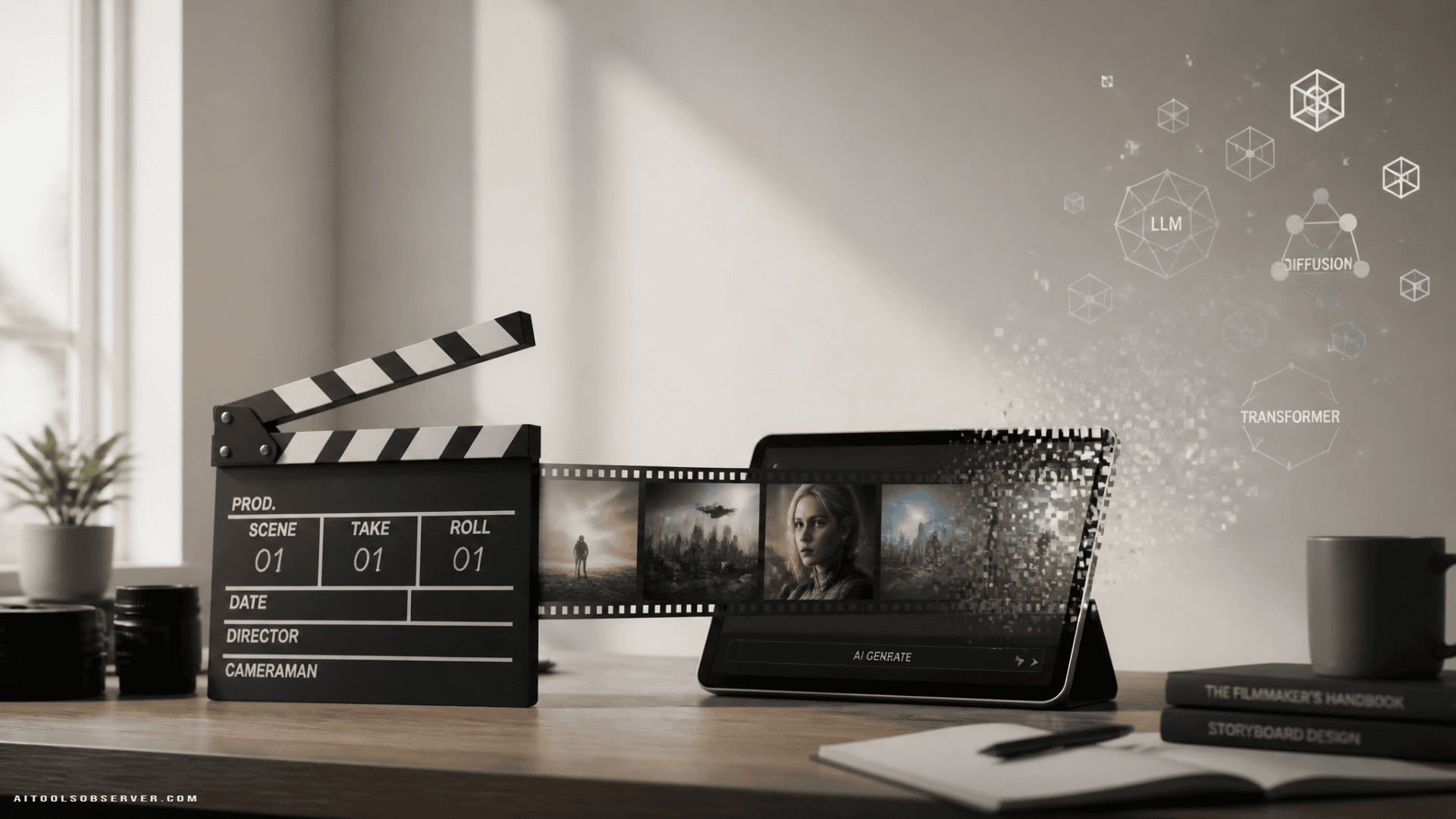
Fountain O’s previous film, Dreams of Violets, cost $2,000 and played at Tribeca. Odysseus: The Fall scales up ambition without scaling up cost. The team built a proprietary pipeline around off-the-shelf AI models, treating each tool as a specialized crew member: one for visuals, one for language, one for research, one for world consistency. The result is a feature-length film that exists as much as a proof of concept as a story.
The Tool Stack
- Kling – AI video generation, used for rendering every scene’s imagery.
- Google Nanobanana – imagery and core frame generation.
- Claude AI – language-related editing (likely script refinement, dialogue, or narration).
- Google Gemini – project research.
- Fountain O proprietary tech – blocking actors, frame accuracy, and world modeling.
The stack reads like a pragmatic indie filmmaker’s toolkit: one tool for the heavy visual lifting, another for stills and keyframes, a language model for text, and a research assistant to keep the mythological details straight.
Why Kling Over Sora?
OpenAI’s Sora was the original plan. When Sora was shuttered, the team switched to Kling, a Chinese AI video generator. Pooya Koosha, the film’s producer and post-producer, praised Kling’s image rendering and noted that each film teaches them new techniques to push AI filmmaking closer to traditional production quality. The pivot highlights a reality of AI video right now: the landscape shifts fast, and flexibility matters more than brand loyalty.
How the Pieces Fit Together
- Research & script – Gemini gathered background on Odysseus; Claude helped shape the script.
- Keyframe creation – Nanobanana generated core visual frames to establish scene composition.
- Video generation – Kling turned those frames and prompts into moving footage.
- Actor blocking & world consistency – Fountain O’s in-house tools kept characters and environments coherent across shots.
- Editing & polish – Claude may have assisted with dialogue pacing or subtitle refinement.
No single tool carried the film. The magic was in the orchestration—knowing which model to use for which task, and building custom glue to hold it together.
What This Means for Creators
You don’t need a studio budget to make a feature. You need a clear vision, a willingness to stitch tools together, and the patience to work around each model’s quirks. The Fountain O approach suggests a template: use AI for the heavy rendering, but keep human judgment at the center for story, pacing, and emotional weight.
The tools themselves are increasingly accessible. Kling, Claude, Gemini, and Nanobanana are all available to individuals. The proprietary layer is the secret sauce, but even without it, a resourceful creator can approximate the workflow.
The Uncomfortable Truth
No distributor has picked up Dreams of Violets yet. Odysseus: The Fall will self-distribute via rental on Fountain O’s website. The technology can lower production costs to near-zero, but it doesn’t automatically solve distribution, audience building, or the age-old problem of making something people actually want to watch. AI filmmaking is a tool, not a shortcut to relevance.
The real takeaway: the barrier to entry for long-form video is crumbling. The new barrier is taste.








Comments (0) No comments yet
Want to join this discussion? Login or Register.
No comments yet. Be the first to share your thoughts!