


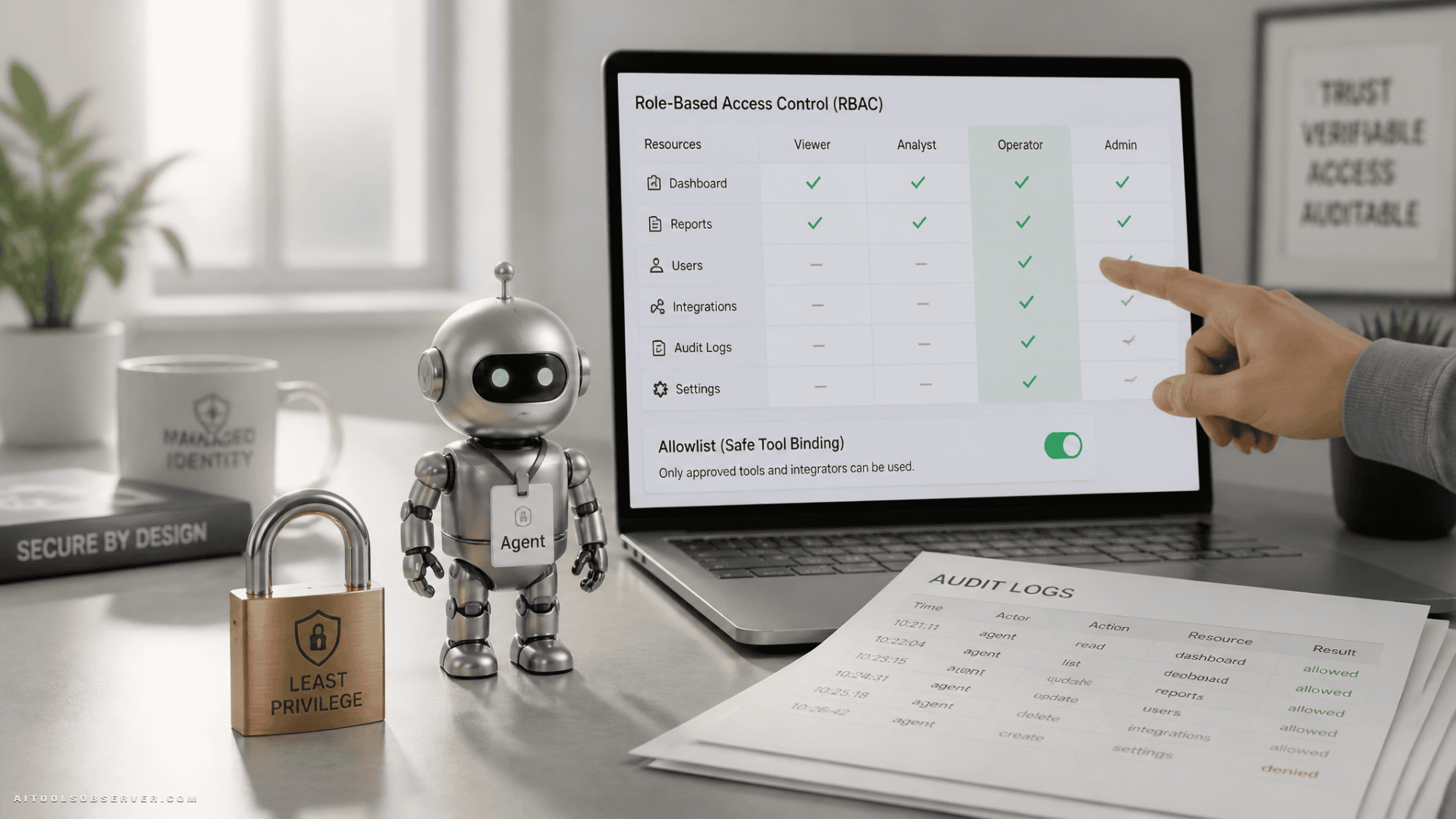
Why AI Agents Create a Different Kind of Access Problem
A traditional service account does one thing. An AI agent plans, sequences, and acts—often across multiple systems in a single workflow. That changes the blast radius of a misconfigured permission dramatically.
When an agent operates without a managed identity and properly scoped role-based access controls, it can access or modify data well beyond what anyone intended. The problem isn’t always a single over-permissioned role. It’s often the combination of several “reasonable” roles that together enable a high-impact chain of actions no one explicitly authorized as a whole.
There’s also an accountability problem. If the agent is acting under a shared secret, a reused service account, or an ambiguous mix of its own identity and a delegated user scope, you can’t cleanly answer the question that matters most during an incident: who authorized this action, under what role, and was it within intended scope?
The Scope Creep Pattern That Keeps Showing Up
Here’s how it typically unfolds. A team provisions an agent with a broad “Reader” role because the initial use case looks read-only. The workflow expands to include remediation. Rather than redesigning the role, someone grants broader write access and moves on.
That scope creep is quiet, incremental, and almost never revisited. The agent ends up with permissions that reflect operational convenience rather than intentional design.
The result shows up later in the worst possible context—an incident where logs capture what tool was called but can’t answer whether the action was authorized, who owned the decision, or what the intended scope actually was.
The Right Mental Model: Agents as First-Class Principals
Treat every agent the same way you’d treat a human employee with system access. That means:
- A unique, dedicated identity with a named human owner
- An explicit purpose statement documenting what it’s allowed to do and why
- Lifecycle management from day one: onboarding, credential rotation, suspension, and a fast shutdown path that actually invalidates tokens
- Task-based RBAC roles scoped to the smallest meaningful unit of work
Avoid bundling unrelated permissions to reduce friction. If a workflow includes both evidence gathering and remediation, separate the duties. Use different roles—or different tools—for read versus write, and gate high-impact operations like delete, export, or privilege changes behind step-up approvals.
RBAC, Scope, and Safe Tool Binding in Practice
Role design is only part of the answer. Scope everything, and do it at multiple layers:
- Resource boundary: tenant, subscription, workspace, or site
- Data boundary: collection, label, or sensitivity classification
- Operation boundary: read, write, export, or admin
Pair that with safe tool binding. Expose only a curated, approved set of tools and actions to the agent. Require explicit allowlists for high-impact operations. This is where the “the agent will only do X” narrative breaks down—prompts are not authorization boundaries. Hard allowlists are.
Where Just-in-Time Access Fits
Just-in-time (JIT) elevation is useful here, but it applies to entitlements—not identities. Keep the agent identity stable for lifecycle management. Use time-limited role activations, short-lived tokens, or per-action approvals when a workflow genuinely requires higher privilege. Automatically drop back to the baseline when the workflow completes.
The goal is to make temporary access actually temporary, not permanent access with an expiry field no one enforces.
Auditability Isn’t Optional
Logging only the LLM response creates an audit trail that looks present but is forensically useless. Instrument agent actions end-to-end so logs capture:
- Agent identity and role used
- Effective scope and resource accessed
- Action taken and timestamp
- “On behalf of” user, if applicable
- Correlation IDs that stitch together the orchestrator call and the downstream system response
Without those fields, you can’t reconstruct intent or containment boundaries during an incident. You also can’t answer the questions leadership, customers, or auditors will ask.
Downstream Systems Must Re-Check, Not Trust
One of the most overlooked gaps in agentic architectures is implicit trust between the orchestrator and downstream integrations. Every downstream tool and service needs to re-verify claims, roles, and scope on each call—not assume the orchestrator already handled it.
If any integration in the chain trusts upstream validation without checking itself, that integration becomes the weakest link. Prompt injection and workflow drift can exploit exactly that assumption.
Common Pitfalls Worth Naming Directly
These anti-patterns appear consistently across real deployments:
- Granting Owner/Admin roles to unblock a pilot, then never refactoring permissions once the workflow works
- Shared secrets across multiple agents, which erase accountability and make revocation slow
- Relying on prompt instructions instead of hard authorization boundaries
- Logging only surface-level outputs without capturing tool invocations, scopes, and downstream decisions
- Temporary access without an enforced expiry, which becomes permanent access in practice
Each of these is avoidable with deliberate design. None of them require exotic tooling—they require treating access review and revocation testing as required operational hygiene, not optional maturity work.
What to Do in the Next 30–90 Days
The practical starting point isn’t a full platform overhaul. It’s an inventory.
Identify every agent identity currently deployed. Flag any using shared secrets or broad roles. Introduce task-scoped RBAC where broad roles exist. Require safe tool binding and end-to-end audit logs with monitoring before expanding any deployment—especially for cross-tenant agents, B2C agents, or multi-agent ecosystems where the combination of permissions across agents compounds the risk.
Access reviews and revocation testing should be on the same reliability standard as feature testing. If you haven’t practiced disabling an agent identity, rotating its credentials, and executing rollback for a common failure case, you don’t actually know if your controls work.
The agents that cause the most damage in production aren’t the ones that were obviously misconfigured. They’re the ones that looked fine at each individual integration, accumulated permissions incrementally, and were never revisited after the initial deployment. Closing that gap is less about technology and more about treating agent identity as a governance problem from day one.








Comments (0) No comments yet
Want to join this discussion? Login or Register.
No comments yet. Be the first to share your thoughts!