


What Is Driving the Upgrade
The MTI cited three primary factors behind the stronger performance:
- AI-related sectors and exports, which contributed meaningfully to first-half growth
- Manufacturing, wholesale trade, and finance and insurance, which drove second-quarter expansion
- A less severe impact from the U.S.-Iran conflict than initially modeled, with global energy prices remaining more contained than feared
Singapore’s Q2 GDP growth was revised upward to 5.9%, from the advance estimate of 5.7%. That is a modest revision in absolute terms, but it reinforces the direction of travel.
The AI Sector Connection
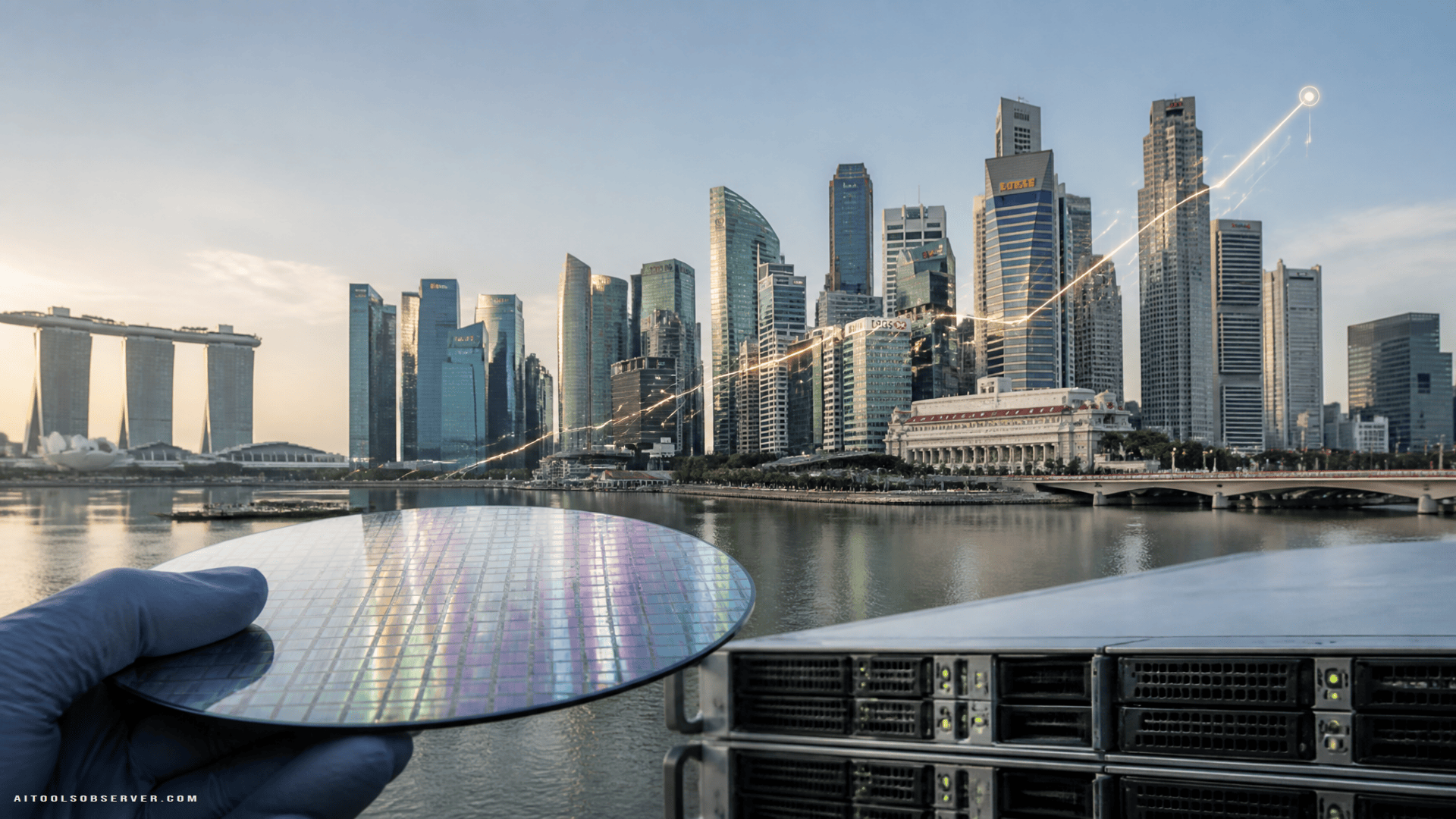
The explicit mention of AI-related sectors and exports as a growth driver is notable. Singapore has positioned itself as a regional hub for data infrastructure, semiconductor supply chains, and financial technology—all of which feed directly into AI deployment and production pipelines across Asia.
This is not a story about Singapore building AI tools. It is a story about Singapore capturing economic value from the global AI build-out: through chip-adjacent manufacturing, AI-driven financial services, and export demand from markets scaling their own AI infrastructure.
For anyone tracking where AI investment is generating measurable economic output, Singapore’s revised numbers offer a concrete data point.
Monetary Policy Implications
The strong growth performance creates space—and pressure—for the Monetary Authority of Singapore. The MAS already made an unexpected policy tightening move in late July, citing rising imported costs from higher fuel and electronic input prices.
Core inflation rose to 1.6% in June, up from 1.4% in May, placing it near the bottom of the MAS’s 1.5%–2.5% target range. Headline inflation sits at 1.9%. Neither figure is alarming, but the direction is upward.
The combination of stronger growth and creeping inflation means the MAS has both the justification and the economic cushion to act further if needed. Markets and businesses operating in Singapore should factor in the possibility of continued monetary tightening through the second half of 2026.
What This Means for the AI Tools Ecosystem
For founders, operators, and investors watching the AI tools market in Southeast Asia, Singapore’s revised forecast carries a practical signal: the region’s appetite for AI infrastructure and services is translating into measurable GDP impact, not just venture capital activity.
That matters for tool adoption curves, enterprise procurement cycles, and the pace at which regional businesses are likely to invest in AI-driven workflows. A growing economy with a tightening monetary environment tends to favor tools that demonstrate clear, near-term ROI over speculative or long-horizon deployments.
The takeaway is straightforward: Singapore’s 2026 numbers confirm that AI-related economic activity in Southeast Asia has moved past the hype phase and into the output phase. For anyone choosing where to focus AI tool strategy in the region, that distinction is worth tracking closely.
















Comments (0) No comments yet
Want to join this discussion? Login or Register.
No comments yet. Be the first to share your thoughts!