


What the Tool Actually Does
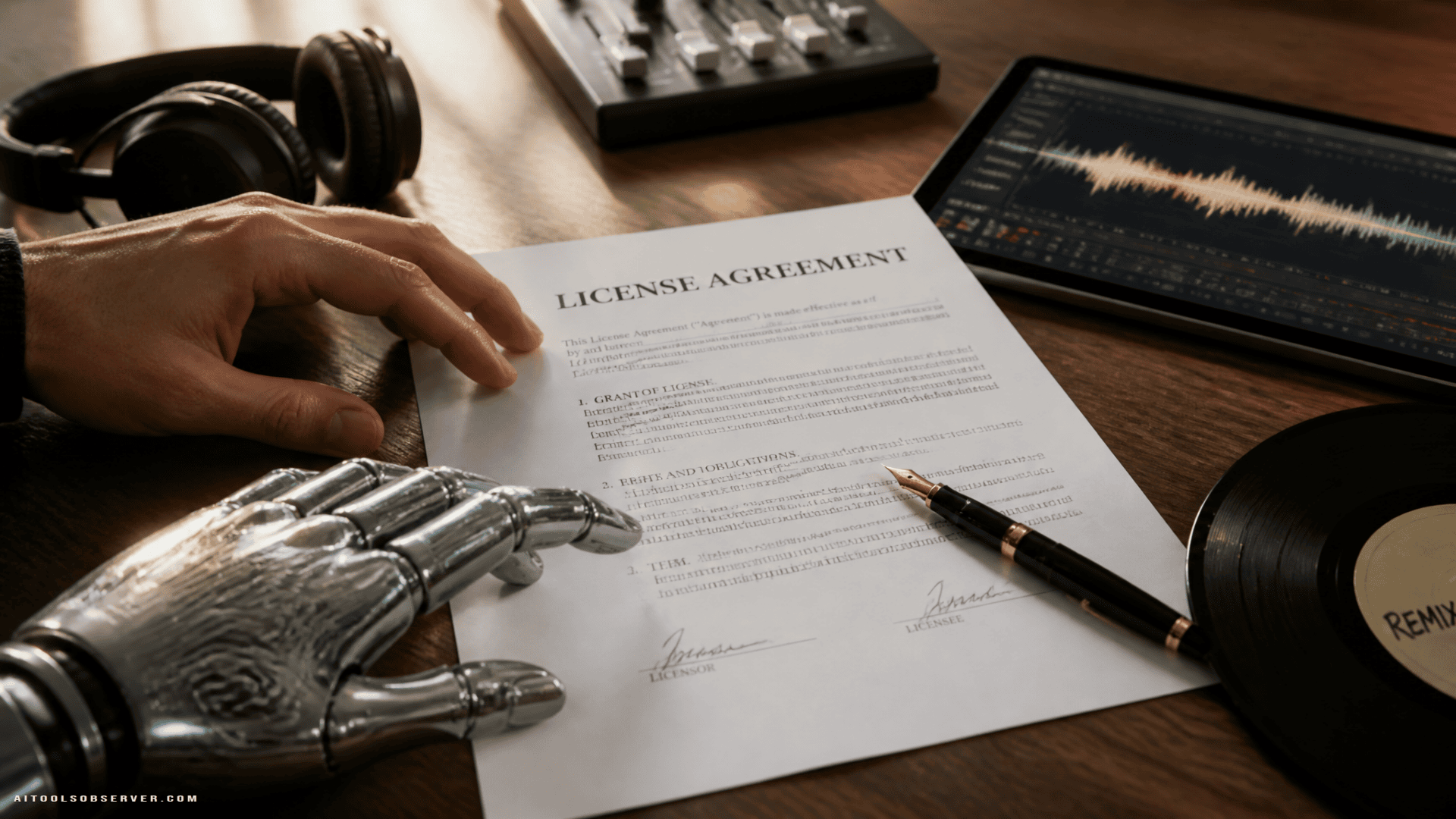
Spotify announced the AI fan remix tool at its Investor Day in May. The premise is straightforward: fans get AI-powered tools to create their own covers and remixes of songs they love, with every creation designed to drive listeners back to the original track.
It’s not a free-for-all. The framework is built around three pillars — consent, credit, and compensation — meaning songwriters have to opt in, they get acknowledged, and they get paid when their work is used.
Why the Kobalt Deal Matters
Kobalt represents a significant slice of the independent publishing world. Bringing them into the fold signals that Spotify isn’t just cutting deals with the major labels — it’s working to cover the broader rights landscape.
Charlie Hellman, Spotify’s senior VP and global head of music, put it plainly: the tool only works if publishers and songwriters are treated as essential partners from the start, not as an afterthought once the product ships.
Laurent Hubert, Kobalt’s CEO, framed it from the creator side — fans have always wanted to engage with music beyond just listening, and this gives them a structured, ethical way to do that while songwriters actually benefit.
The Licensing Architecture Taking Shape
Spotify’s approach here is deliberate and sequential:
- October announcement: Partnerships with UMG, Sony, Warner, Believe, and Merlin on artist-first AI music tools, plus four guiding principles
- May: Licensing deal with UMG
- Earlier this month: Deal with Merlin
- Now: Kobalt added to the roster
The four principles Spotify laid out — partnering with rightsholders, opt-in participation, new revenue streams for creators, and fostering artist-fan connections — appear to be the actual operating framework, not just PR language. Each deal signed reinforces that structure.
The Broader Industry Context
This isn’t happening in a vacuum. A coalition of music organizations including the RIAA, IFPI, and A2IM has proposed a voluntary labeling system for AI music on streaming platforms — two tags: AI-generated for fully AI-created tracks, and AI-assisted for partially AI-created ones.
That proposal is still voluntary and still a proposal. But it points to an industry actively trying to get ahead of the transparency question before regulators or public backlash force the issue.
Spotify’s licensing approach and the tagging proposal are two different levers addressing the same underlying tension: how do you let AI-powered creativity happen without gutting the rights and income of the people who made the original music possible?
What This Means for Songwriters and Publishers
If you’re a songwriter or publisher watching this space, the opt-in model is the key detail. You’re not automatically included — and you’re not automatically excluded. You choose whether your catalog participates.
That’s a meaningful distinction from earlier AI music controversies where training data was scraped without consent. Here, participation is intentional, and compensation is built into the agreement from the start.
The practical question — how much compensation, under what terms, and how transparent the accounting will be — isn’t publicly detailed yet. Those specifics will matter enormously once the tool is live at scale.
The Takeaway
Spotify is doing something relatively rare in the AI tools space: building licensing infrastructure before shipping the product broadly, not scrambling to fix rights issues after the fact.
Whether the compensation model turns out to be genuinely fair is still an open question. But the structural approach — consent-first, opt-in, multi-stakeholder deals across majors and independents — sets a higher baseline than most AI music tools have managed so far.
For anyone tracking AI tool development in creative industries, this deal is worth watching as a case study in how to build licensed AI features without torching the relationships you depend on.







Comments (0) No comments yet
Want to join this discussion? Login or Register.
No comments yet. Be the first to share your thoughts!