

What Is GitHub Next?
GitHub Next is a dedicated research and engineering group inside GitHub focused on prototyping the future of software development. The platform curates experimental projects around agentic workflows, AI-powered repository understanding, and continuous AI-driven collaboration.
Content is organized into projects, posts, talks, and people, making it easy to track specific initiatives and contributors. Developers and engineering leaders can explore active prototypes, completed experiments, and lessons learned from cutting-edge tooling.
By sharing early ideas openly, GitHub Next helps teams anticipate where developer tools are heading and how AI and automation may reshape their day-to-day workflows.
Quick Snapshot
GitHub Next gives you a front-row seat to GitHub’s experimental AI and automation projects before they become mainstream. Stay ahead of developer tooling trends, understand emerging workflows, and learn directly from real research prototypes.
- Works on
-
- Web
- Pricing Model
- Cannot determine the price.
- Fits on
- Affiliate Program
- We could not identify an affiliate program.
- API Availability
- We could not identify whether an API is available.
- Key Features
-
- Explore cutting-edge AI coding experiments
- Track emerging developer workflows and trends
- Learn directly from GitHub research prototypes
- Audience
-
- developers
- software engineers
- engineering managers
- developer advocates
- researchers
- technical founders
- DevOps teams
Screenshot

Key Features of GitHub Next
Experimental projects
Showcases active and completed prototypes focused on AI-assisted coding, agentic workflows, and automation in software development.
Organized content hub
Structures information into projects, posts, talks, and people so you can easily follow specific initiatives and contributors.
AI workflow exploration
Explores how AI can understand repositories, assist collaboration, and support continuous, AI-driven development workflows.
Open research insights
Shares lessons learned from experiments, helping teams anticipate how future developer tools may impact their workflows.
Use Cases for GitHub Next
Trend scouting
Monitor emerging AI-assisted coding and automation patterns directly from GitHub’s research group, helping you spot trends early and shape your technical roadmap.
Tooling strategy
Use real prototypes and experiments as input for deciding which kinds of AI developer tools and workflows to adopt or build in-house.
Team education
Share posts and talks from GitHub Next with engineering teams to deepen understanding of modern AI-driven development practices.
Research inspiration
Researchers and technical founders can draw inspiration from GitHub Next projects to explore adjacent ideas or complementary solutions.
Frequently Asked Questions
What is GitHub Next?
GitHub Next is GitHub’s research and engineering group that publishes experimental tools, workflows, and talks exploring the future of software development, especially around AI and automation.
Is GitHub Next a commercial product?
No. GitHub Next is a research initiative that shares prototypes and experiments rather than a packaged, paid product.
How can developers use GitHub Next?
Developers can browse GitHub Next to study prototypes, watch talks, and read posts that inform their own tooling decisions and understanding of AI-assisted development.
Does GitHub Next provide access to production-ready tools?
GitHub Next primarily showcases research prototypes and experimental ideas, not production-ready, fully supported tools.
Is there any cost to access GitHub Next content?
The site presents research content and does not list specific pricing; it is not positioned as a traditional paid SaaS product.
Who should follow GitHub Next?
Developers, engineering managers, DevOps teams, researchers, and technical founders who want to stay ahead of AI and developer tooling trends will benefit most from GitHub Next.
GitHub Next · Our Verdict
GitHub Next stands out as a transparent research window into how GitHub is rethinking developer workflows with AI. Instead of polished products, it offers prototypes, talks, and documented experiments that are especially valuable for teams planning their long-term tooling strategy.
For anyone serious about understanding where AI developer tools are headed, it is a high-signal resource worth following.
GitHub Next ·
-
 Subscription
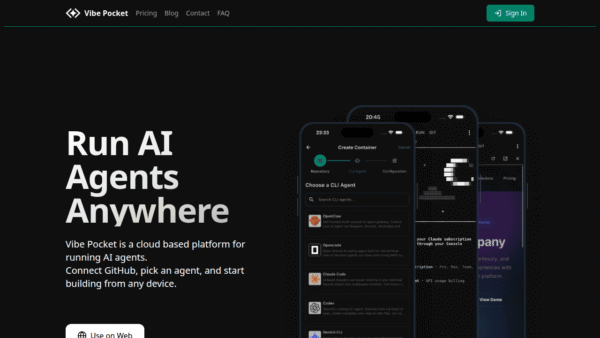
 Vibe Pocket
Run AI agents and cloud terminals anywhere.
AI Developer Tools - Freemium
WOZCODE
Cut your Claude Code costs in half, locally.
AI Developer Tools - Freemium
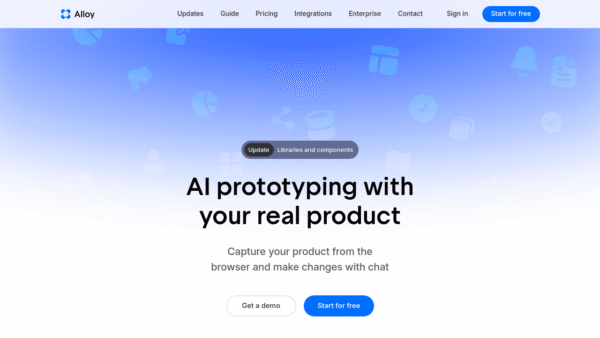
Alloy
AI prototyping with your real product, from the browser.
UI/UX & Web Design Tools - Subscription Featured
Codeanywhere
AI cloud IDE for coding from anywhere
AI Developer Tools - Subscription
PaceAI
AI copilot for fast, accurate software documentation
Productivity & Automation AI - Your Ad Here
- Freemium
Base44
AI-powered base for building apps, fast
No-Code AI App Builders - Subscription Premium
Competely
Instant AI competitive analysis that never lets you fall behind
Market Research & Analysis