


The Real Problem Is Not the Data
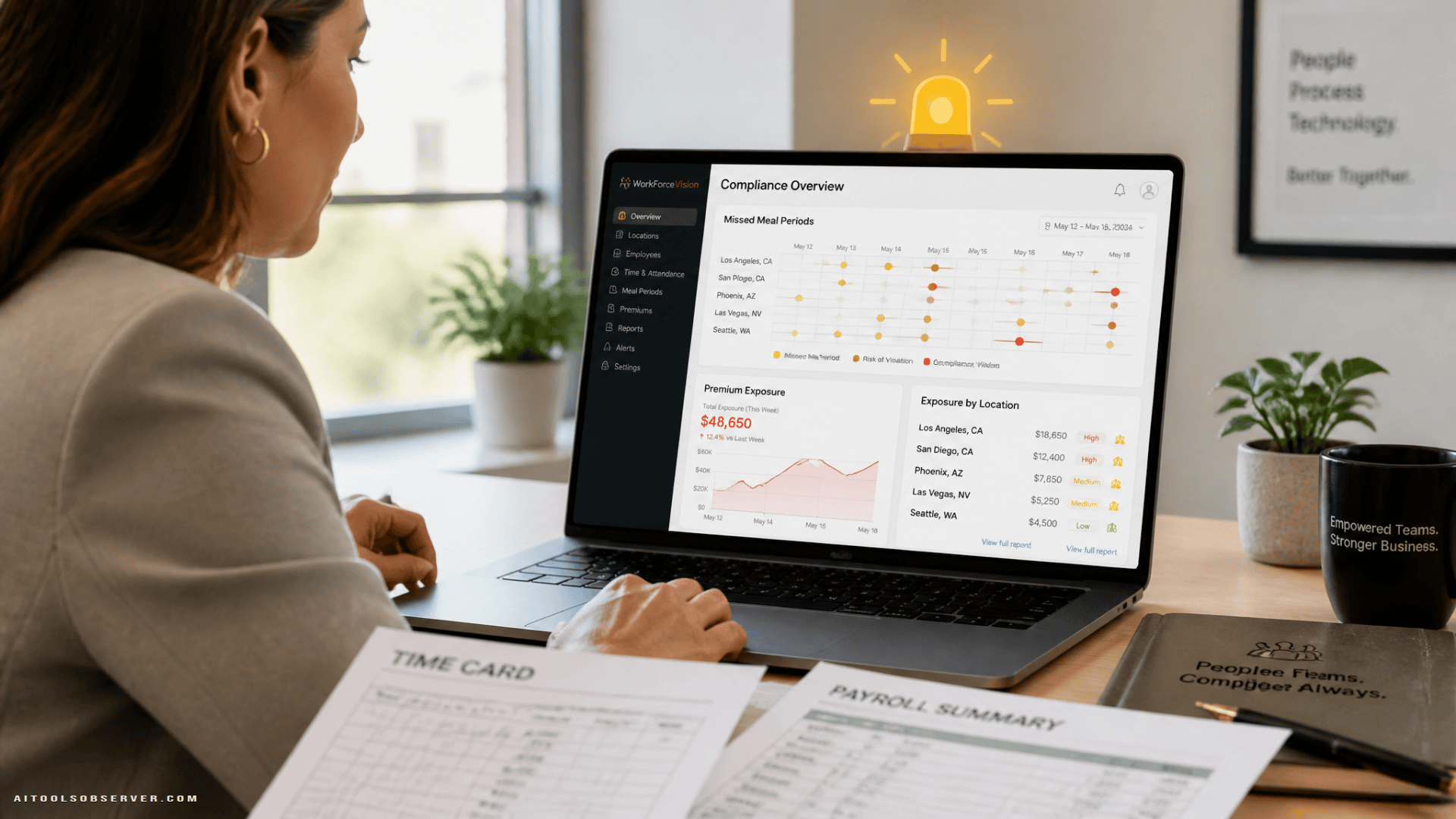
Over the past two decades, employers have built out substantial digital infrastructure: electronic time clocks, cloud-based payroll, scheduling software, HRIS platforms. Most of that investment was designed to answer transactional questions—who missed a meal period yesterday, who was owed a premium last pay period.
Those are the wrong questions for compliance purposes.
The more useful questions operate at a different level: Which supervisors show a rising trend in late or missed meal periods over six months? Which locations carry disproportionate premium exposure once staffing and overtime are factored in? Answering those questions requires looking at the same data differently, not necessarily acquiring new data or new systems.
Where AI Fits—and Where It Does Not
AI-assisted workforce analytics can accelerate pattern recognition across large, multi-location datasets. A tool that continuously monitors timekeeping and attestation records can flag a meaningful uptick in meal-period exceptions at a specific location, draft a summary for a regional manager, and do so faster than a manual monthly review.
But AI is not a prerequisite for starting this work.
An analyst reviewing six months of trend data instead of one pay period at a time can surface the same patterns. The technology compresses the time and scales the effort; it does not replace the underlying logic. For employers evaluating AI tools to complement existing HRIS, payroll, and timekeeping systems, that distinction matters—the tool should support human review, not substitute for it.
A Five-Stage Framework for Proactive Compliance
The practical path from data collection to early-warning compliance tends to follow a recognizable progression. Understanding where a program currently sits is the first step toward moving it forward.
Stage 1: Data Collection
Timekeeping, payroll, scheduling, and HRIS records exist and are stored. Nearly every employer with digital infrastructure is already here.
Stage 2: Basic Reporting
Exception reports, dashboards, and periodic audits are in place. Many employers treat this as a finished compliance program. It is not—it is a foundation.
Stage 3: Pattern Recognition
Trends are tracked across supervisors, locations, workgroups, and shifts on an ongoing basis. This is where AI tools add the most immediate value, though manual trend analysis can also reach this stage.
Stage 4: Documented Intervention
When a pattern surfaces, someone acts—a schedule changes, a policy is corrected—and that action is recorded with a date and a rationale. The documentation is as important as the correction.
Stage 5: Continuous Monitoring
Problems are flagged before they become patterns. Resources are directed toward developing risk, not just historical exposure. The compliance program operates prospectively rather than reactively.
Most employers today are operating at Stage 1 or Stage 2. The gap between Stage 2 and Stage 3 is often smaller than it appears.
A Concrete Illustration
Consider a multi-location employer that already exports weekly timecard and attestation data. That export currently gets a quick review before payroll runs—a Stage 2 practice.
An AI tool could analyze six months of that same data, flag locations with a meaningful increase in late or missed meal periods, and surface a short summary for review. Alternatively, an analyst could run that comparison manually each month. Either way, a regional manager reviewing the output traces the pattern to one location’s Sunday closing shift and adjusts the schedule.
Six months later, premiums at that location have dropped. There is a dated record showing when the issue was identified and what was done. That record is not a legal conclusion—it is evidence of a proactive, good-faith compliance posture.
Why Documented Proactivity Is Increasingly Valuable
Courts and regulators—particularly in California—are paying attention to whether employers took reasonable steps before a problem surfaced, not just how they responded after a claim arrived. California’s PAGA framework, for instance, now includes provisions that can reduce exposure for employers that demonstrate reasonable compliance steps.
Proactive, documented monitoring does not guarantee immunity from a claim. But it shifts an employer’s starting position from after-the-fact defense to a demonstrable record of ongoing good-faith effort. That shift has practical legal value, and it is becoming more relevant in jurisdictions beyond California as wage-and-hour enforcement continues to develop.
Nothing in this framing constitutes legal advice on any specific set of facts. Employers implementing AI-assisted compliance tools should do so in a manner that preserves attorney-client privilege where applicable.
Where to Start
Before evaluating any new tool, ask one question of whoever currently owns meal-period or premium-pay reporting: How far back does the report look, and who actually acts on it?
A report reviewed one pay period at a time will miss the six-month trend that matters most. Extending that window and clarifying accountability costs nothing. It is often the highest-value change available—and it moves a compliance program from Stage 2 to Stage 3 before any new technology enters the picture.
The data is already there. The question is whether anyone is asking it the right questions.


Comments (0) No comments yet
Want to join this discussion? Login or Register.
No comments yet. Be the first to share your thoughts!