



Why People Are Using ChatGPT for Legal Help

The appeal is obvious. Legal fees are expensive, legal language is confusing, and the court system moves at its own pace regardless of whether you understand what’s happening.
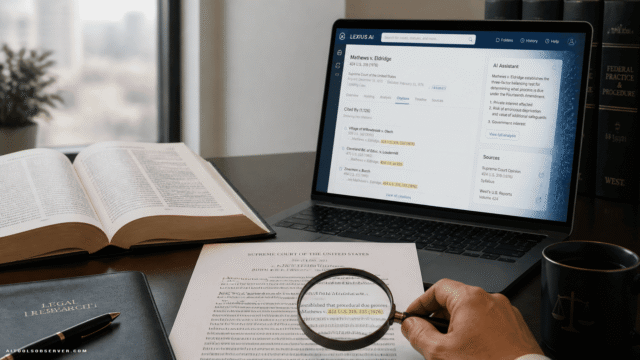
For self-represented litigants — people navigating cases without an attorney — AI tools like ChatGPT have become a lifeline. They help decode legal jargon, explain procedural steps, and give people a starting point when they feel completely lost.
One Alabama resident, navigating her own case during the discovery phase without legal counsel, described ChatGPT as essential to understanding what was actually happening in her proceedings. She used it to figure out what steps came next and what documents she needed to file.
That’s a legitimate use case. AI can genuinely democratize access to legal information for people who would otherwise be completely in the dark.
The Real Problem: ChatGPT Is Not Your Attorney

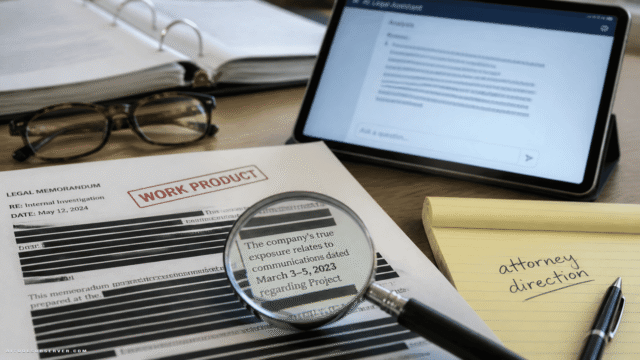
Here’s where it gets critical. Attorney-client privilege is one of the most protected legal concepts in the American justice system. What you tell your lawyer stays between you and your lawyer — full stop.
ChatGPT is not your lawyer.
Huntsville attorney Mark McDaniel sees clients every week who bring in AI-generated answers for their cases. He’s not dismissing the tool. He’s warning about what people don’t realize when they use it: those conversations carry zero legal protection.
“If you’re just out there searching for answers and you’re putting incriminating issues out there on AI, we can get that,” McDaniel said. “Now, even if you delete it, we can get it.”
That’s not a hypothetical. That’s how discovery works in 2025.
How Your ChatGPT Conversations Can Become Court Evidence
This is the part that should make you stop and think before your next session.
Attorneys Can Ask About AI Use in Depositions
McDaniel explained that attorneys are now routinely asking opposing parties whether they’ve used AI tools during a case. The questions go deep: which platform, when they used it, what they searched for.
From there, attorneys can subpoena those records directly from the AI company.
Deleted Conversations Don’t Disappear
Mark Sachs, a cybersecurity professional with Cyber Huntsville, put it plainly: treat your AI chat history the same way you treat your search history.
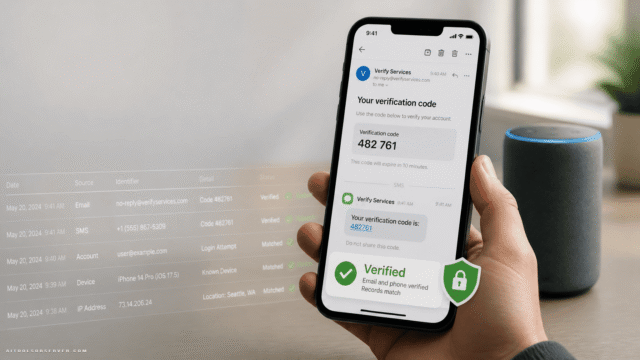
When you delete a ChatGPT conversation, it may still exist on OpenAI’s servers for a period of time. That data can be obtained through legal channels. Deletion is not destruction.
What You Type Reveals What You Were Thinking
This is where it gets genuinely dangerous. Courts care about intent. What someone was thinking or planning at a specific time can be highly relevant to a case — civil or criminal.
If you typed detailed questions about a situation that later becomes the subject of litigation, that query history becomes a window into your state of mind. McDaniel noted that people share remarkably personal things in ChatGPT — details about their actions, their plans, their relationships — without considering that it’s essentially a public resource.
The Accuracy Problem: AI Doesn’t Know Your State’s Laws
Even if privacy weren’t an issue, there’s another risk that gets less attention: ChatGPT can be wrong in ways that matter.
McDaniel cautioned that clients frequently bring in AI-generated legal information based on laws from other states or cases that simply don’t apply in Alabama. Legal rules vary significantly by jurisdiction. A contract clause that’s enforceable in California may be void in Alabama. A procedural deadline in Texas may be completely different in your state.
ChatGPT doesn’t always know where you are, and it doesn’t always flag when its answer is jurisdiction-specific. That gap can cost you.
How to Use AI for Legal Research Without Hurting Your Case
None of this means you should stop using AI tools entirely. It means you need to use them strategically.
Treat every AI conversation like a public document. Before you type anything, ask yourself: would I be comfortable if opposing counsel read this? If the answer is no, don’t type it.
Use AI for education, not confession. There’s a meaningful difference between asking “what is the discovery process in a civil case?” and describing the specific facts of your situation in detail. The first is safe. The second creates a record.
Verify jurisdiction before acting on anything. If ChatGPT gives you legal research information, always confirm it applies to your state. Use it as a starting point for research, not a final answer.
Get an attorney for anything that matters. AI can help you understand the process. It cannot replace the protected, privileged relationship you have with a licensed attorney. For anything with real stakes — criminal charges, custody disputes, significant civil claims — that relationship is worth the cost.
Assume nothing is deleted. If you’ve already had detailed AI conversations about an active legal matter, talk to your attorney about it. Don’t assume hitting delete solved the problem.
The Bigger Picture: AI as a Legal Tool Cuts Both Ways
The same technology that helps a self-represented litigant understand her court proceedings is also giving opposing attorneys a new source of evidence to mine.
That’s not a reason to avoid AI. It’s a reason to use it with the same awareness you’d bring to any other digital tool in your life.
Search engines changed how attorneys investigate cases. Social media changed what evidence looks like. AI chat history is the next frontier — and the legal system is already catching up.
Bottom Line
ChatGPT is genuinely useful for legal education, procedural guidance, and making sense of a system that wasn’t designed to be accessible. Used carefully, it’s a real advantage for people who can’t afford constant attorney access.
But the moment you start typing the specific facts of your case — especially anything incriminating, emotionally charged, or strategically sensitive — you’re creating a record that exists outside your control.
The rule is simple: use AI to learn, not to confess. Know what you’re typing, know where it goes, and know that “deleted” doesn’t mean gone.
Your attorney’s advice stays in the room. Your ChatGPT conversation might end up in a courtroom.












Comments (0) No comments yet
Want to join this discussion? Login or Register.
No comments yet. Be the first to share your thoughts!