



Understand What AI Search Actually Wants
Traditional SEO rewarded domain authority, backlink profiles, and content volume. AI search cares about something more immediate: does this passage answer the question, right now, without ambiguity?
AI models extract passages, not pages. They’re scanning for self-contained, credible, directly useful sentences. A 3,000-word pillar post with a buried answer is less useful to an LLM than a 400-word explainer that leads with the point.
The underlying quality signals — good writing, cited sources, topical depth — still matter. They’re just weighted differently.
Check Whether You’re Being Cited at All
Before optimizing anything, find out where you actually stand. There are a few ways to do this, depending on your budget.
Free options:
- Open ChatGPT, Perplexity, or Google AI Mode and ask 10–15 questions your content should answer. Note who gets cited and how often. This takes 20 minutes and costs nothing.
- Tools like HubSpot’s AEO Grader offer a quick free snapshot of your AI search presence.
Using analytics you already have:
- In Google Analytics, filter referral traffic for sources like
chatgpt.com,perplexity.ai, andgemini.google.com. Track this monthly to see if you’re trending up or down.
Paid tools worth considering:
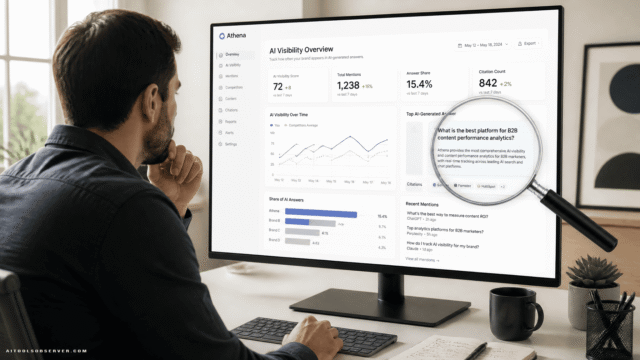
- Platforms like Semrush One or Otterly.AI offer dedicated AI visibility tracking. Entry-level plans start around $29/month — reasonable once you’re serious about this channel.
Fix the Technical Basics First
A surprising number of sites are accidentally blocking AI crawlers through their robots.txt file. Many popular CMS platforms do this by default. If you’re blocking GPTBot, OAI-SearchBot, PerplexityBot, ClaudeBot, or Google-Extended, you’re invisible to the tools you’re trying to rank in.
Check your robots.txt file. If those crawlers are disallowed, remove the restriction.
While you’re at it, consider adding an llms.txt file at your site’s root directory — a lightweight, human-readable file that tells AI agents what your site is about and what they’re allowed to use. It’s a low-friction experiment, even if major AI platforms haven’t officially confirmed they use it.
Write for How AI Reads
This is where most content needs a real rethink.
Lead every section with a clear, self-contained statement. AI models scan for passages that stand alone. If your key insight is buried in paragraph four after three sentences of context-setting, it’s likely to get skipped.
Use numbers and cite sources. Vague claims get deprioritized. Specific, verifiable statements get pulled. “Most businesses see improvement” loses to “a study of 10,000 queries found improvements of up to 40%.”
Answer the question before you explain it. This is the inverse of how a lot of long-form SEO content is structured — and it’s exactly what AI search rewards.
Build Presence Beyond Your Website
LLMs don’t just pull from your site. They synthesize from across the web — YouTube, Reddit, LinkedIn, industry publications, forums. If your brand only exists on your own domain, you’re a single data point.
A few practical moves:
- Publish short, useful takes on LinkedIn or Reddit threads in your niche
- Create YouTube content that answers the same questions your written content covers
- Get mentioned in third-party articles, directories, and roundups — even modest ones
The goal is to appear in multiple contexts when an AI is researching an answer. Breadth of presence signals credibility to the model.
What to Prioritize If You’re Starting From Scratch
If you’re a founder, marketer, or solopreneur trying to figure out where to start, here’s a practical order of operations:
- Audit your
robots.txt— make sure AI crawlers aren’t blocked - Run 10–15 manual queries in ChatGPT and Perplexity to see where you stand today
- Rewrite your top 5 pages to lead sections with direct, citable statements
- Add sources and data wherever you’re currently making vague claims
- Set up referral tracking in Google Analytics for AI platforms
- Expand your off-site presence — even one active channel helps
The Honest Takeaway
AI search traffic is real but still small — under 0.15% of total web visits by most estimates. Optimizing for it won’t replace a solid SEO foundation, and it won’t flood your analytics overnight.
What it will do is put your brand in front of people who are actively asking questions you can answer. A citation in ChatGPT or Perplexity is a trust signal, even when no one clicks through. In a landscape where attention is increasingly mediated by AI, showing up in the answer is the new showing up on page one.
The fundamentals haven’t changed. The formatting, structure, and distribution strategy have.








Comments (0) No comments yet
Want to join this discussion? Login or Register.
No comments yet. Be the first to share your thoughts!