


What It Actually Does

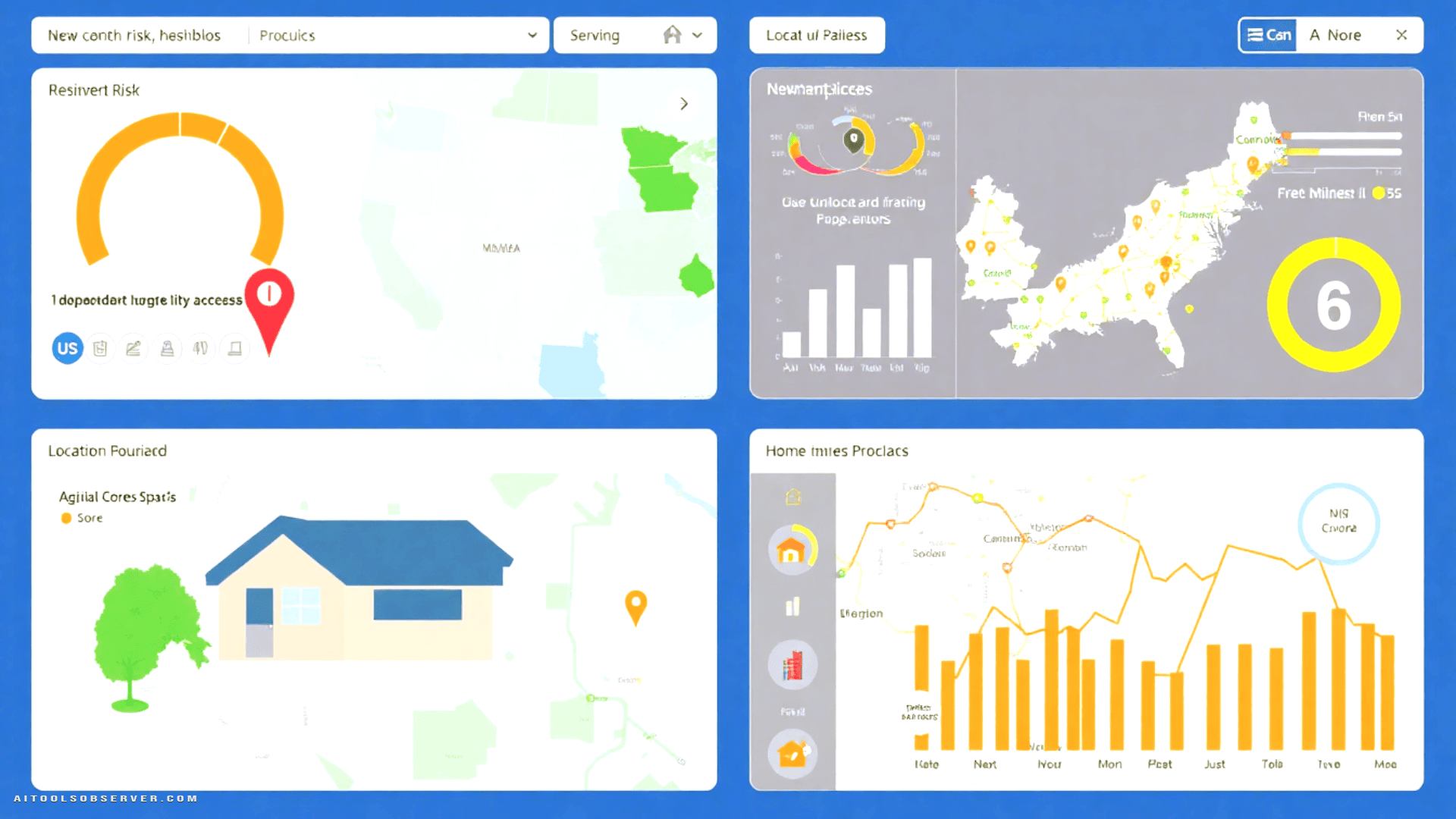
Location Intelligence uses neural network modelling to generate predictive risk scores for residential properties. It pulls from industry-wide claims data, location-based intelligence, and historical loss trends — then packages that into a score insurers can act on during both new business and renewal decisions.
The tool covers six exposure categories: hail, wind, weather-related water, non-weather-related water, freeze events, and collapse or falling objects. Roof condition grading is also available as an add-on layer.
Crucially, it’s been integrated directly into LexisNexis Smart Selection, the company’s existing automated data platform. That means insurers don’t need to rebuild their workflows — the intelligence slots in where decisions are already being made.
The Number That Explains Everything

Here’s the stat that makes this launch land: non-weather water claims accounted for 24% of all home insurance claims in 2025, versus just 4% for weather-related water damage.
That’s a massive risk driver that traditional exterior inspections and weather overlays routinely miss. Meredith Barnes-Cook of Datos Insights put it plainly — legacy models were built around the signals that were easiest to collect, not the ones most predictive of actual loss.
LexisNexis is betting that closing this gap at the individual property level is where the next generation of underwriting tools earns its keep.
The Performance Claim Worth Watching

LexisNexis says homes with the highest Location Intelligence scores are 20 times more likely to experience a claim than those with the lowest scores.
That’s a bold segmentation claim. If it holds up across diverse portfolios and geographies, it represents a meaningful shift in how insurers can price risk, prioritise inspections, and even engage policyholders proactively on mitigation — before a burst pipe becomes a six-figure loss.
Why Insurers Should Care Right Now

Three pressures are converging on the home insurance market simultaneously: rising repair costs, more frequent catastrophic events, and eroding underwriting accuracy. Traditional models weren’t designed for this environment.
What makes Location Intelligence operationally interesting isn’t just the AI — it’s the removal of the internal build burden. Insurers get portfolio-level risk visibility and a maintained predictive model without needing to staff a data science team to sustain it.
George Hosfield, VP of home insurance at LexisNexis Risk Solutions, framed it as a consistency play: more uniform risk assessments across prospective and existing policyholders, using tools already embedded in insurer workflows.
What Comes Next

This launch extends what LexisNexis already rolled out in the commercial insurance market. The company plans to file the predictive model in several US states over the coming months for formal use in underwriting and rating processes — which means regulatory approval timelines will shape how quickly carriers can fully deploy it.
The direction of travel is clear: property risk assessment is moving from reactive to predictive, from exterior-visible to location-intelligent.
The insurers who adapt their underwriting logic to match where risk actually lives — not just where it’s easiest to measure — will be better positioned for what’s coming. LexisNexis just handed them a sharper instrument. Whether they use it well is the next question.














Comments (0) No comments yet
Want to join this discussion? Login or Register.
No comments yet. Be the first to share your thoughts!