



What Is OpenEvidence and Why Does It Matter?

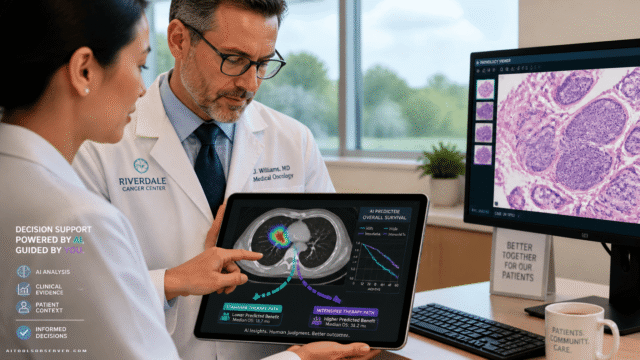
OpenEvidence is a specialized AI search platform built exclusively for healthcare professionals. Think of it as a medical-grade chatbot that searches peer-reviewed journals, clinical guidelines, and evidence-based research to answer specific clinical questions — fast.
It’s free. It works on your phone. And it’s available to any licensed healthcare provider who registers with their government-issued healthcare ID.
The platform’s landing page calls itself “America’s Official Medical Knowledge Platform.” That’s a bold claim. But the adoption numbers back it up.
The Problem It Solves: Clinical Decisions Under Pressure

Doctors face a brutal reality every day. They need precise, evidence-based answers — fast — for patients with complex, overlapping conditions. The old tools weren’t built for that speed.
For years, clinicians relied on UpToDate, a respected but dense reference website filled with long-form summaries. It’s thorough. It’s peer-reviewed. But searching it for a specific clinical scenario — say, antibiotic dosing for a patient without a spleen — can send you down a rabbit hole with no clear exit.
Dr. Anupam Jena, an internal medicine physician at Massachusetts General Hospital and Harvard professor, experienced this firsthand. He spent significant time searching traditional tools for a targeted antibiotic question and came up empty. He asked OpenEvidence the same question and got a direct answer with a citation to a 2014 New England Journal of Medicine paper he couldn’t find anywhere else.
That’s the gap OpenEvidence fills. Not replacing clinical judgment — accelerating access to the evidence that informs it.
How OpenEvidence Actually Works in Clinical Practice

The workflow is straightforward. A doctor types a natural-language question — not a keyword string, but an actual question like “what’s the best treatment for a diabetic patient with stage 3 CKD who can’t tolerate metformin?” — and OpenEvidence generates a synthesized answer with links to the peer-reviewed sources behind it.
This is where large language models genuinely shine. You don’t need to guess the right search term. You ask the question the way you’d ask a colleague.
Dr. Paul Sax, an infectious disease specialist at Brigham and Women’s Hospital in Boston, described the search experience as
“frictionless”
compared to UpToDate. A kidney specialist who requested anonymity said it regularly saved him 30 minutes per query compared to older systems.
Sixty percent of all searches on the platform are about clinical decision-making — helping doctors determine the right treatment for a specific patient profile, condition, or combination of comorbidities.
Real-World Use Cases From Practicing Physicians

- A junior doctor in New Hampshire used it to confirm whether a sudden potassium drop was a medication side effect or a new emergency. OpenEvidence confirmed it was a known side effect and listed restoration options.
- A physician at an Indian Health Service clinic in rural South Dakota used it to verify whether an X-ray was sufficient to diagnose a suspected spinal fracture. OpenEvidence recommended a CT scan and linked to supporting literature.
- Surgeons use it to navigate clinical questions outside their specialty — blood pressure management, medication adjustments — areas where their training is thinner.
These aren’t edge cases. They’re everyday clinical moments where speed and accuracy matter.
Why Doctors Adopted It When They Resist Most New Tech

Healthcare has a well-documented problem with technology adoption. Doctors are notoriously resistant to tools forced on them by administrators. EHR systems are a classic example — widely used, widely resented.
OpenEvidence broke that pattern entirely.
“We did the hardest thing in the history of American health care,” said CEO Daniel Nadler. “We got the majority of American doctors to all voluntarily adopt a single technology platform.”
The reasons are practical. It’s free. It’s mobile-first. It answers questions faster than any alternative. And it was built specifically for clinicians — not adapted from a general-purpose AI tool.
Dr. Jeremy Cauwels, Chief Medical Officer at Sanford Health — the largest rural healthcare system in the U.S., overseeing more than 2,500 providers — put it simply: “It’s one of those things that can help you answer questions more quickly than you would be able to by any other method.”
The Data and Research Partnerships Behind the Answers

OpenEvidence isn’t just pulling from the open web. That’s a critical distinction.
The company has licensing agreements with the world’s most prestigious medical journals — including the New England Journal of Medicine and the Journal of the American Medical Association. It also has partnerships with specialized clinical organizations like the National Comprehensive Cancer Network and the American Diabetes Association for the latest treatment guidelines.
Dr. Eric Rubin, editor-in-chief of NEJM, framed the relationship clearly: “If they’re going to be using a tool like OpenEvidence, then I’d like my material to be on that platform.”
This is what separates OpenEvidence from general-purpose AI tools in a clinical context. When OpenAI launched ChatGPT for Clinicians in April 2026, it referenced “millions of peer-reviewed studies” — but without the same exclusive licensing agreements that give OpenEvidence access to top-tier, current medical literature.
Access to the right sources isn’t a minor detail in medicine. It’s everything.
The Legitimate Concerns Worth Taking Seriously
No tool at this scale gets a free pass, and OpenEvidence shouldn’t either.
Hallucinations and Incomplete Answers
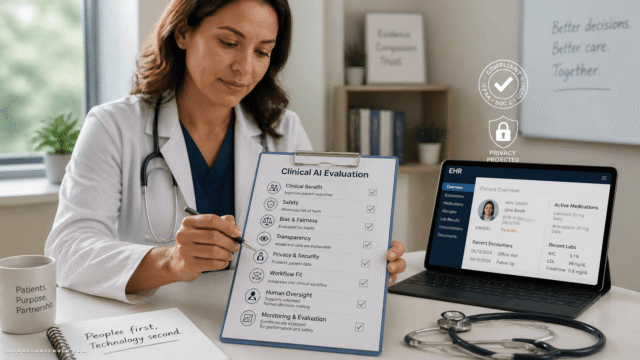
Like all large language model-based systems, OpenEvidence can generate plausible-sounding but incorrect information. The company says it works to minimize hallucinations, but the risk isn’t zero. In clinical settings, a confident wrong answer is dangerous.
Privacy and PHI
OpenEvidence says it complies with HIPAA and allows covered entities to input protected health information under specific conditions. But not every health system agrees. MaineHealth, for example, currently asks its doctors not to enter patient health information into the platform at all.
Many doctors interviewed for this piece said they use the tool on personal devices, including general patient details like age, sex, and medical history — but stopping short of names or direct identifiers. That’s a workaround, not a solution.
Cognitive Dependency
Some experts worry that heavy reliance on AI-assisted search could erode doctors’ independent critical thinking and diagnostic reasoning over time. It’s a valid long-term concern, especially as the tool becomes embedded in daily clinical workflows.
OpenEvidence is explicit in its terms of service: the platform is meant to supplement clinical judgment, not replace it. But the line between supplement and dependency can blur quickly when a tool becomes the default first stop.
The Business Behind the Platform

OpenEvidence is free for users. It’s funded by advertising — including ads from pharmaceutical and medical device companies — though many physicians report the ads are minimal or barely noticeable.
The startup’s financial trajectory is striking. Valued at $1 billion in early 2025, it surged to a $12 billion valuation in just over a year after raising $700 million. Backers include Sequoia Capital, Google Ventures, Nvidia, Andreessen Horowitz, and Thrive Capital.
CEO Daniel Nadler has committed that core OpenEvidence will always remain free for clinicians. The company’s growth strategy focuses on expanding into AI notetaking, billing integration, and visit documentation — building a broader clinical workflow platform around the search product that already has the majority of American doctors using it.
How OpenEvidence Fits Into the Broader AI-in-Healthcare Landscape

OpenEvidence doesn’t exist in isolation. It’s part of a rapidly expanding ecosystem of clinical AI tools.
AI scribes record and transcribe doctor-patient conversations. Competitors like Doximity and iatrox are building their own clinical knowledge platforms. A recent American Medical Association survey found that over 80% of physician respondents now use some form of AI in their practice.
What makes OpenEvidence stand out isn’t just its adoption rate. It’s that it solved a specific, high-friction problem — finding reliable, current, evidence-based clinical answers quickly — and built a product that clinicians actually wanted to use without being told to.
That’s a rare thing in healthcare technology.
What This Means for Anyone Thinking About AI Adoption

The OpenEvidence story is a masterclass in AI tool adoption done right. It identified a genuine pain point. It built for a specific, professional audience. It made the barrier to entry nearly zero. And it delivered real, measurable value from the first use.
For founders, operators, and AI adopters watching this space, the lesson is clear: adoption follows value, not mandates. The tools that win are the ones people reach for voluntarily because they make hard work easier.
OpenEvidence didn’t disrupt medicine by replacing doctors. It made them faster, more confident, and better equipped to handle the complexity of modern clinical care.
That’s what good AI adoption looks like — in healthcare, and everywhere else.





Comments (0) No comments yet
Want to join this discussion? Login or Register.
No comments yet. Be the first to share your thoughts!