



Why this healthcare AI strategy matters
Healthcare is full of information bottlenecks. Patient records are fragmented, imaging data is dense, documentation consumes clinician time, and early disease detection often depends on finding subtle patterns before symptoms become obvious.
AI fits those problems well because many of them are pattern-recognition and summarization tasks. But healthcare AI also has a much higher bar than most software categories. A small error in a marketing workflow is annoying. A small error in a clinical workflow can change care decisions.
That tension is the real story here: strong upside, high stakes, and slow, trust-driven adoption.
Use case 1: AI for patient record summarization
One of the clearest examples is Mayo Clinic’s record-review workflow. Physicians preparing for appointments may need to work through long, messy records collected from multiple outside systems, especially when patients arrive seeking additional opinions.
The AI tool highlighted in the context, Record Time, helps by:
- generating relevant patient summaries
- organizing documents chronologically
- making records easier to search
That sounds simple, but it targets a painful workflow. If a clinician is dealing with dozens or hundreds of pages before a visit, even modest time savings matter. More importantly, better organization reduces the chance that an important detail gets buried in the file.
This is a strong example of an AI use case that is practical before it is flashy. It doesn’t try to replace clinical judgment. It tries to improve the quality and speed of preparation.
Why this use case works
Record summarization is one of the most realistic near-term healthcare AI applications because it sits in a support layer. It helps clinicians process information faster without making the final care decision for them.
That’s a recurring pattern in good enterprise AI deployment:
- reduce cognitive overload
- structure unstructured data
- keep humans in control
- save time where time is scarce
For hospitals and health systems, this may be one of the easiest categories to justify because the value is immediate and operational.
Use case 2: AI for early cancer detection
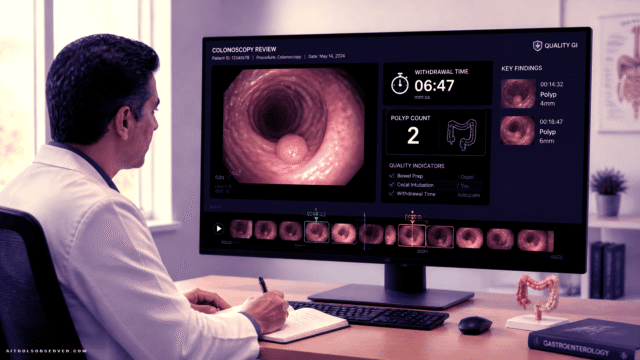
The second use case is more clinically ambitious: identifying subtle warning signs earlier, especially in imaging and risk detection.
According to the context, Mayo Clinic is running a clinical trial to test whether AI can help identify patients at risk of, or with, early-stage pancreatic cancer. The significance is obvious. Pancreatic cancer is often detected late, when treatment options are more limited.
This is where AI’s pattern-recognition strength becomes medically meaningful. Models can be trained to find faint signals in large datasets that may be difficult to catch consistently through manual review alone.
Early cancer detection is one area where subtle findings can matter significantly.
What makes early detection a high-value AI application
Early detection is one of the strongest healthcare AI use cases because the downstream impact can be substantial:
- earlier intervention
- more treatment options
- potentially better outcomes
- more focused follow-up testing
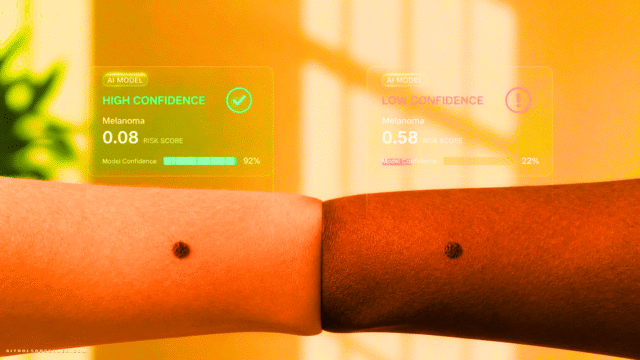
But it is also one of the hardest areas to deploy responsibly. Detection models need to be accurate enough to be useful without triggering too many false alarms. In healthcare, “find more” is not automatically better if it creates unnecessary stress, testing, or cost.
That’s why trial-based validation matters so much here.
Use case 3: AI for cardiac risk prediction
Another application mentioned in the context is AI analysis of heart rhythms to identify whether a patient could develop atrial fibrillation.
This is a different but related pattern. Instead of simply reacting to a current condition, the AI looks for signs that suggest future risk. That moves AI from documentation support into predictive clinical assistance.
For healthcare systems, predictive models are attractive because they can help surface patients who may need closer monitoring. For clinicians, the value is not that the model “knows” more than they do. It’s that the model may notice weak signals across large amounts of data at a scale that is difficult to replicate manually.
Use case 4: AI for clinical documentation
Documentation is one of the most common and useful AI use cases in healthcare because it addresses a universal pain point: time lost to admin work.
The context describes an AI system developed with nursing input that listens during patient visits and helps create notes. The operational benefit is clear. If clinicians spend less time typing, they can spend more time with patients.
This is one of the best examples of AI improving care indirectly. The model is not diagnosing disease. It is reducing friction around the work that surrounds care delivery.
That distinction matters. Some of the most valuable healthcare AI tools may not be diagnostic systems at all. They may be workflow systems that give clinicians back attention and time.
The real strategy: pair clinicians with technical teams
One of the most practical lessons from Mayo Clinic’s approach is how use cases appear to be selected and developed. The context suggests that technical experts work alongside doctors and clinicians to identify the medical problems worth solving.
That is a far better model than starting with a generic AI platform and searching for a use. In healthcare, successful AI deployment usually depends on workflow fit as much as model capability.
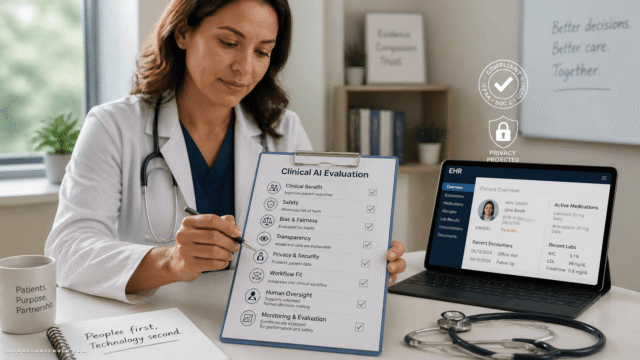
A useful evaluation framework looks like this:
- Is the problem frequent enough to matter?
- Does it involve large amounts of repetitive or unstructured data?
- Can AI improve speed, consistency, or signal detection?
- Is there a clear human decision-maker after the model output?
- Can the system be tested safely before broad rollout?
That is the kind of filtering more hospitals and healthtech teams should use.
Why clinical trust matters more than speed
One line in the context stands out: quality of care is the bar, then speed.
That’s the right priority for healthcare AI. In many software categories, the winning strategy is launch fast, gather feedback, and iterate in public. In clinical settings, that approach is not enough.
Based on the available details, Mayo Clinic’s process emphasizes:
- limited early testing
- physician oversight
- performance measurement
- wider rollout only after evaluation
- continued monitoring after deployment
That sounds less like consumer app growth and more like clinical validation, which is exactly the point.
Adoption is the real KPI
Another useful signal is that clinicians reportedly have a choice in whether to use some tools. That matters because forced adoption can create quiet resistance, especially among experienced staff who are already skeptical of automation claims.
In healthcare, trust shows up in behavior. If doctors and nurses believe a tool helps them work better without adding risk, they use it. If they don’t, usage stalls, no matter how strong the internal launch messaging is.
For healthcare AI teams, adoption is not just a product metric. It is evidence of clinical credibility.
Privacy, oversight, and the limits of AI optimism
No serious healthcare AI strategy can avoid privacy and governance questions. The context also notes controversy and legal scrutiny related to privacy and oversight concerns around some Mayo AI systems.
That does not make healthcare AI uniquely problematic. It makes healthcare AI uniquely sensitive. Hospitals are working with highly personal data, complex compliance obligations, and patient relationships built on trust.
So the hard questions are unavoidable:
- How is patient data used?
- Who has oversight over model development and deployment?
- How are outputs monitored for errors?
- What happens when a model underperforms?
- How transparent is the institution with patients and staff?
These are not side issues. They shape whether AI can scale inside healthcare organizations without damaging trust.
What other hospitals and AI buyers can learn
Mayo Clinic’s example offers a practical blueprint for healthcare AI adoption that goes beyond headlines.
Other hospitals and AI buyers can use these lessons as a starting point.
Start with narrow, high-friction workflows
The strongest early wins often come from operational pain points like:
- record review
- note generation
- search and summarization
- risk flagging for follow-up
- imaging support
These areas are easier to measure and safer to phase in than broad autonomous decision systems.
Keep clinicians in the loop
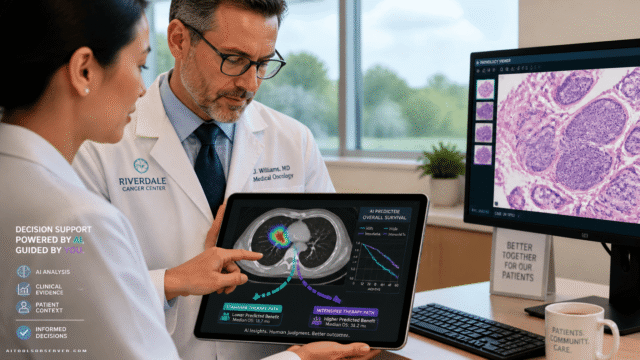
Healthcare AI works better when it supports expert judgment instead of pretending to replace it. Human review is not a temporary patch. In many cases, it is the right long-term design.
Validate before scaling
Clinical AI needs staged testing, real-world monitoring, and clear rollback paths. A pilot is not enough if no one is tracking whether outcomes or workflow quality actually improve.
Measure saved time and decision quality
Too many AI projects are sold with vague productivity claims. Better metrics include:
- time saved per visit or task
- documentation burden reduced
- search and retrieval speed
- earlier risk identification
- clinician satisfaction and adoption
If an AI tool cannot show practical value in those categories, it will struggle to justify itself.
The broader AI use case: less admin, better attention
The easiest way to misunderstand healthcare AI is to think the main goal is replacing doctors. The more realistic near-term goal is reducing low-value friction so clinicians can focus more on care.
That includes:
- turning disorganized records into usable summaries
- finding potential disease signals earlier
- highlighting risk patterns in complex data
- cutting documentation time
- making large systems easier to navigate
These are not small gains. In a healthcare environment, minutes matter, missed details matter, and attention matters.
Where this leaves AI buyers and healthcare leaders
If you are evaluating AI in healthcare, the Mayo Clinic example suggests a simple filter: ignore the loudest promises and watch where models are quietly producing workflow value under real oversight.
The most useful healthcare AI tools are often the ones that do one job clearly:
- summarize records
- assist with screening
- flag patterns
- document visits
- support earlier intervention
That is how adoption usually grows in high-trust environments. Not through grand claims, but through repeatable systems that save time, reduce risk, and earn clinician confidence one workflow at a time.
Practical takeaway
If you want to apply AI in healthcare or any high-stakes industry, start where information overload slows experts down. Pick a narrow use case, keep humans accountable, measure real workflow impact, and treat trust as part of the product.
That approach may look slower from the outside. It is usually how useful AI actually sticks.






Comments (0) No comments yet
Want to join this discussion? Login or Register.
No comments yet. Be the first to share your thoughts!