


From Distributor to Manufacturer
This isn’t a pivot born from desperation. RoboStore’s founder and CEO Teddy Haggerty says the shift had been in the works for about a year, driven by direct customer feedback on how robots were actually being deployed in the real world.
That ground-level experience revealed something important: most businesses don’t need a general-purpose humanoid robot. They need something purpose-built for a specific job.
"Companies like Standard Bots and Universal Robots have a robotic arm for specific use cases," Haggerty noted. "And I will tell anyone that that product is better suited for most businesses, for what they want to achieve, than a humanoid robot."
That insight is now the foundation of Robo Inc.’s product strategy.
The Regulatory Tailwind Nobody Saw Coming
The timing of this move isn’t accidental. US policy has been shifting fast against foreign-made robots.
In March, the American Security Robotics Act was introduced in the Senate. In June, the GUARD Act followed in the House. Then in July, the FCC banned imports of new models of foreign-made robots—including Unitree’s humanoid robots and robot dogs—citing cybersecurity vulnerabilities and national security concerns.
The practical effect: a growing gap in the market for US-compliant robotic products, particularly in regulated sectors like healthcare, education, and security.
RoboStore had already wound down its distribution business before the FCC ruling, while continuing to support existing customers with parts, repairs, and upgrades. The team’s focus had already shifted to development and manufacturing capacity.
What Robo Inc. Is Actually Building
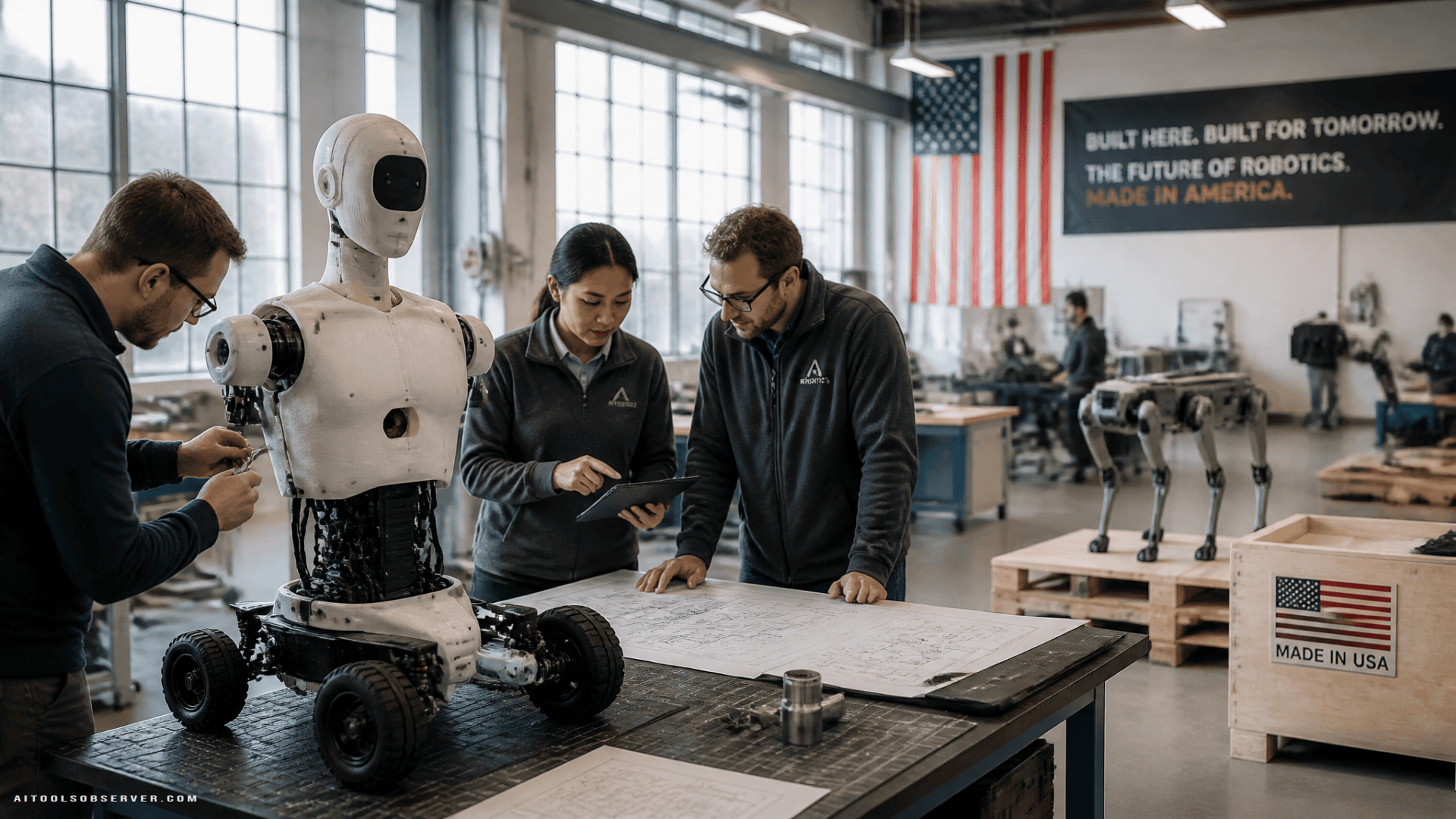
Robo Inc. is not chasing the humanoid hype cycle. The initial product lineup is deliberately sector-specific:
- Healthcare and concierge robot — A humanoid torso on a wheeled chassis, equipped with cameras and sensors to assist with standard patient vitals like temperature and blood oxygen levels.
- Security quadruped — A specialized four-legged robot designed for security applications.
- Education and research humanoid platform — Aimed directly at universities looking for US-compliant alternatives to now-restricted foreign models.
Engineers are already using 3D printing to build and test prototypes with select customers. Commercial production from the new dedicated facility is expected by early 2027.
The Road Ahead: Funding and Scale
Robo Inc. has operated as a bootstrapped business without outside investor money—until now. The company is preparing for its first significant funding round, and early signals from its existing customer base appear strong.
"We’ve reached out to all these customers, and we have an incredible interest now as we’re going through the process of raising money," Haggerty said.
That existing network—Cisco, OpenAI, Nvidia, 150+ universities—is a meaningful asset when approaching investors. It’s not a cold pitch. It’s a warm pipeline with documented deployment history.
Scaling manufacturing and commercialization will still be the hard part. Building prototypes with 3D printing is a long way from running a 66,000-square-foot production facility at volume.
Why This Matters for AI and Robotics Buyers
If you’re evaluating robotics solutions for healthcare, security, or education, the regulatory landscape has materially changed what’s available and what’s permissible. Foreign-made options that were on the table six months ago may no longer be viable for new deployments.
Robo Inc. is positioning itself to fill that gap with purpose-built, US-manufactured robots—not a one-size-fits-all humanoid. Whether they can execute on that promise by 2027 is the question worth watching.
The smarter move right now: track which vendors are building US-compliant products, and factor regulatory risk into any robotics procurement decision you’re making today.



Comments (0) No comments yet
Want to join this discussion? Login or Register.
No comments yet. Be the first to share your thoughts!