


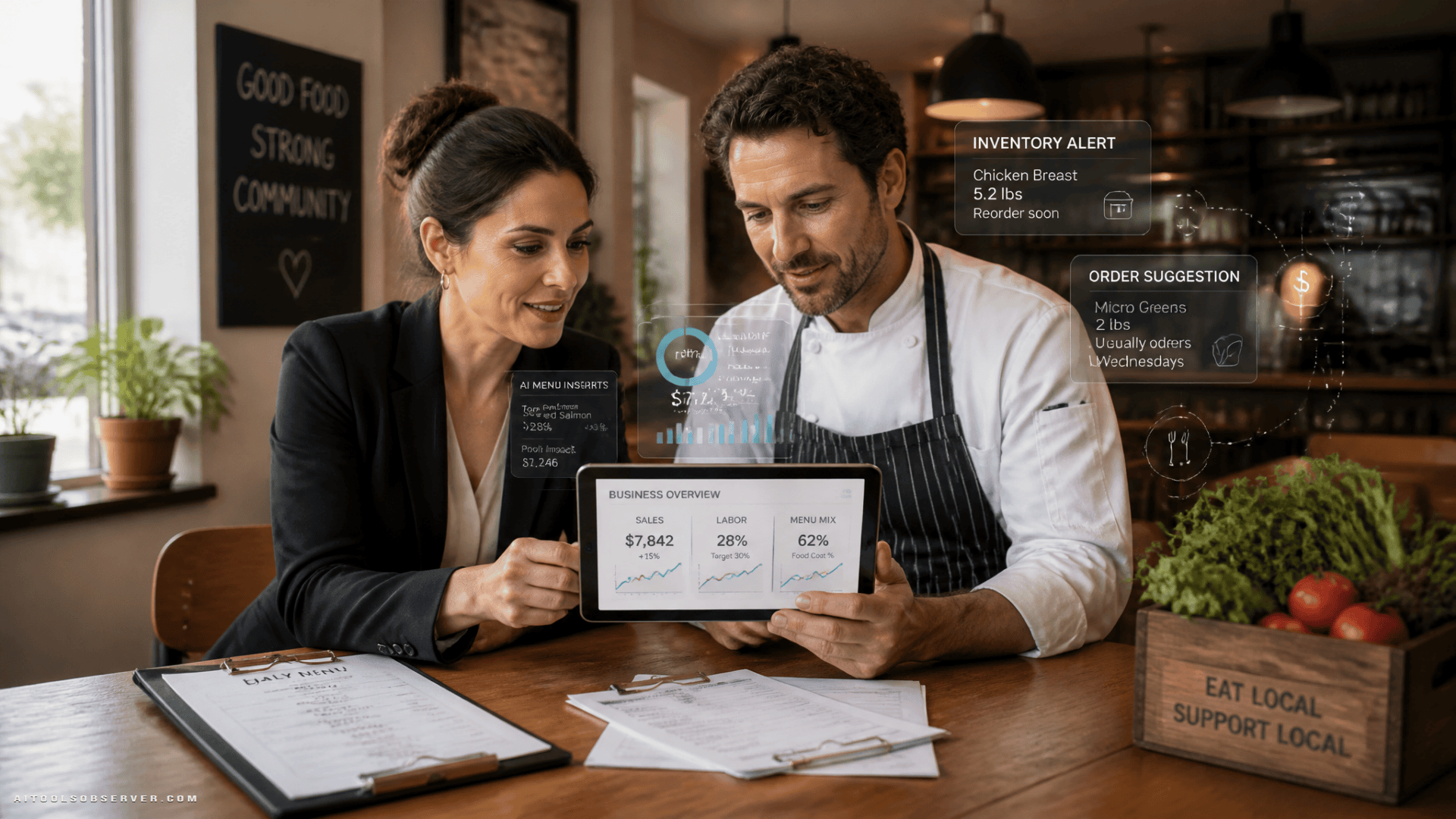
1. Audit Your Tech Stack Before You Buy Anything New
Most independent operators are paying for features they never use. Before you add another subscription, call your existing POS, reservation platform, and marketing tools directly and ask what AI capabilities are already built in.
You might be sitting on tools you’ve already paid for. That’s free ROI with zero new spend.
2. Treat Tech Strategy as Data Strategy
AI is only as good as the data you feed it. If your job titles aren’t standardized across locations — “busser” at one spot, “runner” at another — your labor analytics become incomparable and useless.
Start with data hygiene basics: consistent job titles, standardized inventory naming, and uniform menu item labels. This isn’t glamorous work, but it’s the foundation everything else depends on.
3. Run Pilot Programs Before Full Rollouts
Resistance to new technology is almost always a change management problem, not a technology problem. Start with one location or one team member when testing something new.
When your staff sees that a tool makes their job easier rather than threatening it, resistance drops fast. Some will start asking to be included. That’s when adoption becomes self-sustaining.
4. Accept That No Single Platform Does Everything
POS systems, inventory management, HR and payroll, reservations, accounting — each of these has deeply specialized needs. No single platform handles all of them well.
Build your stack with the best tools for your segment and growth stage, then connect them through integrations. The goal is a coherent system, not a single vendor.
5. Get the Six Foundational Systems Right First
Before layering in AI, make sure these six systems are in place and accurate:
- Point-of-sale
- Reservations platform
- HRIS and payroll
- Accounting software
- Inventory management
- Labor scheduling
Any AI tool you adopt needs to connect to at least one of these. If your foundational data is messy, AI won’t fix it — it will amplify the mess.
6. Don’t Let AI Accelerate Broken Workflows
This is one of the most underappreciated risks in restaurant tech adoption. AI amplifies what already exists. If your workflows are broken, AI will make them break faster and at greater scale.
Before adopting any AI tool, ask yourself: “Do I have a strong enough foundation for this tool to actually work?” If the answer is no, fix the foundation first.
7. Build a Master Brief to Train AI on Your Business
One of the most practical moves any independent operator can make is creating a business profile document — a “master brief” — that captures your culinary philosophy, sourcing standards, target audience, financial constraints, and goals.
Load this into your AI tool and organize it into project folders: SOPs, marketing, financial planning. Every time you open a new conversation, the brief gives the AI context so its outputs are relevant to your business, not a generic restaurant.
8. Turn Payroll and Sales Reports Into a Weekly Financial System
Instead of reviewing reports line by line every week, upload your payroll summaries with clear instructions to check against your defined benchmarks and flag anything abnormal.
One operator described doing this weekly with a specific checklist — including tip model details and business-specific targets — to catch errors before they hit the bottom line. This turns a tedious manual task into a fast, consistent financial review.
10. Use AI as a Brainstorming Partner for High-Stakes Decisions
Not every independent owner has a board or a business advisor. AI can fill some of that gap — not as a source of definitive answers, but as a thinking partner that surfaces questions you might not have considered.
One operator described using AI during a lease negotiation: entering the situation, sharing the other party’s position, and comparing the risks AI identified against the ones he already saw. That kind of structured second opinion can surface blind spots before they become expensive mistakes.
A Few Honest Caveats
AI makes mistakes. It tends to fill in gaps it doesn’t know with confident-sounding errors — which is especially risky in finance and legal contexts. Always cross-reference AI outputs before acting on them in high-stakes decisions.
The goal of AI in restaurants isn’t fewer people. Every operator who’s gotten this right says the same thing: AI handles the administrative burden so staff can focus on hospitality. The human element doesn’t become less important as AI absorbs more operational work — it becomes the differentiator.
The Real Takeaway
The gap between restaurants thriving with AI and those struggling with it isn’t about which tools they’re using. It’s about whether they built a clean foundation first, implemented deliberately, and kept humans at the center of the operation.
Start with an audit. Fix your data. Pick tools that connect to systems you already have. Then let AI do what it’s actually good at: turning your existing information into faster, sharper decisions.







Comments (0) No comments yet
Want to join this discussion? Login or Register.
No comments yet. Be the first to share your thoughts!