


The Gap Between What You Pay and What You Actually Cost

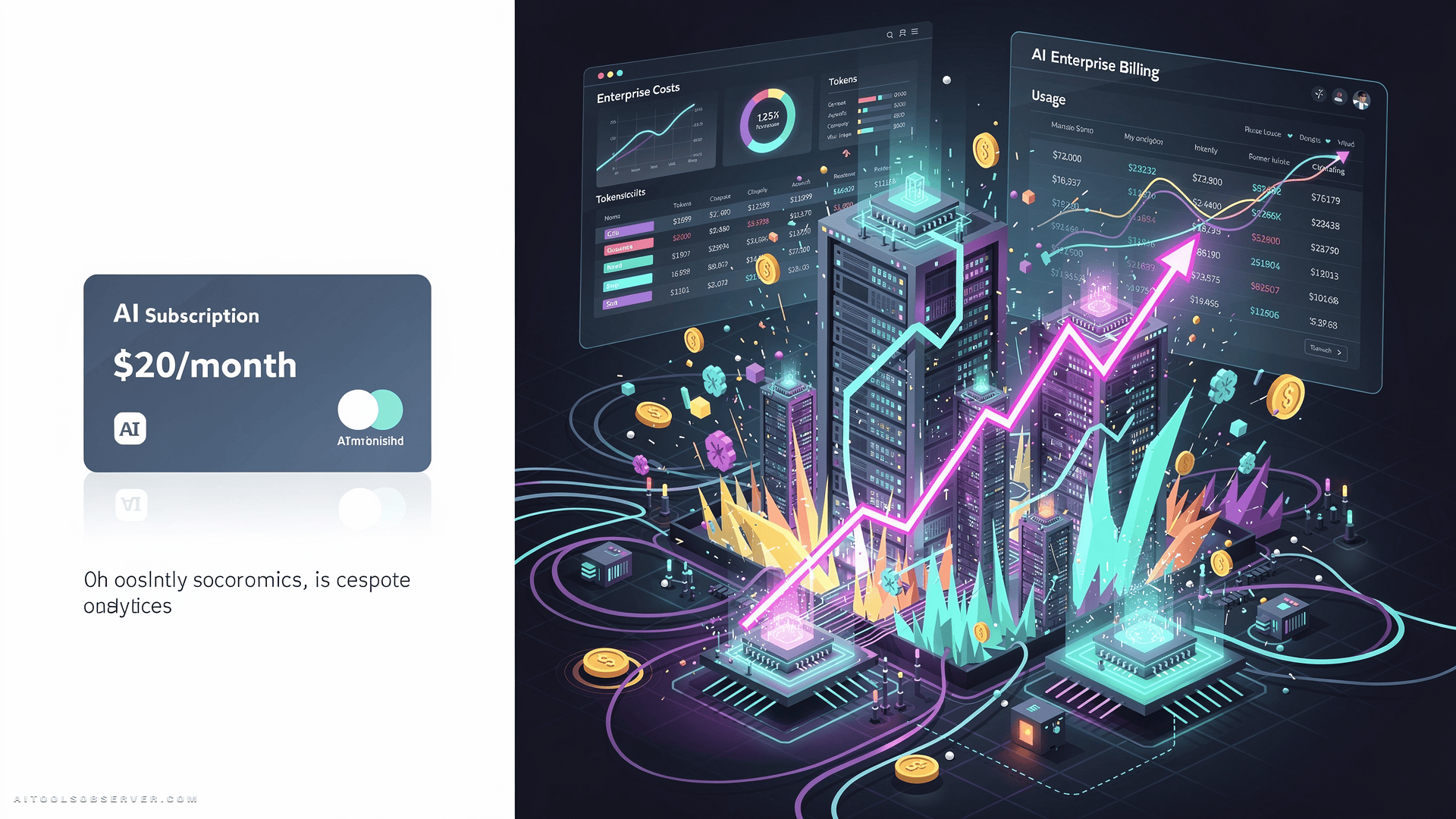
Here’s the uncomfortable math. A $200 ChatGPT Pro subscription — if fully utilized at API rates — could cost OpenAI up to $14,000 to serve. Anthropic’s Claude Max 20x plan, also $200 per month, carries a comparable ceiling of roughly $8,000 in token costs.
These aren’t edge cases. They’re the theoretical maximums for plans that are actively marketed to power users.
SemiAnalysis reached these figures by running long-horizon coding and agentic tasks until weekly limits were exhausted — exactly the kind of work these plans are designed to support. The gap between subscription revenue and compute cost isn’t a rounding error. It’s an order of magnitude.
The Utilization Cliff
The real danger zone isn’t maximum usage. It’s the surprisingly low threshold where subscriptions turn unprofitable.
OpenAI starts losing money on ChatGPT Plus and Pro 5x once utilization climbs above 11.4%. At the high end — ChatGPT Pro 20x — that break-even point drops to just 5.7%. Anthropic fares slightly better on its mid-tier plans, breaking even at around 20% utilization on Claude Pro and Max 5x, but hits zero gross margin at roughly 10% on its top-tier offerings.
Put simply: you don’t need to be a power user to become a problem. You just need to show up consistently.
Why This Is Getting Worse, Not Better

Token consumption is accelerating. Agentic workflows — where AI systems autonomously chain tasks, browse, write code, and loop back on themselves — can consume up to 1,000 times more tokens than a standard prompt. That’s not a typo.
As more companies deploy AI agents for real work, the average cost-per-user climbs fast. The subscription model was calibrated for chatbot-style interactions. It wasn’t built for autonomous systems running all day.
The enterprise world is already feeling it. Microsoft, Meta, and Amazon have reportedly pulled back from internal programs that encouraged unrestricted AI use after costs escalated. One company reportedly burned through $500 million in a single month using Claude — largely because no one thought to set limits on employee access.
That’s not a usage problem. That’s a governance problem with a very expensive invoice.
How Smart Companies Are Responding
The market is adapting faster than the pricing models. Three strategies are gaining traction:
Route by complexity
Not every task needs a frontier model. Routing complex queries to expensive models while handling routine work with cheaper alternatives can cut costs by up to 95%, according to a Wall Street Journal report. Columbia University vice dean Vishal Misra framed it cleanly:
You don’t need a model that knows quantum gravity.
Switch providers entirely
Lindy, an AI assistant startup, moved 100% of its traffic to DeepSeek V4 — away from Anthropic’s models entirely. The reason was straightforward: comparable output at a fraction of the cost. The result, according to CEO Flo Crivello, was millions of dollars saved.
Build on open source
Some organizations are going further, training custom models on internal data using open-source foundations. The upfront investment is real, but so is the cost control. For specific use cases, these tailored systems can outperform general-purpose frontier models — at a permanently lower operating cost.
What Providers Are Doing About It
Adjusting pricing or restricting access isn’t a clean fix. Subscriptions drove adoption. Pulling back risks slowing momentum in a market where capability is still the primary competitive signal.
OpenAI CEO Sam Altman has acknowledged the tension publicly, noting that rising token costs are a serious issue and that the company is working to help users “get more value for less spend.” That’s a careful way of saying: we’re trying to make this work without raising prices or cutting features.
There is a longer-term path. SemiAnalysis suggests that mid-tier models — around the Opus 4.8 capability level — could eventually be delivered profitably for around $20 per month as infrastructure scales and newer, more efficient models replace older ones. That’s a reasonable horizon.
Frontier models are a different story. The most advanced systems, including those still in development, may increasingly move away from flat subscriptions entirely — priced via API, consumed by usage, and reserved for workloads that genuinely justify the cost.
The Takeaway
Flat-fee AI subscriptions made adoption frictionless. That was the point. But friction-free access to compute-intensive systems creates a structural problem that doesn’t disappear just because users love the product.
The companies navigating this well aren’t waiting for providers to solve it. They’re routing smarter, switching where it makes sense, and treating AI spend like any other infrastructure cost — with budgets, limits, and deliberate tradeoffs.
The era of “just use it as much as you want for $20 a month” is quietly ending. What replaces it will be more nuanced, more usage-aware, and probably more honest about what powerful AI actually costs to run.
Observe the pricing. Choose accordingly.











Comments (0) No comments yet
Want to join this discussion? Login or Register.
No comments yet. Be the first to share your thoughts!