



The Problem With Most “Free Tool” Lists
They dump 50 names on you with zero context. You end up with 12 browser tabs, three half-finished signups, and the same blank Google Doc you started with.
This post is different. Every tool here earns its place by solving a specific marketing job. We’ll show you how they connect, where they overlap, and which ones to reach for first.
What a Lean AI Marketing Stack Actually Needs

Before the tools, a quick framework. A functional startup marketing stack covers five core jobs:
- Strategy & planning — figuring out who you’re talking to and why
- Content creation — writing, video, visuals, and blogs
- SEO & discoverability — getting found without paying for every click
- Engagement & distribution — reaching people where they already are
- Discovery & optimization — finding better tools as your needs evolve
Every tool below maps to one of these. Pick your weakest layer and start there.
Layer 1: Strategy & Planning

This is where most founders skip ahead too fast. AI can help you slow down just enough to think clearly — then speed back up.
FounderPal
Built specifically for founders who need to move from “idea” to “marketing plan” without hiring a strategist. It helps you define your audience, sharpen your positioning, and generate actionable marketing directions in minutes. Think of it as a strategy session that doesn’t bill by the hour.
AI Business Plan Builder
When you need structure fast — investor decks, internal planning, or just getting your thinking out of your head — this tool generates organized business plans from your inputs. It won’t replace a CFO, but it’ll get you 80% of the way there before breakfast.
Ideate AI
Startup ideas are cheap. Validated ones aren’t. Ideate AI helps you stress-test concepts, explore monetization angles, and spot gaps before you build the wrong thing. Useful at the “should we even do this?” stage.
Mentor AI
Less tool, more thinking partner. Mentor AI creates step-by-step goal plans tailored to your situation. For founders juggling twelve priorities, having something that says “here’s what to do next” is genuinely underrated.
Krafter AI
Go-to-market planning is where good products go to die quietly. Krafter AI streamlines GTM planning and execution, helping you map channels, messaging, and launch sequences without a dedicated growth team.
Layer 2: Content Creation

Content is still the engine. AI just makes it faster to fuel.
The Content Company AI Tool
A generalist content generator that produces engaging copy quickly. Good for founders who need to keep multiple content surfaces alive — landing pages, social posts, product descriptions — without a full content team behind them.
AI Blog Writer
Thirty seconds to a full SEO blog post sounds like a punchline. It’s not. This tool is built for volume and speed, ideal when you need to maintain publishing cadence without burning out your one-person marketing operation.
Auto AI Blog
Takes it a step further by automating the entire blogging workflow — from keyword input to published post. It also includes built-in monetization hooks, which makes it interesting for content-led startups looking to turn traffic into revenue.
BlogBuster
Focused specifically on SEO-driven blog creation with consistent output. If organic traffic is your primary acquisition channel, BlogBuster helps you stay in the game without writing every word yourself.
Bookcraft
Long-form content like ebooks and lead magnets take forever to produce manually. Bookcraft uses AI to generate professional ebooks faster, making it a solid tool for lead generation campaigns that need a content upgrade.
Purpose AI
Designed for startups, nonprofits, and professionals who need clean, purposeful writing without the bloat. It’s particularly useful when your brand voice needs to stay tight and human — not like it was written by a robot having a good day.
Layer 3: Copywriting & Messaging

Good copy is the difference between a landing page that converts and one that just exists.
Copyfast.AI
Creates on-brand SEO content efficiently. The emphasis on brand consistency makes it more useful than generic copy generators — you’re not just getting words, you’re getting words that sound like you.
AI Product Marketing (Product Descriptions at Scale)
When you have a catalog of products or features that all need clear, compelling descriptions, doing it manually is a trap. This tool generates fast product descriptions at scale, which is particularly valuable for e-commerce founders or SaaS teams launching multiple features simultaneously.
AI Sentence Generator
Sometimes you don’t need a full article. You need one perfect sentence for an ad, a subject line, or a CTA. This tool crafts tailored sentences for marketing use — small output, high leverage.
Easy Comment Generator
Engagement on social platforms is partly a volume game. This tool creates interesting, contextually relevant comments to boost engagement across posts. Useful for community-building phases when you need presence without constant manual effort.
Layer 4: SEO & Discoverability

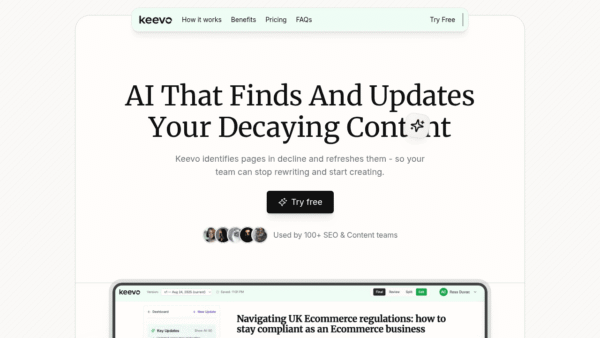
You can write the best content in your niche and still get zero traffic. SEO tools close that gap.
SEOPro AI
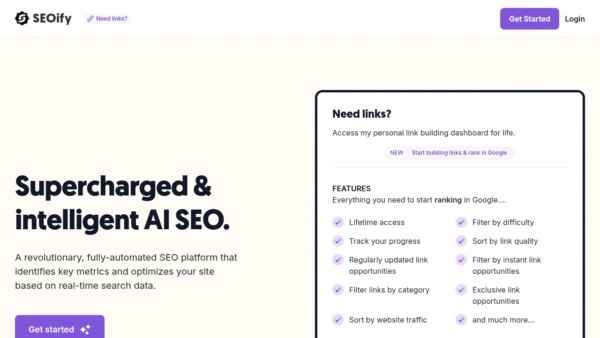
Automates content creation and optimizes visibility across search. It handles the keyword research, structure, and optimization signals that most founders know they should be doing but rarely have time for. A strong anchor for any content-led growth strategy.
Marketing Frameworks
Generates tailored marketing insights and content frameworks based on your context. Less about raw output, more about giving your strategy a backbone that search engines and readers both appreciate.
Layer 5: Video & Visual Content

Text alone doesn’t cut it anymore. These tools handle the formats that used to require a production budget.
Pippit AI
Automates video creation to speed up marketing content production. For founders who know video works but don’t have time to script, shoot, and edit — Pippit handles the heavy lifting so you can stay focused on the message.
Infographic AI Generator
Turns long-form text into visual infographics automatically. Useful for repurposing existing content into shareable formats — a single blog post can become five different visual assets with minimal effort.
Layer 6: Engagement & Distribution

Creating content is half the job. Getting it in front of people is the other half.
Followr.ai
Simplifies content creation, scheduling, and analytics in one place. For founders managing social media without a dedicated team, having scheduling and performance data in the same tool removes a lot of unnecessary friction.
Super Comments
Lets you generate and schedule AI-powered posts and comments. Useful for maintaining consistent presence across platforms during busy launch periods when manual posting isn’t realistic.
Head AI
Automates influencer, affiliate, and email marketing campaigns. For startups ready to move beyond organic-only growth, Head AI provides automation across channels that typically require dedicated tools for each.
Email.AI
Creates professional emails quickly with AI assistance. Whether it’s cold outreach, nurture sequences, or product announcements — clean, fast email copy is always in demand.
Layer 7: Tool Discovery & Stack Optimization

Meta, yes. But genuinely useful. The best stack is the one you actually know how to use.
Show Me Best AI
Helps users discover and compare over 2,200 AI tools. When your needs evolve and you’re not sure what to reach for next, this is a solid starting point for exploration without the noise.
MyPerfectAI
Recommends task-specific AI tools for professionals. Instead of browsing directories, you describe what you’re trying to do and get targeted suggestions. Faster than guessing.
ToolForThat
Helps users find the perfect tools to boost productivity. Similar to MyPerfectAI but with a broader scope — useful when you’re building out a stack across multiple functions.
Findtool
Uses AI to recommend the best tools for any task instantly. The speed here is the differentiator — quick recommendations without deep research sessions.
MindPal Tools
Supercharges your AI agents with expanded capabilities. For founders who’ve moved past basic tools and want to build more sophisticated automated workflows, MindPal adds meaningful depth.
How to Actually Build Your Stack

Don’t install all 21 tools this week. That’s how you end up with 21 tools you barely use.
Instead, follow this sequence:
Week 1 — Foundation: Pick one strategy tool (FounderPal or Krafter AI) and one content tool (AI Blog Writer or The Content Company). Get comfortable with the output quality.
Week 2 — SEO layer: Add SEOPro AI. Start connecting your content output to search intent.
Week 3 — Distribution: Add Followr.ai or Head AI depending on whether social or email is your primary channel.
Week 4 — Optimize: Use MyPerfectAI or Findtool to identify gaps in your current stack. Fill one, not five.
This isn’t a sprint to collect tools. It’s a deliberate build toward a system that runs without you micromanaging every piece.
The Honest Trade-off
Free tools have ceilings. You’ll hit output limits, notice quality inconsistencies, or find that a tool works brilliantly for one use case and awkwardly for another.
That’s fine. The goal at the early stage isn’t perfection — it’s momentum. These tools give you enough to test, learn, and iterate without burning cash on agency retainers or enterprise software subscriptions you’ll outgrow in six months anyway.
One Last Thing
The best AI marketing stack isn’t the one with the most tools. It’s the one that removes the most friction between your idea and your audience.
Start small. Stay consistent. Let the tools do the repetitive work so you can focus on the thinking that actually moves the needle.
That’s the whole game.












Comments (0) No comments yet
Want to join this discussion? Login or Register.
No comments yet. Be the first to share your thoughts!