



The real divide is not age. It’s task exposure.
The research frames AI risk around what a job actually consists of, not whether the worker is older, younger, technical, or nontechnical.
If a role includes tasks that AI can increasingly perform, assist, or speed up, it has higher exposure. If the work is physical, hands-on, or highly situational in ways software struggles with, exposure tends to be lower.
Based on the available context, higher-exposure roles include jobs like:
- Web and digital interface design
- Web development
- Database architecture
- Programming
- Data science
Lower-exposure roles include jobs like:
- Mining and excavating work
- Orderly roles
- Painting and spraying work
- Fiberglass fabrication
That list can feel backwards at first. The better-paid, college-heavy jobs often look safer on paper. But AI does not care about salary prestige. It cares about repeatable cognitive tasks.
Why some older workers are leaving sooner
The research points to three main paths.
First, AI can directly replace or reduce parts of a role. If enough of the job gets automated, some workers end up unemployed or leave the labor force altogether.
Second, the pressure to adapt can become its own exit ramp. If a worker does not want to retrain around new tools, a different role—or retirement—may start to look cleaner.
Third, AI can also extend careers. If tools remove drudge work, raise productivity, and let people spend more time on the parts of work they actually like, staying employed becomes more plausible.
So the question is not “Will AI hurt older workers?” It’s closer to: “Which older workers, in which roles, under what management, with which tools?”
The uncomfortable twist: some high earners may be more exposed
One of the more interesting implications is that older workers with higher AI exposure tend to be more educated and higher earning.
That cuts against the lazy assumption that automation mostly threatens lower-wage work. In this case, some well-paid knowledge jobs may face more disruption because their tasks are easier to digitize, structure, and assist with generative AI.
There’s also a policy wrinkle here. If future retirement or Social Security changes push people to work longer, those pressures may land hardest on workers whose jobs are also becoming easier to automate.
Put bluntly: the people who may need to stay employed longer are not guaranteed a stable runway.
Not all experience is vulnerable
This is where the story gets more useful.
Separate findings in the broader discussion suggest experienced professionals are often in roles that rely more on judgment, leadership, collaboration, and problem-solving. Those are not magical AI-proof shields, but they are more durable than routine output alone.
That distinction matters. AI tends to slot into work more easily when the work is:
- Structured
- Text-heavy
- Repetitive
- Easy to benchmark
- Easy to break into standard steps
Humans keep an edge when the work is:
- Ambiguous
- Political
- Relationship-driven
- Cross-functional
- High-stakes
- Dependent on context and judgment
A senior employee who mainly produces standard reports may be more exposed than a senior employee who aligns teams, handles clients, mentors staff, and makes calls in messy situations.
Experience still matters. But it matters most when it shows up as leverage, not just tenure.
Where AI tools actually help older workers
This is the part that gets lost in the panic.
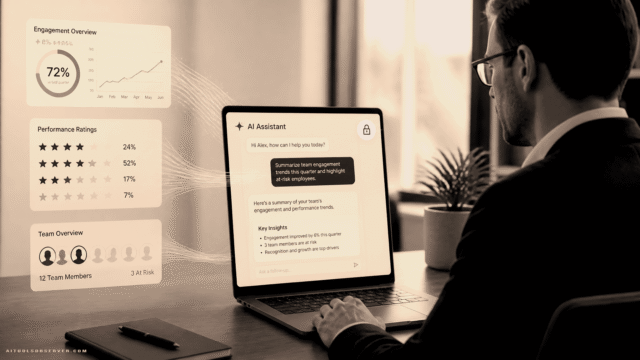
For many older professionals, AI is less “replacement machine” and more “friction remover.” The tools are often most useful when they shave time off low-value tasks and free up energy for the parts of work where experience counts.
Common areas where AI can help include:
- Drafting and refining emails
- Summarizing documents or meetings
- Scheduling and administrative support
- Writing first-pass reports or outlines
- Basic data analysis
- Research organization
- Job search materials like resumes and cover letters
Used well, these tools can reduce the annoying tax on modern knowledge work. That matters for any worker, but especially for someone trying to stay productive without spending extra hours wrestling with inboxes, formatting, or blank-page syndrome.
The gain is not just speed. It’s stamina.
The trap: using AI only for the easy stuff
There’s nothing wrong with starting with email drafts and summaries. That’s sensible. But staying there forever is like buying a power drill to use as a paperweight.
Workers who get the most value usually move from basic assistance to workflow redesign. They ask:
- Which parts of my week are repetitive?
- Which tasks slow me down but do not really need my judgment?
- Where can a tool create a first draft, checklist, summary, or analysis that I then improve?
That shift matters because AI literacy is becoming less about prompt tricks and more about work design.
The winning move is not “become an AI expert.” It’s “know where AI fits in your actual job.”
A practical playbook for workers 55+
If you’re in a higher-exposure role, denial is expensive. So is overreacting. A better approach is small, boring, steady adaptation.
1. Learn the tools already inside your workplace
Start with what your employer already uses or approves. That lowers risk, speeds adoption, and makes the learning immediately relevant.
If your company has an AI assistant for writing, search, meeting notes, or internal knowledge, use that first. Familiar context beats random experimentation.
2. Audit your job by tasks, not title
Your title tells you very little. Your task mix tells you a lot.
Split your work into three buckets:
- Tasks AI can probably assist with now
- Tasks AI may support but should not own
- Tasks where human judgment is central
That gives you a clearer map of where to adopt tools and where to emphasize your human value.
3. Double down on the hard-to-clone skills
This is the unsexy advice that keeps winning.
Communication. Judgment. Relationship-building. Leadership. Problem-solving. Coaching. Calm under ambiguity.
These are not “soft” in the sense of optional. They are often the reason experienced workers remain useful even as workflows change.
4. Show adaptation, not just experience
Employers generally like experience. They like adaptable experience more.
That means being able to say, in plain English, how you’ve used new tools to improve work quality, speed, collaboration, or output. “I’ve been doing this for 25 years” is nice. “I improved this process using AI while reducing manual review time” is better.
5. Don’t confuse discomfort with inability
Many workers hesitate because AI tools feel awkward, overhyped, or vaguely annoying. Fair. But awkward at first does not mean unusable.
A lot of effective AI use is ordinary: draft this, summarize that, compare these, extract themes, clean up the language. You do not need to become a chatbot whisperer.
What employers should notice
If older workers in exposed occupations are more likely to leave, that is not just a worker problem. It may also be a management problem.
Rolling out AI without training, context, or workflow support can push experienced people out faster than necessary. That is a bad trade if those workers carry operational knowledge, client trust, and institutional memory.
The better approach is simple:
- Train on real workflows, not generic demos
- Tie tools to actual job tasks
- Reward thoughtful adoption, not performative enthusiasm
- Preserve roles where judgment and mentoring create value
Companies that treat AI as a cost-cutting shortcut may lose people they cannot easily replace.
The bottom line
Older workers are not universally safer from AI, and they are not universally doomed by it either. The key variable is how much of the job consists of tasks AI can absorb versus value only a seasoned human can deliver.
If your work is heavy on repeatable digital output, pay attention. If your work is heavy on judgment, relationships, and messy decision-making, you likely have more room—but you still need tool fluency.
The useful move is not panic or posturing. It’s this: let AI handle more of the routine, and make your experience show up where machines are still clumsy.













Comments (0) No comments yet
Want to join this discussion? Login or Register.
No comments yet. Be the first to share your thoughts!