


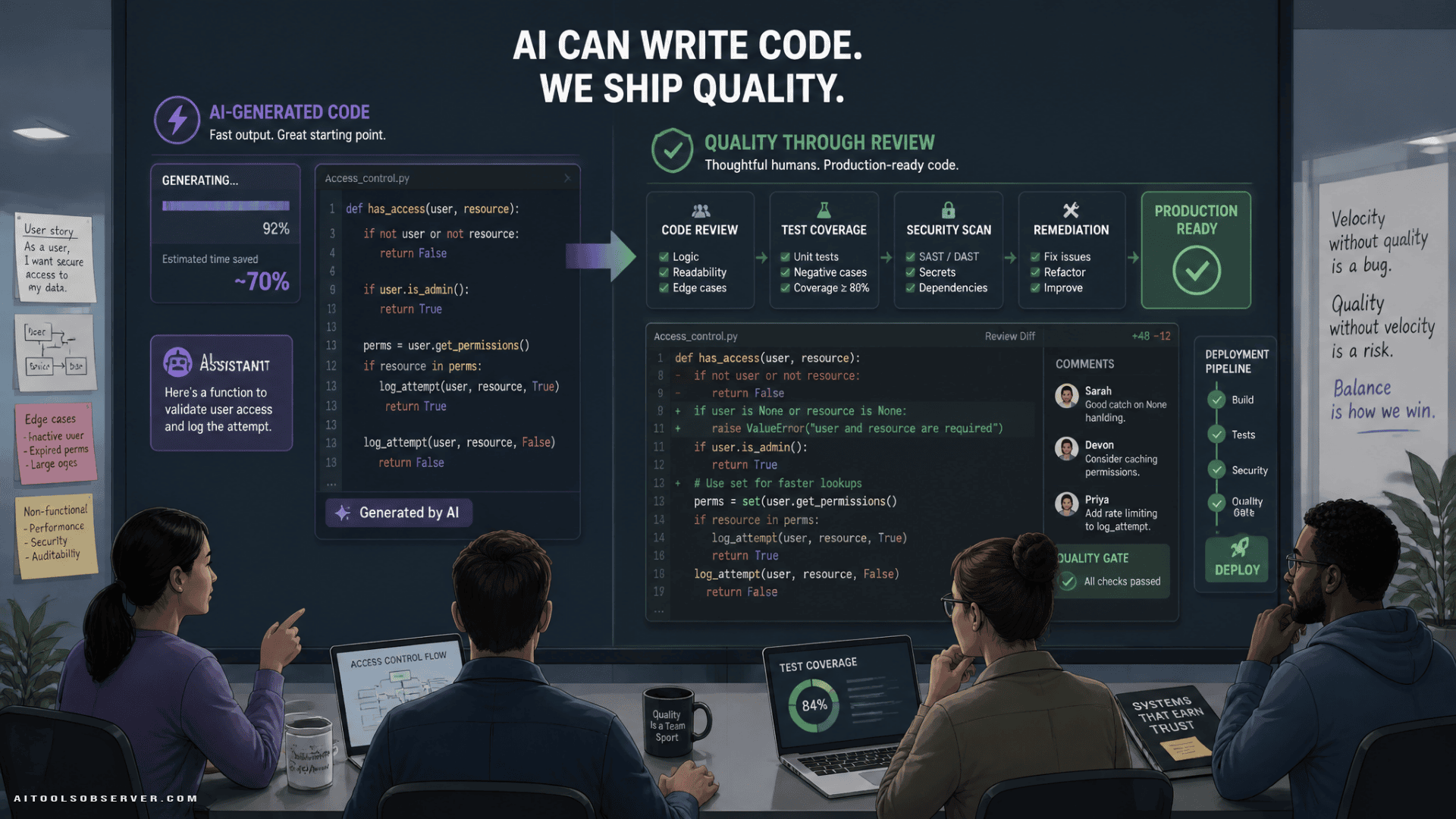
Fast Code Is Not the Same as Good Code
Qodo’s 2026 survey, conducted by Gatepoint Research across financial services, healthcare, technology, and telecommunications, surfaces a gap that many engineering teams already feel but rarely quantify. AI-generated code is fast. It is also, frequently, not production-ready without meaningful human review and remediation.
That remediation cost is invisible in most productivity metrics. Teams measure how quickly code gets written. They measure less often how long it takes to fix what the AI got confidently wrong.
This is the structural problem Qodo is positioning against.
The Hallucination Tax Is Real and It’s Being Paid Manually
Futurum Group’s 1H 2026 Decision Maker Survey puts a number on the broader anxiety: 55.4% of organizations cite AI agent reliability and hallucination management in production as their primary GenAI challenge. Separately, 50.4% are already actively monitoring accuracy and hallucination rates in production environments.
So engineering teams are not ignoring the problem. They are absorbing it — manually, expensively, and at increasing scale.
That is not a sustainable workflow. It is a market gap wearing a hard hat.
Software Engineering Is Now a Strategic GenAI Battleground
This matters beyond individual developer productivity. Futurum data shows 46.8% of enterprises identify software engineering — code generation, debugging, development assistance — as a top GenAI use case. Another 39.6% plan agentic AI deployment specifically in product R&D and software engineering within 18 months.
Agentic workflows are the critical variable here. As autonomous coding reduces human review checkpoints, the tolerance for unreliable output shrinks proportionally. A quality layer that catches problems before they reach production stops being a nice-to-have and starts being load-bearing infrastructure.
Qodo’s framing around “code integrity” rather than “code assistance” is a deliberate positioning move. Assistance is table stakes. Integrity is the enterprise procurement conversation.
The Market Context Makes This Timing Deliberate
The AI platforms market more than doubled from $53.5B in 2024 to $109.9B in 2025, with forecasts pointing toward $181.3B in 2026. That trajectory reflects genuine enterprise commitment — budget lines, procurement cycles, and organizational dependencies, not pilot enthusiasm.
At that scale, the competitive question shifts. It is no longer whether teams adopt AI coding tools. It is which tools earn a permanent place in the production stack. Permanence requires trust. Trust requires measurable quality.
Notably, 55.1% of organizations measure AI success by productivity improvements. Any quality tooling that slows teams down will lose the argument regardless of how good its integrity checks are. Speed and reliability have to coexist — which is precisely the tightrope Qodo is walking.
What to Watch
A few signals worth tracking as this space develops:
- Budgeting behavior. Whether organizations start treating AI code quality as a distinct line item, separate from AI coding assistants, will signal how seriously the integrity problem is being taken at the CFO level.
- Agentic acceleration. With 39.6% of organizations targeting agentic deployment in software engineering within 18 months, demand for automated quality guardrails could move faster than most vendors are prepared for.
- Platform consolidation pressure. If major AI platform vendors embed code integrity features natively, standalone quality-layer providers face a classic build-vs-buy squeeze from above.
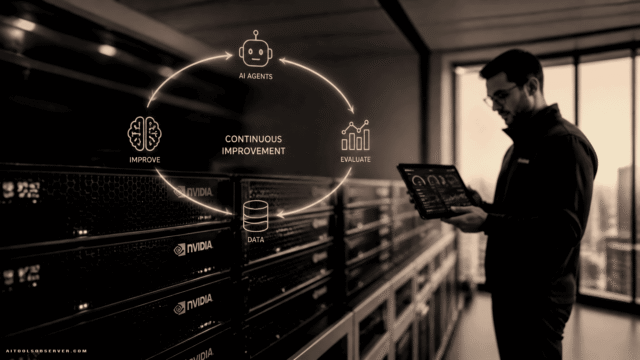
- Remediation automation. Right now, most production monitoring tracks accuracy and hallucination rates. The next evolution is automated remediation — catching and fixing, not just flagging.
The Useful Takeaway
The adoption story for AI coding tools is effectively over. The trust story is just beginning.
Engineering teams that treat AI-generated code as draft output — requiring structured review, quality gates, and integrity checks — are already ahead of the curve. The ones treating it as finished output are quietly accumulating technical debt at machine speed.
Qodo’s research doesn’t just validate a product category. It names a problem that most engineering organizations are solving with human labor they can’t scale. That’s the gap worth watching.











Comments (0) No comments yet
Want to join this discussion? Login or Register.
No comments yet. Be the first to share your thoughts!