


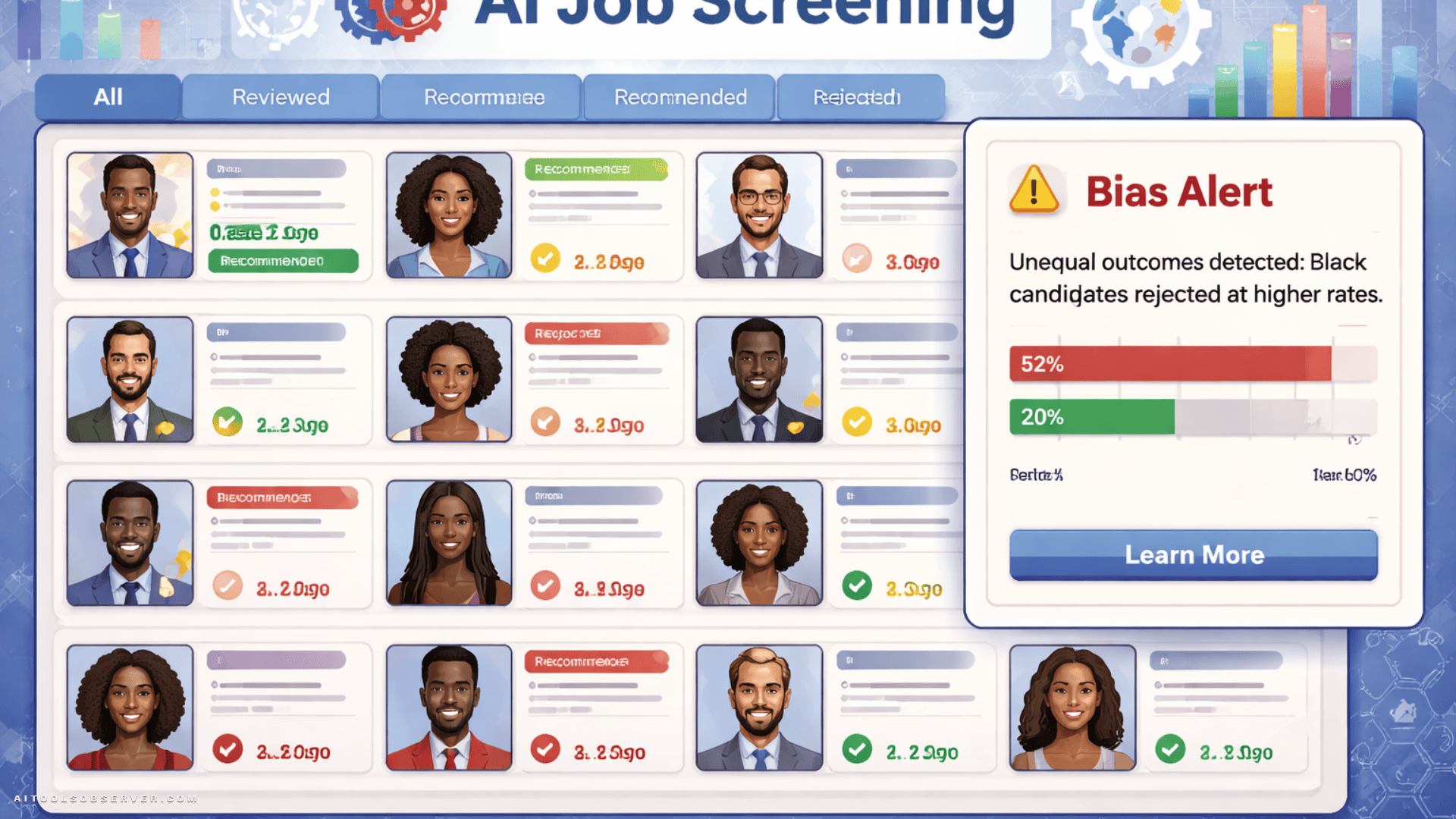
The Scale of the Problem Is Staggering

Ninety percent of U.S. employers now use AI screening tools to filter applicants before a human ever sees a resume. Most of them rely on the same small group of third-party vendors.
That concentration of power is the first red flag.
When a handful of systems control access to millions of jobs, a single flaw in one algorithm doesn’t just affect one company. It ripples across the entire hiring ecosystem — and for Black job seekers, that ripple becomes a wall.
What the Data Actually Shows
The study found that 26% of Black applicants submitted applications to positions where the AI discriminated against their racial group.
The researchers ran a direct comparison: if the AI had recommended Black candidates at the same rate as the most-favored group — typically white applicants — 40,000 more applications would have advanced to the next stage.
That’s not a rounding error. That’s a structural failure.
How the Bias Hides in Plain Sight
Here’s what makes this particularly dangerous: the discrimination is designed to be invisible.
Vendors can point to aggregate statistics that look perfectly acceptable. Averaged across all roles, the numbers appear neutral. But zoom in, and the picture changes completely.
A system might recommend Black candidates at reasonable rates for warehouse positions while quietly filtering them out of finance or management roles. The overall average masks what’s actually happening job by job, position by position.
This is how algorithmic bias survives scrutiny. It doesn’t show up in the headline number. It hides in the details that most employers never think to audit.
The Compounding Effect No One Is Talking About

One rejection is painful. But this study reveals something far more damaging: the bias compounds.
Because so many employers share the same vendor, a Black applicant rejected by one company’s AI faces the same algorithm at the next company, and the one after that. The system has already made up its mind.
The research found that applicants submitting to multiple positions screened by the same vendor are more likely to receive rejections across the board than basic probability would predict. For someone submitting four applications, there’s a one-in-ten chance of receiving nothing but rejections — not because of their qualifications, but because one algorithm flagged them early and that judgment followed them everywhere.
That’s not a hiring process. That’s a blacklist with better branding.
Three Qualities That Make This a Crisis
The researchers identified what makes AI screening tools uniquely dangerous in this context. These systems combine three qualities that rarely appear together:
Pervasive adoption. Nearly every major employer uses them, so there’s no easy way to opt out of the system.
High consequence. A rejection at this stage ends the opportunity entirely. There’s no appeal, no callback, no second look.
Opacity. Candidates don’t know they were screened by an algorithm. Employers often don’t know how the algorithm makes decisions. The public has almost no visibility into how these tools work or who they disadvantage.
That combination — everywhere, consequential, and invisible — is what turns a software flaw into a systemic civil rights issue.
What This Means for Anyone Making Hiring Decisions
If you’re using an AI hiring tool right now, you need to ask harder questions than your vendor is volunteering answers to.
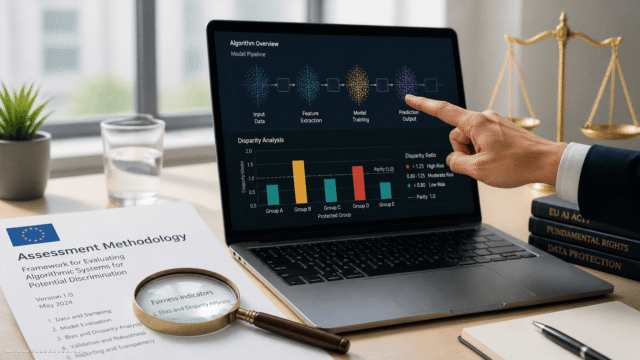
Aggregate pass rates are not enough. You need position-level data, broken down by race, to see where discrimination is actually occurring. You need to know whether your vendor has conducted independent audits — not internal reviews, but third-party assessments with published methodology.
And you need to understand that “our tool doesn’t use race as an input” is not the same as “our tool doesn’t produce racially discriminatory outcomes.” Proxy variables — zip code, school name, employment gaps — can encode racial bias without ever mentioning race directly.
The Bigger Picture
AI tools are being sold to HR teams as efficiency upgrades. And they are efficient — at processing volume, reducing time-to-hire, and cutting recruiter workload.
But efficiency isn’t the same as fairness. Speed isn’t the same as accuracy. And a system that processes millions of applications quickly while systematically disadvantaging Black candidates isn’t a solution. It’s discrimination at scale.
The researchers describe this as a problem embedded into the infrastructure of hiring itself. That framing matters. This isn’t about one bad actor or one biased recruiter. It’s about a set of tools that have been quietly woven into the foundation of how people access economic opportunity in America.
The Bottom Line
The data is clear. AI hiring tools, as currently deployed, are not neutral. They are not fair. And for Black job seekers, they represent an invisible barrier that compounds with every application submitted.
The fix isn’t to abandon AI in hiring. It’s to demand transparency, mandate position-level audits, and hold vendors accountable for outcomes — not just inputs.
Until that accountability exists, every employer using these tools should assume the problem applies to them. Because statistically, it probably does.







Comments (0) No comments yet
Want to join this discussion? Login or Register.
No comments yet. Be the first to share your thoughts!