



The Campus Hiring Fraud Problem Is More Organised Than You Think
Recruiters aren’t just dealing with the occasional candidate who Googles an answer. They’re up against coordinated, professional-grade cheating infrastructure.
According to reporting from TOI, companies are now encountering hidden wearable devices, proxy candidates, remote “ghost coders,” and what’s being called “interview-as-a-service” networks—organised groups on Discord and Telegram that candidates pay to clear hiring rounds on their behalf. This isn’t opportunistic cheating. It’s a service industry built around defeating your hiring process.
Vivek Ravisankar, co-founder and CEO of HackerRank, put a number on it: roughly 30–35% of sessions get flagged for at least one suspicious behaviour. The biggest culprit is AI-powered cheating apps.
The Four Fraud Vectors You Need to Know
HackerEarth identifies four dominant forms of malpractice in technical hiring right now:
- AI-generated code submissions — candidates submit AI-written code without understanding it
- Proxy candidates — hired through Telegram or Discord groups to sit the test entirely
- Off-camera assistance — a second person or device providing answers outside the webcam’s view
- Virtual machines and remote desktop software — used to hide a separate AI session from proctoring systems
What ties all four together is a single structural weakness: assessments that score only the final answer, not the process used to produce it. Static tests are easy to game when the output is all that matters.
AI-Powered Proctoring Is Becoming the Standard Response
The industry’s answer has been to deploy AI against AI.
Platforms like Talview, Mercer Mettl, HackerEarth, and HackerRank now offer proctoring systems that analyse webcam footage, audio feeds, screen activity, and behavioural signals in real time. The goal is to catch suspicious patterns as they happen, not after the fact.
The adoption numbers reflect urgency. HackerEarth’s 2025 Technical Hiring Landscape Report found that the share of companies using proctored technical assessments jumped from 64% at the start of 2025 to 77% by July. Nearly two-thirds of all technical hiring assessments conducted during the year were proctored.
That’s a significant shift in under a year.
The Most Effective Defence Isn’t Proctoring Alone
Here’s what’s interesting: the most effective countermeasure isn’t more sophisticated surveillance. It’s a short live follow-up interview.
As HackerEarth’s Aditya noted, candidates who relied on AI to generate their solutions typically fail within two questions when asked to explain their reasoning. The process reveals what the output conceals.
This is a useful signal for any team evaluating hiring tools. Proctoring catches suspicious behaviour. But process-based evaluation—asking candidates to walk through their thinking—exposes the gap between what was submitted and what was actually understood. The best hiring stacks will combine both.
BPM 3.0: From Outsourcing to Outcome Ownership
Zoom out from hiring, and you see a larger transformation underway in India’s tech services industry.
A recent Economic Times x Nasscom podcast brought together industry veterans to trace the arc from ITES to what they’re now calling BPM 3.0. The framing matters. This isn’t a rebrand. It’s a structural shift in what the industry does and how it creates value.
Srikanth Srinivasan, VP at Nasscom, described the evolution clearly: the industry started as cost-driven outsourcing, moved to process optimisation, and has now arrived at process transformation. Three distinct phases over roughly four decades.
The Shift From Doing Processes to Owning Outcomes
Jasjit Singh Kang, Managing Partner at Wipro’s Business Process Services, articulated the core change:
“We are moving from doing processes to owning outcomes.”
That’s not a subtle distinction. Doing processes means executing tasks on behalf of a client. Owning outcomes means taking accountability for the results those processes produce. It changes the commercial model, the talent model, and the technology stack required to deliver.
Gaurav Iyer from EXL added another layer. The industry’s evolution wasn’t just about process optimisation—it was about recognising that data-driven decisions were a persistent gap. That recognition drove heavy investment in analytics. Now, with AI, the industry has the execution capability to close the loop between insight and action.
Agentic Workflows Are the New Execution Layer
Under BPM 3.0, the scope of transformation has expanded from planning and strategy to real-time execution. The shift is from advising clients on what to change to actually orchestrating that change through AI agents and agentic workflows.
This is significant for anyone evaluating AI tools in the enterprise space. The BPM industry isn’t just automating repetitive tasks anymore. It’s building systems where multiple AI agents coordinate across workflows, make decisions, and drive outcomes with minimal human intervention at the task level—while humans retain ownership at the outcome level.
That’s a fundamentally different architecture than what most organisations have deployed so far.
Why These Two Trends Are Connected
Campus hiring fraud and BPM 3.0 look like separate stories. They’re not.
Both reflect the same underlying dynamic: AI has made it easier to produce outputs that look legitimate without the underlying capability or process integrity to back them up. A candidate can submit polished code they don’t understand. A business process can generate reports without anyone owning the outcome.
The response in both cases is the same: shift evaluation from output to process, and shift accountability from task completion to outcome ownership.
What This Means If You’re Choosing AI Tools Right Now
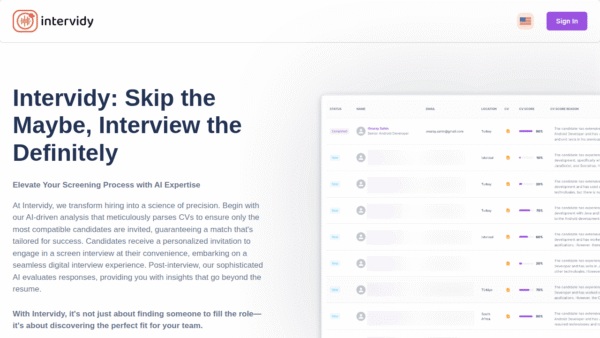
If you’re building or evaluating a hiring stack, proctoring alone isn’t enough. Look for platforms that assess process behaviour—keystroke dynamics, solution progression, live explanation capability—not just final output. The tools that combine behavioural monitoring with live follow-up evaluation will outperform those that only flag suspicious activity.
If you’re evaluating AI tools for enterprise process transformation, the BPM 3.0 framing is a useful lens. The question isn’t whether a tool automates a task. It’s whether it supports outcome ownership—can you trace a business result back to the AI-driven process that produced it?
The AI tools ecosystem is maturing fast. The platforms that will win aren’t the ones that make outputs easier to generate. They’re the ones that make process integrity and outcome accountability harder to fake.
















Comments (0) No comments yet
Want to join this discussion? Login or Register.
No comments yet. Be the first to share your thoughts!