



The Problem Nobody Was Solving
When a Weixin team visited schools in Hong Kong and Macau in 2022, they found a familiar frustration. Teachers wanted to teach programming in ways that felt real — not abstract syntax exercises disconnected from anything students actually cared about.
Most existing tools were either too technical, too dry, or both. Students were learning to code in a vacuum.
Mini Programs changed the equation. Instead of writing code that ran nowhere, students could build software that real people could open and use. The shift sounds small. The effect wasn’t.
What Happens When Students Build Real Things
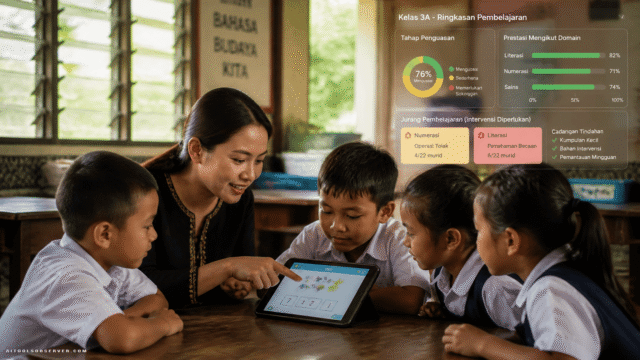
Teacher He Xianjia from a secondary school in Chengdu described the moment his students finished their first Mini Program: “Everyone cheered and hugged each other. For the first time, they felt they could actually build software themselves.”
That’s not a learning outcome you can put in a rubric. But it’s the one that matters most.
The Weixin team noticed something else too — students weren’t just learning programming. They were learning to identify problems, collaborate under pressure, and think creatively about technology. Project-based learning, turbocharged.
Scaling Without Leaving Anyone Behind

One early barrier was hardware. Schools in less-developed regions often couldn’t run the developer tools at all, and many teachers lacked the technical confidence to lead these classes.
The response was practical: in 2025, Weixin launched a web-based teaching platform with AI-assisted tools and step-by-step resources designed for teachers who aren’t engineers. Lower floor, same ceiling.
The result? A four-year ecosystem spanning 11 countries, nearly 8,000 schools, 17,830 teachers, and over 87,000 students — producing more than 287,000 Mini Program projects and consuming over 50 billion AI tokens in the process.
That’s not a pilot program. That’s infrastructure.
The Projects That Actually Matter

Numbers are easy to skim. The projects are harder to ignore.
Farm Assistant — Botswana
A student built a tool now actively used by local farmers. Not a prototype. Not a school demo. A working product solving a real agricultural problem in the field.
Slow Sounds — Hong Kong
An intelligent language-learning tool designed for people with hearing impairments. It won the Gold Medal at the 51st International Exhibition of Inventions of Geneva. Built by students.
Mental Wellbeing Tool — Chongqing
A team of teenagers developed an app to help peers navigate emotional challenges. Because they saw the need around them and decided to do something about it.
These aren’t edge cases. They’re the pattern.
From Learning AI to Using AI
The 2026 Global Youth AI + Weixin Mini Program Insights Report from Tencent Research Institute tracks a meaningful shift in how students relate to AI — moving “from learning AI to using AI to solve real-world problems.”
More than 60% of challenge projects were independently completed by students. That number signals something important: the barriers to building have genuinely fallen. AI tools aren’t just teaching aids here — they’re co-creators, helping students punch well above their technical weight class.
The platform keeps it age-appropriate and safe. Students get access to serious AI capabilities without the wild west of the open internet. Guardrails that enable, rather than restrict.
Technology That Amplifies Kindness
Scroll through the project catalog and a theme emerges fast. Medication reminders for grandparents. Fraud prevention tools for elderly users. Mental health apps for classmates. Accessibility software for family members with disabilities.
The Tencent Insight Report calls this cohort a generation using technology to “amplify kindness.” It’s an unusual phrase for a tech report — and it lands because it’s accurate.
Jim Hawkins, former Headmaster of Harrow School in the UK, put it plainly: “I’m really interested in their creativity. Many of the ideas show a strong entrepreneurial spirit and a desire to make the world better. We should encourage young people to think bigger, break boundaries, and imagine boldly.”
Hard to argue with that.
What This Means for AI Education
Most conversations about AI in education focus on AI as a threat — cheating, shortcuts, eroding critical thinking. This program is a useful counterargument.
When students use AI as a building tool rather than an answer machine, something different happens. They develop agency. They ship things. They see themselves as creators, not consumers.
The 4th Weixin Mini Program Global Innovation Challenge, held in May 2026, is the latest chapter in a model that’s been quietly proving itself for four years. It’s not a competition gimmick — it’s a structured pipeline from classroom curiosity to real-world impact.
The Takeaway
Eighty-seven thousand students. Eleven countries. Two hundred and eighty-seven thousand projects. One consistent finding: give young people the right tools, a real problem to solve, and enough trust to run with it — and they will build things that matter.
The future of AI isn’t just being shaped by the tools we build. It’s being shaped by who we teach to build them.
Turns out, the smartest investment in AI might be a classroom.






Comments (0) No comments yet
Want to join this discussion? Login or Register.
No comments yet. Be the first to share your thoughts!