


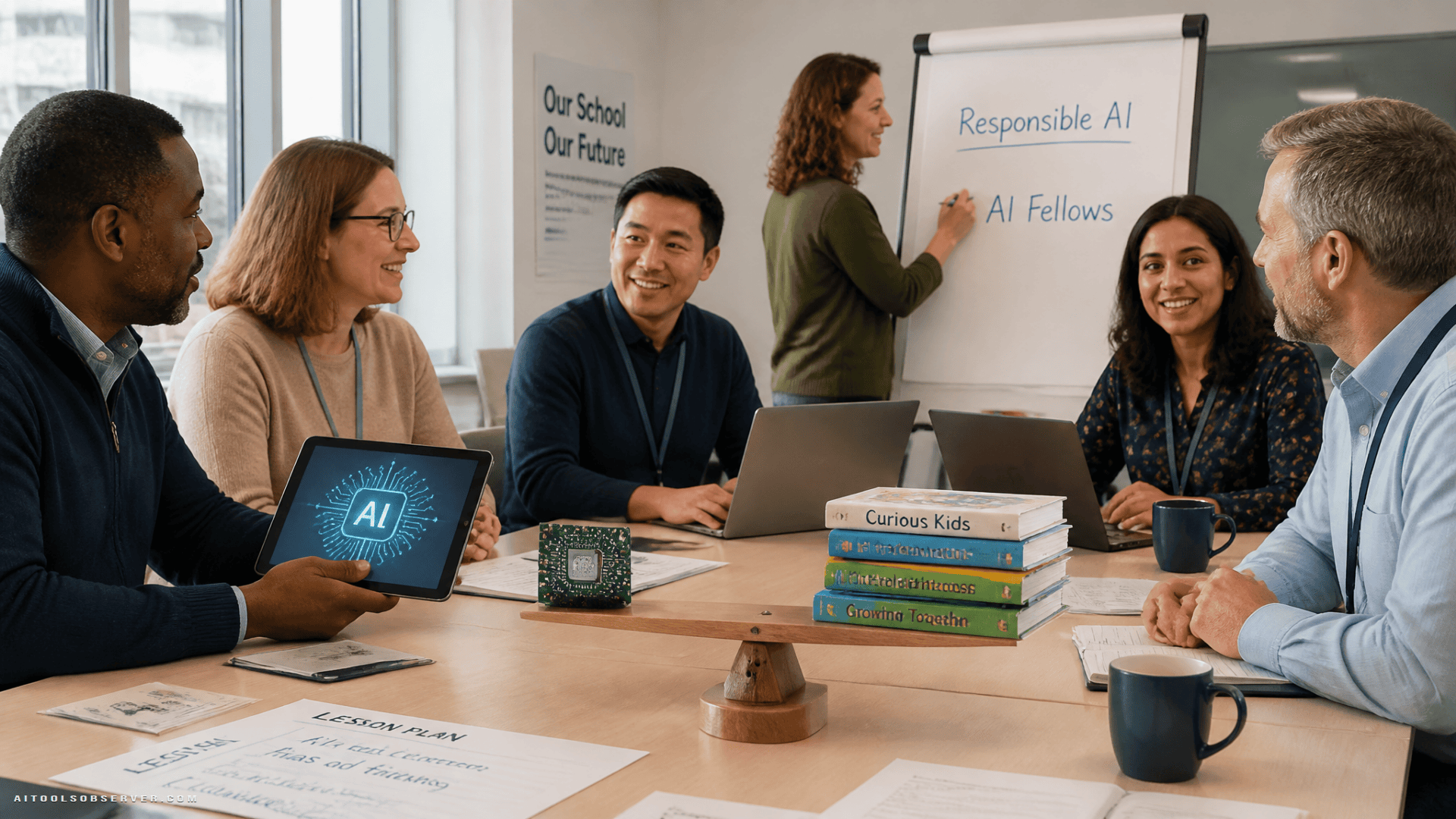
What the AI Fellows Program Actually Involves
The program is structured, not informal. It kicks off two weeks after students return to class and is designed to build responsible AI capacity across its schools.
Peter Thorne, the district’s chief information and technology officer, described the fellows as future “spokespeople for AI and the tools that we’re using.” The goal isn’t just training — it’s creating a feedback loop between classroom experience and district-level decision-making.
District materials frame the program’s purpose clearly: AI should “augment — not replace — human expertise, relationships, and decision-making.” That framing matters, especially in K-12 environments where concerns about AI replacing teachers or enabling academic dishonesty are real and ongoing.
What’s Already Approved for Classrooms
The district’s AI policy has been in development since 2024 and already covers approved tools for curriculum support, lesson planning, and productivity.
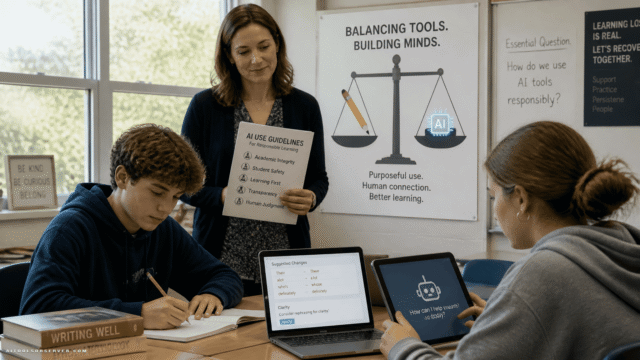
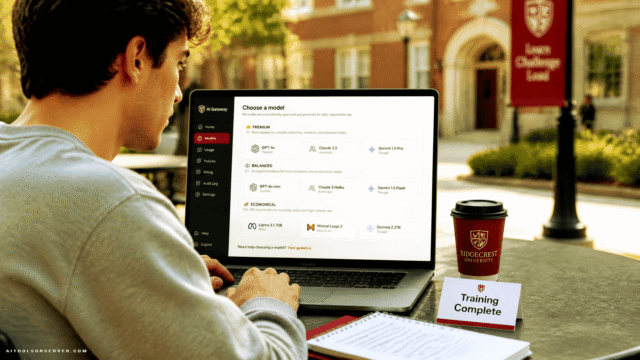
For students, the district is rolling out Microsoft Copilot as an AI learning companion for those aged 13 and older. A few guardrails come with it:
- Students must fact-check AI-generated information themselves
- Sharing confidential or personal data with AI tools is not allowed
- Use is limited to approved contexts
Kim Castro-Stevens, a teacher at Hickory Tree Elementary, is already using AI in her classroom. She uses it to speed up lesson planning and create basic instructional materials. “I can throw my standards in,” she said, describing how the tools help her work faster without replacing her judgment.
Why This Approach Is Worth Watching
Most K-12 AI rollouts fail at the implementation layer — not because the tools are bad, but because staff don’t know how to use them well or safely. Osceola County is trying to solve that problem before it becomes one.
The AI Fellows model is practical for a few reasons:
- It builds internal expertise rather than depending entirely on vendor training
- It creates accountability — fellows present measurable results, not just participation
- It scales organically — 30 trained advocates across a district can influence far more than a single policy document
The district is also being transparent about the limits of AI. Requiring students to fact-check Copilot outputs, for example, treats AI as a tool that requires critical thinking — not a shortcut around it.
The Bigger Picture for AI in Education
Osceola County’s approach reflects a broader tension in K-12 AI adoption: districts want the productivity benefits, but they’re also responsible for student safety, data privacy, and academic integrity. Getting that balance right requires more than an acceptable-use policy — it requires trained people who understand both the tools and the context.
The AI Fellows Program won’t solve every challenge, but it’s a more structured and human-centered approach than most districts are taking right now.
If you’re tracking how institutions are building responsible AI capacity — not just deploying tools — this is a model worth following.



Comments (0) No comments yet
Want to join this discussion? Login or Register.
No comments yet. Be the first to share your thoughts!