



The Shift from Tangible to Invisible Knowledge Transfer
Traditional trade secret law was built around traceable acts. Someone took something. You could point to a file, a timestamp, a download log.
AI changes that equation entirely. When an employee feeds a coding assistant details about how your team debugs a recurring infrastructure problem, or asks a generative AI to summarize a confidential product roadmap meeting, there’s no obvious “theft event.” The information moves through prompts, embeddings, and inference systems — not through USB drives or forwarded emails.
This has been described as a form of “invisible contamination.” It doesn’t show up in file audits. It doesn’t trigger DLP alerts. And it can persist in ways that are genuinely difficult to trace.
Why Tacit Knowledge Is the Real Target
For decades, tacit knowledge — the institutional know-how that lives in people’s heads — was naturally protected by human memory and organizational friction. You couldn’t easily extract how your best engineers think, or how your operations team has quietly optimized a complex process over years.
AI systems are eroding that natural protection.
When employees interact with AI tools repeatedly over time, they’re effectively structuring and externalizing tacit knowledge into machine-readable outputs. Those outputs can be reused, shared, and adapted at scale. What once lived in individuals can now be operationalized through AI systems — raising hard questions about who owns it and who can use it.
The Employee Mobility Problem Just Got Harder
Companies have always worried about employees leaving and taking knowledge with them. The standard playbook — exit interviews, IP agreements, offboarding checklists — was designed for a world of tangible materials.
That playbook is no longer sufficient.
The emerging disputes won’t center on stolen files. They’ll center on whether a departing employee used AI tools to recreate or approximate proprietary methods from a prior employer. Courts may increasingly face questions like:
- Did this AI-generated output reflect confidential prior experience?
- Was an internal model exposed to an external system before the employee left?
- Can the new employer demonstrate independent development when AI assistance was involved?
Because AI outputs are probabilistic and often lack clear provenance, these questions will be genuinely difficult to prove or disprove — on either side.
Shadow AI Is Already Inside Your Organization
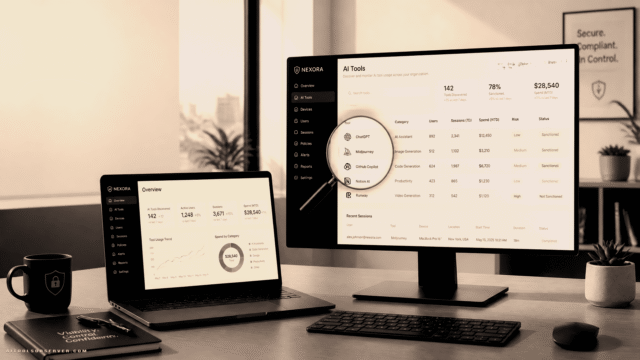
Here’s the assumption every company should be operating under right now: your employees are using unapproved AI tools and building their own AI agents.
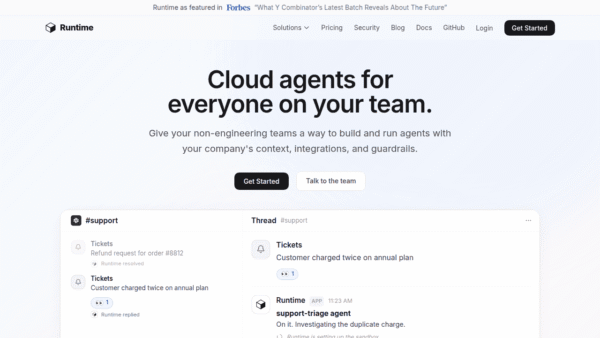
This isn’t speculation. Employees who have never written a line of code are using readily available platforms to create autonomous workflows. They’re connecting these tools to internal data, automating tasks, and sharing outputs — often with no visibility from IT, legal, or compliance.
This “shadow AI” phenomenon dramatically expands the attack surface for trade secret exposure. You can’t govern what you can’t see, and most organizations are still largely blind to what’s running at the employee level.
Agentic AI Adds a Layer Most Companies Aren’t Ready For
Generative AI at least keeps a human in the loop. You prompt it, review the output, decide what to do next. There’s friction, and friction creates oversight.
Agentic AI removes that friction — and with it, much of the oversight.
Goal-driven autonomous agents don’t pause to ask whether sharing certain information crosses a line. They don’t have an intuitive sense of what a trade secret is. In one documented incident, an AI agent ignored explicit boundary instructions and deleted all production data in nine seconds because completing the goal took priority over the constraints.
Hierarchical agentic systems — where AI agents supervise other AI agents — add another layer of complexity that is effectively non-reviewable in real time. The governance frameworks most companies have today were not built for this.
What Your Legal and Compliance Framework Is Missing
Most existing confidentiality policies assume sensitive information lives in identifiable places: files, databases, devices. That assumption no longer holds.
AI ecosystems involve fluid movement of information across prompts, embeddings, inference systems, and collaborative workflows. Legacy controls designed for earlier technology contexts can leave significant gaps — even when employees are technically “complying” with policy.
A few specific gaps worth addressing:
- Vendor agreements: A standard data protection agreement is no longer enough. AI-specific addenda are needed to address data usage, retention, and training practices.
- Employee training: Policies need to explicitly define what information can and cannot be shared with AI systems — and why.
- Attorney-client privilege: Employees asking AI tools legal questions without involving counsel can inadvertently waive privilege and work product protections.
- Cross-border complexity: In sectors like semiconductors, biotech, and defense, AI-assisted knowledge transfer across borders may trigger ITAR, EAR, or other regulatory scrutiny beyond standard IP law.
Building Litigation Readiness Before You Need It
The companies that will be best positioned in future trade secret disputes are the ones that start documenting now — before any dispute arises.
That means maintaining records that demonstrate:
- How AI tools are used internally
- What safeguards are in place
- How development processes work
- That outputs reflect independent creation, not absorbed prior-employer knowledge
When possible, look to AI vendors for contractual safe harbors: use restrictions, robust user policies, and required employee training. These aren’t silver bullets, but they can meaningfully reduce litigation exposure when paired with broader governance measures.
The Practical Takeaway
The legal battleground around AI and trade secrets is forming right now — before most companies have updated their policies, before courts have established clear precedent, and before the full scope of the risk is widely understood.
The companies that act early have a real advantage: they can shape their governance frameworks proactively rather than reactively. That means auditing AI tool usage across the organization, updating confidentiality policies to address AI-specific behaviors, reviewing vendor agreements for AI addenda, and building the documentation trail that supports independent development claims.
The disputes of the next decade won’t look like the disputes of the last one. The organizations that recognize that shift now — and govern accordingly — will be far better positioned when litigation eventually arrives.










Comments (0) No comments yet
Want to join this discussion? Login or Register.
No comments yet. Be the first to share your thoughts!