


What changed
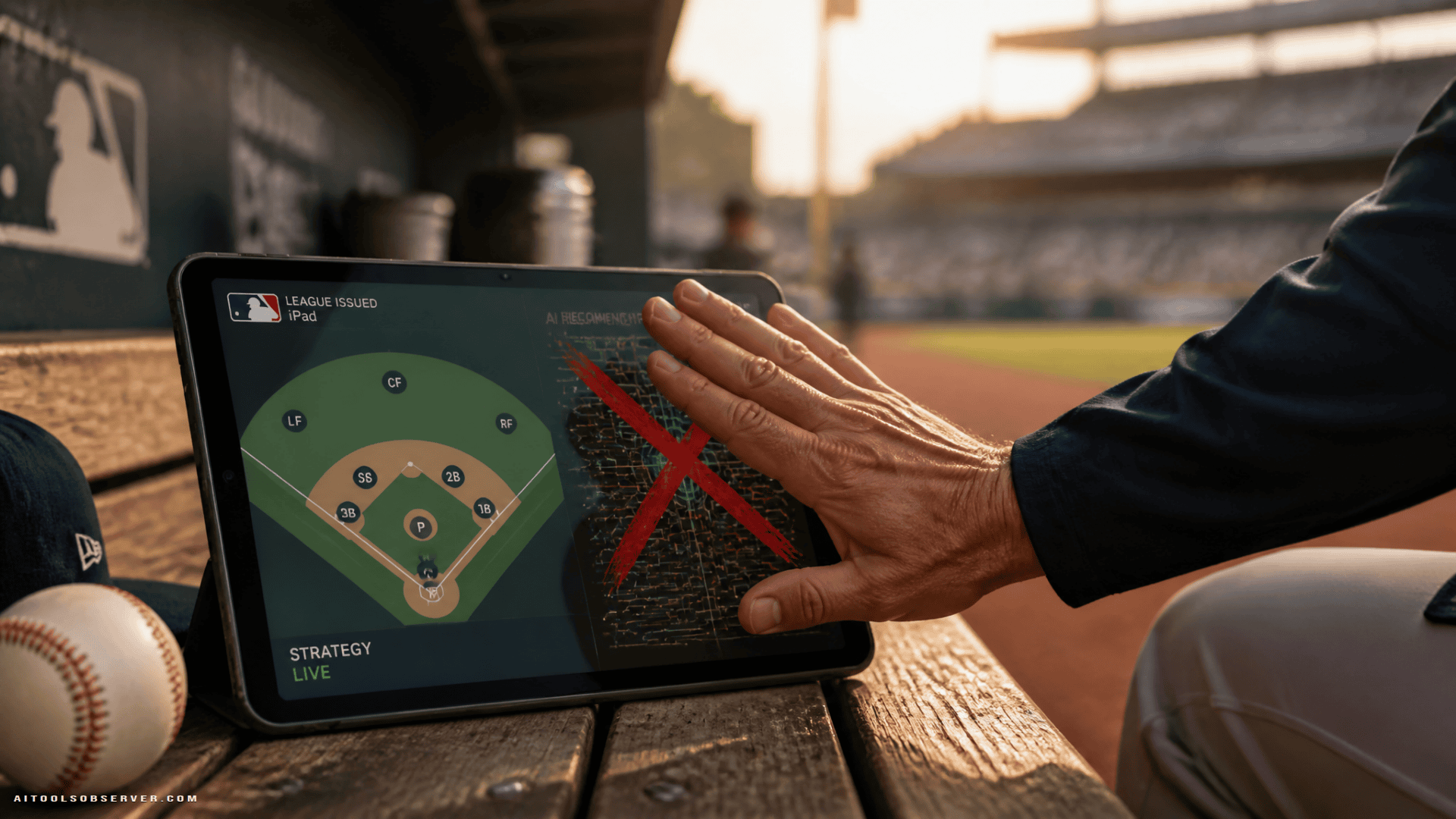
MLB has effectively prohibited teams from using custom AI-powered applications on dugout iPads during games. The practical result is simple: no more third-tab team-built apps being used for live in-game recommendations.
League-issued iPads still exist, but their use is being narrowed back toward approved functions. Based on the available context, teams can still access MLB-provided tools and data views, but not custom software designed to shape tactical decisions in real time.
The ban reportedly became fully effective after the All-Star break, following a league memo issued earlier in the season.
What teams were doing with dugout iPads
The issue was not the iPads themselves. It was how some clubs were using them.
According to the reported memo, teams had started using custom apps beyond the devices’ original intended purpose. Those apps were being used for:
- Pitch-calling recommendations
- Substitution decisions
- Defensive alignment and tactical choices
- Other live in-game strategy calls traditionally handled by players and coaches
In other words, the dugout iPad was starting to look less like a video and stats tool and more like a live strategy engine.
Why MLB stepped in
The league appears to have acted before the practice became normal. That is the real story here.
MLB’s review reportedly did not find teams had violated sign-stealing or electronic-device rules in the narrow sense. But the use of AI-assisted custom apps still raised a broader integrity problem: when does a support tool become an active participant in the game?
That question gets uncomfortable quickly in sports. If one team uses custom models to recommend every pitching move and defensive substitution in real time, other teams are pushed to do the same. Soon, what started as an edge becomes an arms race.
From MLB’s perspective, banning the custom tab solves several problems at once:
- It limits live algorithmic influence on the field
- It reduces the chance of technology rules being stretched further
- It keeps human coaches and players responsible for tactical choices
- It avoids future disputes over what counts as fair in-game assistance
This is a familiar pattern in AI governance. The issue is often not whether the tool exists, but where the line gets drawn during live, high-pressure decisions.
The iPad itself is not gone
One important nuance: MLB did not ban dugout iPads entirely.
League-issued devices still include approved functions. Based on the context provided, those include MLB-provided Statcast data, video angles, and information tied to the automated ball-strike system. What is gone is the custom app layer that teams were adding for their own strategic use.
That distinction matters because it shows MLB is not rejecting baseball technology. It is narrowing what kind of technology can be used, by whom, and for what purpose during a live game.
Why the “custom app” issue matters more than it sounds
At first glance, this can seem like a niche sports rules story. It is bigger than that.
Custom AI apps are where a lot of real advantage gets created. Off-the-shelf tools are easier to monitor because everyone sees roughly the same thing. Custom tools are different. They can combine proprietary data, team preferences, predictive logic, and live inputs in ways that are hard for a league to inspect consistently.
That creates three problems.
1. Fairness gets murky
If clubs are using their own models for live recommendations, the competition shifts from player execution to hidden systems design. Some level of analytics is normal in modern sports, but real-time algorithmic coaching changes the balance.
2. Enforcement becomes harder
A league can approve hardware. It is much harder to evaluate what every team-built application is doing behind a simple interface.
3. The spirit of the rulebook starts to bend
Even if a tool does not technically break an existing rule, it can still undermine the intent behind those rules. That appears to be what MLB wanted to stop.
What this means for AI in sports
This does not mean AI is leaving sports. It means leagues are becoming more specific about where AI is allowed.
Expect a sharper divide between two categories:
- AI for preparation, scouting, training, and post-game analysis
- AI for live in-game decision support
The first category is easier for leagues to accept. It happens away from the field, can be reviewed more calmly, and generally fits the long-standing use of analytics in sports.
The second category is where friction grows. Once AI starts advising tactical decisions in the moment, leagues have to decide whether the game is still being managed by coaches and players or by software systems built behind the scenes.
That tension is not unique to baseball. Similar debates can emerge anywhere AI tools touch real-time decisions under strict rules, whether in sports, finance, hiring, or healthcare.
A practical takeaway for AI tool builders
If you build AI tools for regulated or competitive environments, MLB’s move is worth paying attention to.
The lesson is not “AI gets banned.” The lesson is that AI adoption depends heavily on context, governance, and timing. A tool can be useful and still become unacceptable if it changes who is effectively making the decision.
For founders and product teams, that means asking better questions early:
- Is this tool advisory or decisive?
- Is it used before the event or during the event?
- Can a governing body easily audit what it does?
- Does it preserve clear human accountability?
- Does it create an arms race others will feel forced to follow?
Those questions matter just as much as model performance.
What happens next
MLB’s decision could become a template rather than a one-off rule adjustment. Other leagues may look at this and decide they also need tighter definitions around live AI use, custom software, and approved device behavior.
That does not mean sports will use less technology. It likely means approved technology stacks will become more standardized, while custom in-game experimentation gets squeezed out.
For fans, the immediate result is straightforward: coaches and players are expected to make the calls again without custom AI prompting from the dugout iPad. For anyone tracking AI adoption, the bigger lesson is even clearer: the closer AI gets to live decision authority, the more likely regulation is to step in.











Comments (0) No comments yet
Want to join this discussion? Login or Register.
No comments yet. Be the first to share your thoughts!