


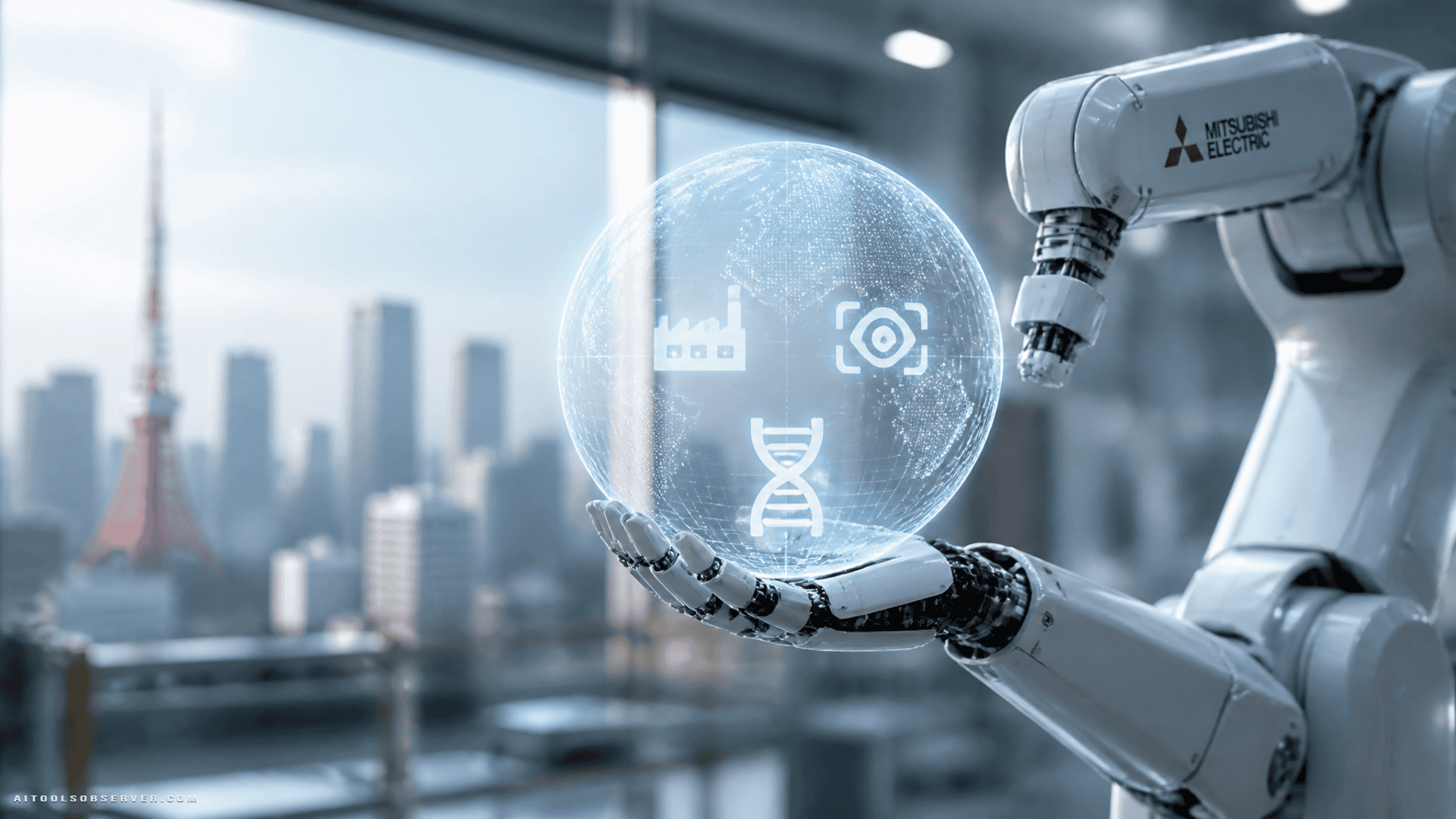
What’s a World Model, and Why Does It Matter Here?
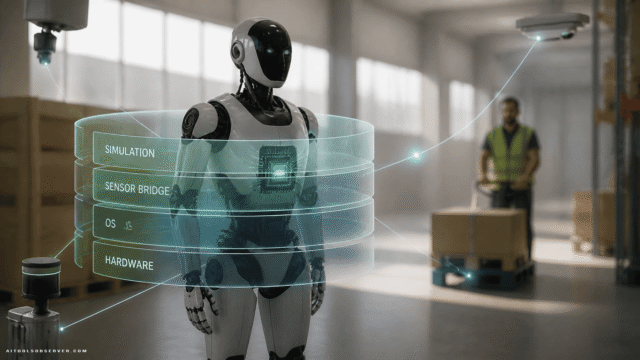
Unlike large language models that primarily process text, world models learn from a broader range of inputs — sensor data, spatial context, physical interactions. That makes them better suited for robotics and industrial automation, where understanding the environment matters as much as understanding language.
Cosmos 3 Edge appears positioned specifically for edge deployment: running inference closer to the machine, not in a distant data center. For factory floors and medical robotics, that’s a meaningful distinction.
Japan as the Physical AI Proving Ground
The regional timing is deliberate. Japan’s AI market is projected to reach $27.9 billion by 2029, and the country’s manufacturing heritage makes it a natural fit for physical AI applications.
Nvidia is building a local coalition that includes some heavy hitters:
- Fujitsu and Hitachi — industrial and enterprise tech giants
- Kawasaki Heavy Industries — a direct play into industrial automation and robotics
- Japanese pharmaceutical firms Astellas Pharma, Daiichi Sankyo, and Ono Pharmaceutical — all leveraging Nvidia’s BioNeMo Agent Toolkit for drug discovery workflows
This isn’t a vague “partnership announcement.” These are sector-specific integrations with named companies across manufacturing, logistics, and life sciences.
The Healthcare Angle Is Quietly Significant
Nvidia is expanding Tokyo-1, the AI drug discovery consortium run by Xeureka (a Mitsui subsidiary), powered by the BioNeMo Agent Toolkit. The platform has been growing since 2023, and major Japanese drugmakers are now actively using it to accelerate their research pipelines.
Medical robotics is also on the roadmap. Agentic AI in healthcare — systems that can autonomously execute multi-step scientific workflows — is still early, but Nvidia is clearly staking out territory before the space gets crowded.
The Broader Context
Nvidia’s Japan push lands in a market that’s already attracting serious capital. Microsoft committed $10 billion to Japanese AI infrastructure earlier this year. SoftBank is pursuing AI partnerships with both Microsoft and Sakura Internet. The country is actively courting U.S. tech investment, and U.S. firms are responding.
Huang’s quote — “Japan invented modern manufacturing. Now, it has the opportunity to reinvent it” — reads like a pitch as much as a statement. But the underlying logic holds: Japan has the industrial base, the partners, and the policy appetite. Nvidia is showing up with the models and the platform.
What to Watch
Cosmos 3 Edge is the product. The Japan coalition is the distribution strategy. The real question is whether these partnerships translate into deployed systems at scale — or stay in the announcement phase.
For anyone tracking AI tools in robotics, industrial automation, or life sciences, Nvidia’s physical AI stack is worth understanding now, before it becomes the default infrastructure everyone’s building on.











Comments (0) No comments yet
Want to join this discussion? Login or Register.
No comments yet. Be the first to share your thoughts!