


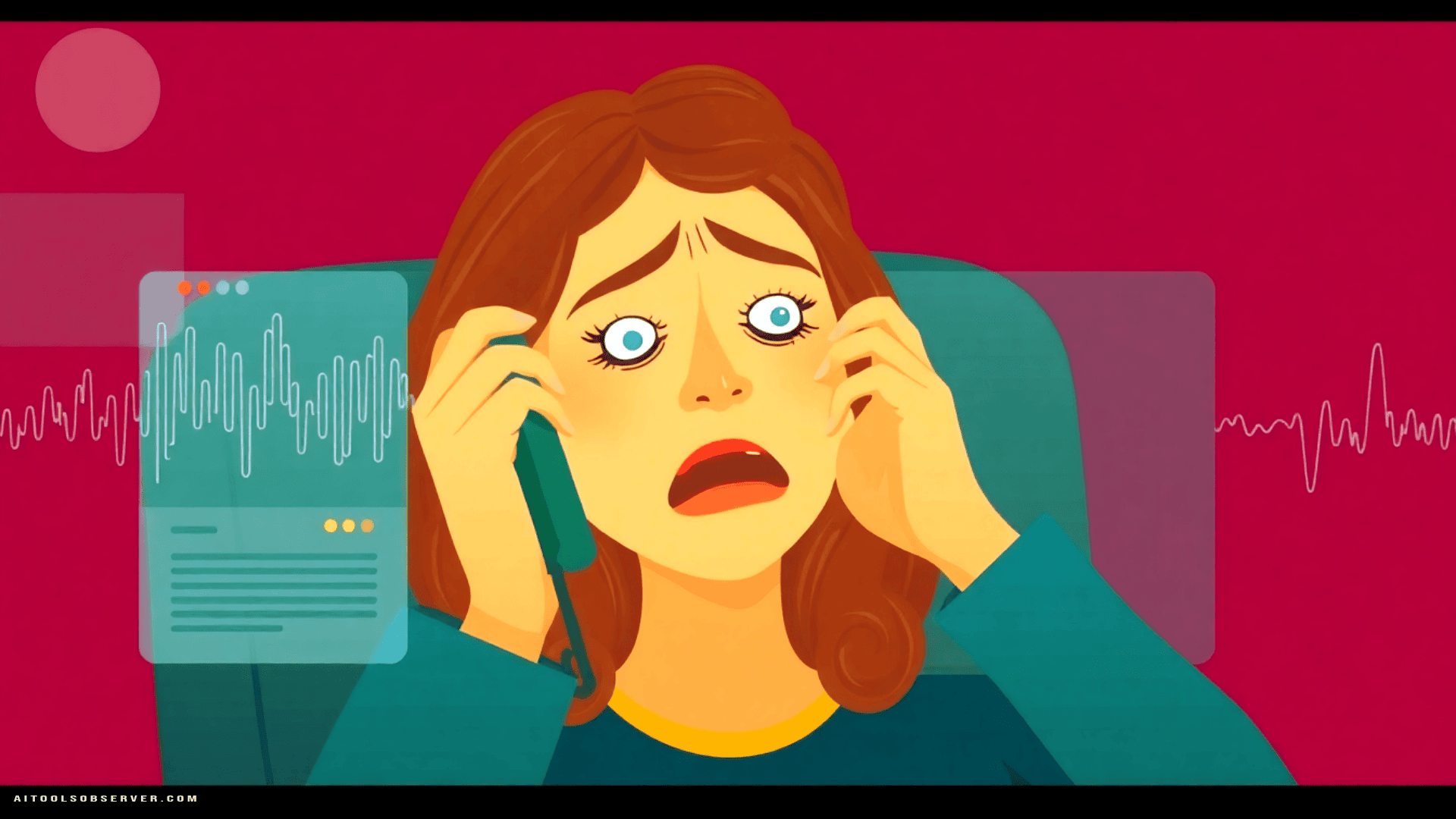
What Actually Happened in Martinez, California

Deborah received a call from an unknown number one morning. A man asked who she was, then claimed her 37-year-old daughter Sarah had been kidnapped by a Mexican drug cartel after witnessing something she shouldn’t have.
Then he played the audio.
It was Sarah’s voice — panicked, crying, saying “I love you, mom, I’m so sorry, I’m so scared.” Then silence.
For the next five hours, Deborah followed every instruction the caller gave. Don’t speak. Get dressed. Move now. Wire money. She sent $5,400 from multiple locations to Mexico, believing she was buying her daughter’s freedom.
When she arrived at the grocery store where she was told Sarah would be released, no one was there. She called her daughter directly. Sarah picked up. She was at work. She had no idea any of this had happened.
How AI Voice Cloning Made This Possible

This scam didn’t require a sophisticated operation. It required a few seconds of audio and a voice cloning tool.
Erin West of Operation Shamrock, a law enforcement initiative focused on elder fraud and tech-enabled crime, explained it plainly: scammers pull voice samples from social media videos, voicemails, or recorded calls. With just a few seconds of audio, modern AI tools can generate a convincing clone of that voice — one capable of expressing fear, love, or desperation on command.
The technology exists right now. It’s accessible. And it’s being weaponized at scale.
West called the trend a “scamdemic” — and said it will only get worse as AI voice synthesis and deepfake technology continue to improve and become cheaper to use.
Why This Scam Works So Well
Understanding the psychology here matters as much as understanding the technology.
It Hijacks Your Nervous System
The moment you hear what sounds like your child’s voice in distress, your rational brain goes offline. Fear, love, and urgency flood in simultaneously. Scammers know this. The five-hour call wasn’t accidental — it was designed to keep Deborah in a state of controlled panic, preventing her from stopping to verify anything.
It Creates Artificial Time Pressure
Every instruction came with urgency. “Do this now.” “It has to happen now.” That pressure is intentional. Time pressure kills critical thinking. It’s the same mechanism behind fake countdown timers in shady sales funnels — except here, the stakes feel like life and death.
It Exploits Trust in Familiar Voices
We are hardwired to trust the voices of people we love. A stranger’s voice triggers skepticism. A cloned version of your daughter’s voice bypasses that filter entirely. The scam doesn’t need to be perfect — it just needs to be convincing enough in a moment of extreme stress.
The Red Flags You Need to Know

Erin West summed it up in one sentence worth memorizing:
“When we get something that raises our anxiety and requires immediate action, and that immediate action requires the movement of money — red flag, this is a scam.”
Here’s a practical breakdown of what to watch for:
- Unknown number, high-stakes claim immediately. Legitimate emergencies don’t start with strangers calling from unknown numbers to deliver news about your family.
- You’re told not to hang up or contact anyone. Isolation is a core tactic. Scammers need to keep you away from anyone who might break the spell.
- Urgency is extreme and artificial. Real emergencies allow for verification. Scammers manufacture urgency specifically to prevent it.
- Money movement is required — fast. Wire transfers to foreign accounts, gift cards, cryptocurrency. If a “rescue” requires you to send money immediately, stop.
- The “victim” can’t speak freely or for long. In Deborah’s case, the audio was cut off quickly. That’s by design — longer exposure increases the chance you’ll notice something off.
What You Can Do Right Now to Protect Your Family

These aren’t theoretical precautions. They’re practical steps that take minutes to set up and could save you thousands — or more.
Create a Family Code Word
This is the single most effective countermeasure. Choose a word or phrase that only your immediate family knows. If anyone ever calls claiming a family member is in danger, ask for the code word. A scammer using cloned audio cannot provide it.
Enable Location Sharing
Deborah’s family now shares locations through their phones. This is a simple, free step that lets you verify in seconds whether a family member is actually where a caller claims they’ve been taken from.
Don’t Answer Unknown Numbers
If someone genuinely needs to reach you, they’ll leave a voicemail or follow up. Screening unknown calls removes the first point of contact scammers rely on.
Verify Before You Act
If you receive a distressing call about a family member, hang up and call that person directly on a number you already have saved. Don’t use a number the caller provides. This one step would have ended Deborah’s ordeal immediately.
Talk to Your Family About This Now
The people most vulnerable to this scam are those who’ve never heard of it. Share this story with parents, grandparents, and anyone who might be targeted. Awareness is the cheapest protection available.
The Broader AI Threat Landscape You Should Understand

Voice cloning fraud is one application of a much wider problem: AI tools being used to deceive at scale.
The same underlying technology that powers legitimate use cases — podcast production, accessibility tools, content localization — can be repurposed for fraud in minutes. The barrier to entry is low. The emotional impact is devastating. And law enforcement is still catching up.
Martinez police are investigating Deborah’s case, but she doesn’t expect to recover the $5,400. That’s the reality of wire fraud to foreign accounts — once the money moves, it’s almost always gone.
Operation Shamrock and similar initiatives are working to raise awareness, but the volume of these scams is growing faster than any single organization can address.
The Takeaway

AI voice cloning fraud isn’t a future threat. It’s happening now, in your city, to people who are smart, careful, and completely unprepared for it.
Deborah Del Mastro lost $5,400 and five hours of her life to a scam built on a few seconds of her daughter’s voice and a well-rehearsed script. Her message is direct: “Let our horrible experience be a warning to all of you — question this, because I didn’t question it at all.”
Set up a family code word today. Enable location sharing. Talk to the people you love about what this looks like.
The scammers are already using the tools. The only question is whether you’re ready when they call.









Comments (0) No comments yet
Want to join this discussion? Login or Register.
No comments yet. Be the first to share your thoughts!