



What Changed and What the Numbers Say

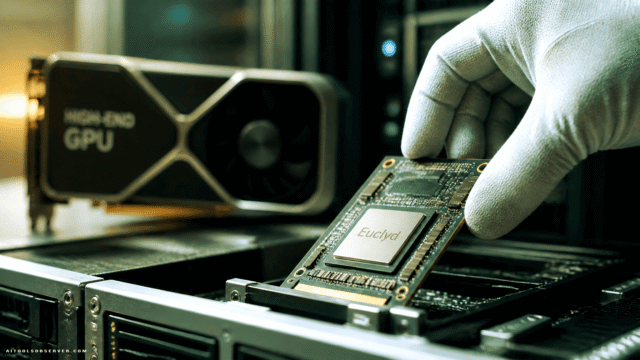
The M890 arrives with 144 GB of GPU memory and an interchip bandwidth of 800 GB per second — both significant upgrades over the prior generation. Alibaba reports that it has already shipped 560,000 Zhenwu units to more than 400 customers spanning 20 industries, suggesting the platform has moved well beyond internal use.
That deployment scale is notable. It indicates that Alibaba’s chip subsidiary, T-Head, is not simply building reference hardware for its own cloud infrastructure — it is actively competing for external enterprise customers across sectors.
However, analysts are urging measured expectations. Myron Xie of SemiAnalysis notes that while the M890 is gaining traction, its advertised memory and bandwidth figures still trail those of leading Western chip makers. Critically, Alibaba has not yet published compute performance metrics — a gap that makes direct benchmarking against competitors difficult.
The Market Context: Nvidia Out, Domestic Players In

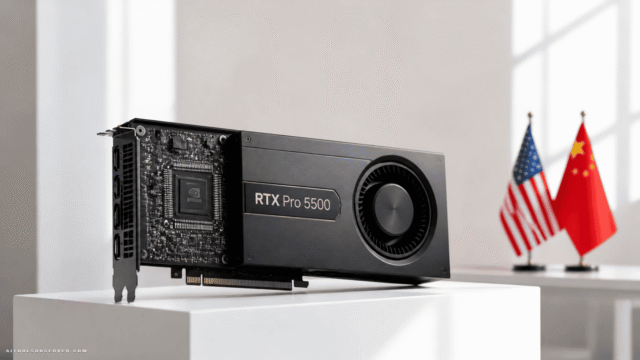
American export restrictions have long blocked Chinese AI developers from accessing Nvidia’s most advanced processors. Washington recently cleared the sale of the H200 in China, but Beijing has simultaneously tightened domestic scrutiny over foreign chip usage — creating a regulatory environment that effectively pushes Chinese enterprises toward homegrown alternatives regardless of what is technically available.
This dynamic benefits Alibaba directly. As Leonid Mironov, portfolio manager at Gavekal, put it plainly: given that Nvidia remains effectively out of China as a long-term supplier, domestic alternatives are not just viable — they are increasingly necessary.
Brady Wang of Counterpoint Research frames the M890’s competitive position with precision: it is not a raw silicon match for the H200, but it does not need to be. In the current Chinese market, it functions as a believable replacement — and that distinction matters more than benchmark supremacy.
Where Alibaba Fits in China’s AI Hardware Race

The domestic AI chip market in China is no longer a single-player field. Huawei’s Ascend series and Cambricon’s processors are established competitors, and the race for manufacturing capacity at foundries like SMIC adds another layer of constraint. Counterpoint’s Wang flags this as a genuine bottleneck: how much production capacity Alibaba can reliably secure will shape how far the M890 can scale.
Still, Alibaba’s position is structurally strong. The company operates as a full-stack AI player — spanning hardware through T-Head, cloud computing infrastructure, large language models via the Qwen series, and enterprise applications. The M890 is not an isolated product; it is a component of a vertically integrated AI stack.
That integration becomes more visible with Alibaba’s concurrent announcement of Qwen3.7-Max, its next-generation large language model, expected to release soon. The chip and the model are designed to reinforce each other — a strategy that mirrors what Nvidia has built with CUDA and its GPU ecosystem, adapted for the Chinese regulatory and market reality.
A Data Center Signal Worth Watching

In early April, Alibaba and China Telecom jointly announced a new data center in southern China powered entirely by Alibaba’s own chips. That infrastructure move, combined with the M890 launch, suggests Alibaba is building the physical and computational foundation for a self-sufficient AI supply chain — one that does not depend on foreign silicon at any layer.
For enterprise buyers in China evaluating AI infrastructure, this matters. A chip backed by a hyperscaler’s own data center deployments carries a different risk profile than one sold purely as third-party hardware.
What This Means for AI Tool Observers
For founders and teams building on AI infrastructure, the M890 announcement is a signal rather than a specification sheet. It confirms that China’s domestic AI hardware market is maturing faster than many Western observers anticipated, and that Alibaba — alongside Huawei — is positioning to define the compute layer for Chinese AI development for years ahead.
The missing compute performance metrics are a real gap and should not be glossed over. But the deployment numbers, the data center partnerships, and the full-stack integration tell a coherent story: Alibaba is not chasing Nvidia — it is building a parallel ecosystem designed to function without it.
That is a strategic posture worth tracking closely, regardless of where you sit in the global AI tools landscape.









Comments (0) No comments yet
Want to join this discussion? Login or Register.
No comments yet. Be the first to share your thoughts!