



The Numbers Behind the Narrative
Amazon has projected capital expenditures of $200 billion for the current year, up from $131 billion the year prior. Most of that spending targets data centers, AI chips, and supporting equipment. The $25 billion bond raise is one piece of a much larger financing puzzle — but it’s a meaningful piece.
To put the scale in context: Amazon has now raised roughly $89 billion in bonds across multiple offerings in a relatively short window. The company has also signaled to underwriters that it won’t issue additional debt this year, suggesting this raise is the final chapter of a deliberate, structured capital strategy rather than reactive scrambling.
CEO Andy Jassy has framed the spending as a “once-in-a-lifetime opportunity.” That’s the kind of language that makes CFOs wince and infrastructure engineers cheer.
Why Bonds, Not Just Cash Flow?
Amazon generates substantial cash. So why tap debt markets at this scale?
A few reasons worth unpacking:
Interest rate math. Locking in debt at current rates can be more capital-efficient than deploying operating cash, especially when the investment horizon stretches years into the future. Bond markets let companies spread the cost of long-cycle infrastructure across time.
Signaling. A structured, multi-part bond offering with disclosed SEC filings isn’t just financing — it’s a public commitment. It tells investors, partners, and competitors that the AI buildout is not a quarterly experiment. It’s a multi-year infrastructure thesis with real capital behind it.
Flexibility. Amazon’s spokesperson noted proceeds could also support debt repayment and general investments. That flexibility matters when you’re managing a capital structure at this scale across AWS, logistics, devices, and now AI services.
Amazon Isn’t Alone in This Trade
The broader pattern here is worth tracking if you follow the AI tools ecosystem closely.
Nvidia, Oracle, Alphabet, and Meta have all announced debt raises or stock issuances in recent months to fund AI infrastructure spending. The capital markets have effectively become a parallel track to operating cash flow for big tech’s AI buildout.
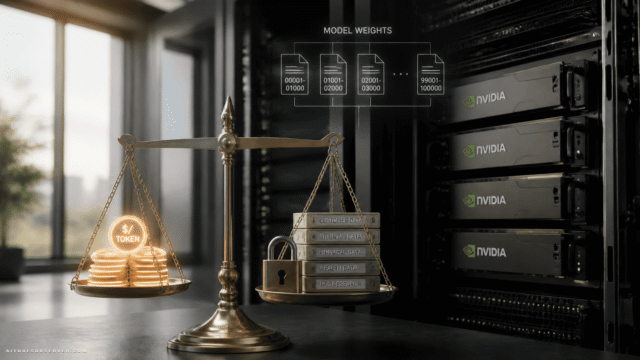
This matters for anyone watching the AI tools landscape because infrastructure investment at this scale shapes what’s possible downstream. The data centers being funded today determine the compute available to AI model developers, cloud service providers, and ultimately the tools built on top of those platforms.
When Amazon spends heavily on chips and data centers, AWS capacity expands. When AWS capacity expands, the cost and availability of cloud AI services shifts. That ripple reaches every startup, enterprise team, and developer building on top of it.
What This Means for the AI Tools Ecosystem
For founders and teams evaluating AI tools, the infrastructure arms race has a few practical implications worth keeping in mind.
Cloud Pricing Will Stay Competitive
Massive capital investment in data centers tends to drive capacity up and, over time, unit costs down. AWS, Google Cloud, and Azure are all spending aggressively. That competition benefits buyers of cloud AI services — more compute availability, more pricing pressure, more service options.
If you’re currently evaluating AI infrastructure costs for your team or product, the medium-term trajectory of cloud AI pricing is likely to remain competitive precisely because of investments like this one.
Enterprise AI Tooling Gets More Headroom
Amazon’s infrastructure spending isn’t just about raw compute. It’s about building the foundation for enterprise AI services — the kind that power the tools businesses actually deploy. More capacity means more room for higher-context models, longer inference runs, and the kind of reliability that enterprise buyers require.
Tools built on AWS infrastructure — or competing platforms making similar investments — will have more room to scale without hitting the ceiling that constrained earlier AI deployments.
The Gap Between Infrastructure Haves and Have-Nots Widens
Here’s the less comfortable implication: when the entry cost for competitive AI infrastructure reaches hundreds of billions of dollars, the number of players who can compete at the foundation layer shrinks. Amazon, Microsoft, Google, and a small number of others can sustain this kind of capital deployment. Most cannot.
That concentrates infrastructure power, which in turn shapes which AI models get built, which APIs get offered, and which pricing structures become standard. For teams choosing AI tools today, understanding which infrastructure layer your tools depend on — and who controls it — is increasingly relevant strategic context.
The Debt Market as an AI Trend Signal
There’s a meta-signal worth noting here for anyone tracking AI trends: the debt markets are now a leading indicator of AI infrastructure direction.
When Amazon files an SEC disclosure for a multi-part bond offering, it’s not just a finance story. It’s a roadmap signal. The capital being raised today funds the data centers that come online in 12 to 24 months, which power the AI services that reach developers and enterprises the year after that.
Following the capital flows gives you a rough preview of where AI capacity is heading before the product announcements arrive.
The same logic applies to Nvidia’s order books, Oracle’s data center expansion announcements, and Meta’s infrastructure disclosures. These aren’t just investor relations documents — they’re early-stage signals about the AI capabilities that will be available to builders in the near future.
Andy Jassy’s Bet, Explained Simply
Strip away the bond mechanics and the capital markets language, and Amazon’s position is fairly straightforward: we believe AI infrastructure is a durable, high-return investment category, and we’re willing to take on significant debt to build it faster than our competitors.
Jassy’s “once-in-a-lifetime opportunity” framing is doing real work here. It’s the internal and external justification for a capital allocation strategy that would look aggressive in almost any other context. The argument is essentially: the cost of underinvesting in AI infrastructure exceeds the cost of the debt required to build it.
Whether that bet pays off depends on AI adoption curves, enterprise spending patterns, and whether the services built on top of this infrastructure generate the returns the capital structure requires. Those are genuinely open questions.
But the commitment is real, the capital is being deployed, and the infrastructure is being built. The bet is placed.
What to Watch Next
A few things worth tracking as this plays out:
- AWS pricing and capacity announcements — infrastructure investment at this scale typically surfaces in service expansions and pricing adjustments within 12–24 months.
- Competitor responses — Microsoft and Google are making comparable investments. Watch for similar debt raises or capex disclosures that signal the competitive intensity isn’t slowing.
- Enterprise AI adoption rates — the return on this infrastructure depends on enterprise buyers actually deploying AI at scale. Adoption data from cloud providers will be the clearest signal of whether the bet is paying off.
- AI tool pricing trends — as infrastructure costs evolve, the pricing of AI tools built on top of cloud platforms tends to follow. Teams evaluating AI tools today should factor in that the cost structure of the underlying infrastructure is still in motion.
The Useful Takeaway
Amazon’s $25 billion bond raise is a useful reminder that the AI tools you evaluate and deploy don’t exist in a vacuum. They sit on top of infrastructure that requires extraordinary capital to build and maintain — capital that shapes what’s possible, what’s affordable, and who controls the foundation layer.
For teams choosing AI tools, the practical implication is this: the infrastructure layer is consolidating around a small number of heavily capitalized players, and that consolidation will increasingly define the boundaries of what AI tools can do and what they cost.
Understanding the capital flows behind the AI ecosystem isn’t just interesting context. It’s part of choosing smarter.















Comments (0) No comments yet
Want to join this discussion? Login or Register.
No comments yet. Be the first to share your thoughts!