



What the Deal Actually Is

The Wall Street Journal first reported the partnership, placing the investment in the $75 million range — comparable to previous funding rounds A24 has closed with backers like Thrive Capital. The structure ensures A24 remains fully independent, which is a deliberate and important detail.
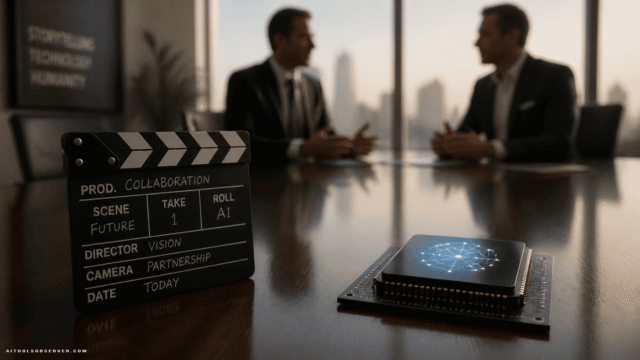
Google DeepMind, the tech giant’s flagship research lab, will work directly alongside A24’s filmmakers across multiple projects over time. The collaboration is framed as iterative and exploratory — not a fixed deliverable with a launch date.
A24 CEO Ari Ari Collins described it as
the beginning of a collaborative journey, one rooted in research and shared curiosity.
That language matters. This is a research-first partnership, not a product rollout.
What It Is Not
Before the speculation runs wild, let’s be precise about what this deal explicitly excludes.
This is not a production deal. DeepMind isn’t co-producing A24 films.
This is not an IP deal. A24’s creative assets aren’t being handed over.
This is not a data training deal. A24’s films and footage are not being used to train DeepMind models.
A24 and its filmmakers retain full creative control. DeepMind gains something arguably more valuable than data — direct, ongoing feedback from working artists at one of the most critically respected studios in the world.
Why A24 Is the Right Partner for This

A24 isn’t a random pick. The studio behind Everything Everywhere All at Once, Midsommar, and the recent buzzy Backrooms has built its reputation on backing distinctive, director-driven work. It attracts the kind of filmmakers who push craft boundaries.
That creative culture makes A24 an unusually credible testing ground for AI tools. If new workflows can earn trust and adoption inside A24’s ecosystem, they carry real-world validation that no benchmark or demo reel can replicate.
Collins put it plainly: the goal is to ensure
the tools of the future are shaped by the creators who use them.
That’s a direct counter-narrative to the fear that AI tools are being built at artists rather than with them.
What DeepMind Gets Out of This
Google DeepMind is one of the world’s leading AI research labs. So why does it need A24?
Because building AI tools that actually work in creative production is a fundamentally different problem than building tools that perform well in controlled research environments.
Film production is messy, iterative, deadline-driven, and deeply human. Getting continuous feedback from directors, cinematographers, editors, and visual effects artists — people who will stress-test tools in real workflows — is invaluable signal for any research team.
DeepMind gets a living laboratory. A24 gets early access to cutting-edge infrastructure and research capabilities before they reach the broader market.
The Strategic Ripple Effects for AI Tools in Entertainment
This deal doesn’t exist in a vacuum. It’s part of a broader acceleration of AI investment across the entertainment industry — and it will create ripple effects worth tracking.
Workflow Innovation Will Move Faster
When a research lab of DeepMind’s caliber embeds directly with a production studio, the feedback loop between tool development and real-world use compresses dramatically. Expect new workflow capabilities — in areas like pre-visualization, post-production, sound design, or script development — to emerge faster than they would through traditional product cycles.
The “Artist-Led AI” Narrative Gains Momentum
The framing of this deal — artists shaping tools, not the other way around — is a deliberate positioning move. It signals that the most credible AI tools for creative industries will need to demonstrate genuine co-development with practitioners, not just slick demos.
Expect other studios, agencies, and creative platforms to adopt similar language and similar structures as they negotiate their own AI partnerships.
Independent Film Gets a Seat at the Table
Historically, major technology investments in entertainment have flowed toward the biggest studios and streaming platforms. A24’s involvement signals that independent film — with its emphasis on craft and creative risk — is now a legitimate proving ground for next-generation AI tools.
That’s good news for the broader ecosystem of independent filmmakers who will eventually benefit from workflows developed through this collaboration.
What This Means for AI Tool Builders and Adopters
If you’re building AI tools for creative industries, this deal sets a new standard for credibility. Artist co-development isn’t optional anymore — it’s becoming the baseline expectation.
If you’re a filmmaker or creative professional evaluating AI tools, watch what emerges from this collaboration. Workflows tested inside A24’s production environment will carry a different weight of validation than tools built purely in tech labs.
And if you’re tracking the AI tools ecosystem broadly, this partnership is a clear signal: the most durable AI tools in entertainment won’t be built by tech companies alone. They’ll be built in genuine collaboration with the people who actually make things.
The Bigger Picture
The A24–Google DeepMind deal is a bet that the future of AI in entertainment isn’t about replacing creative labor — it’s about expanding what’s creatively possible.
Collins said it directly: the partnership
aims to expand what is possible in the future of entertainment.
That’s the right framing. And if this collaboration delivers on its ambition, it won’t just shape A24’s next chapter — it will shape the expectations every filmmaker, studio, and AI tool builder brings to the table for years to come.
The tools of the future are being built right now. The question is who gets to shape them — and A24 just made sure artists have a seat in the room.






Comments (0) No comments yet
Want to join this discussion? Login or Register.
No comments yet. Be the first to share your thoughts!