


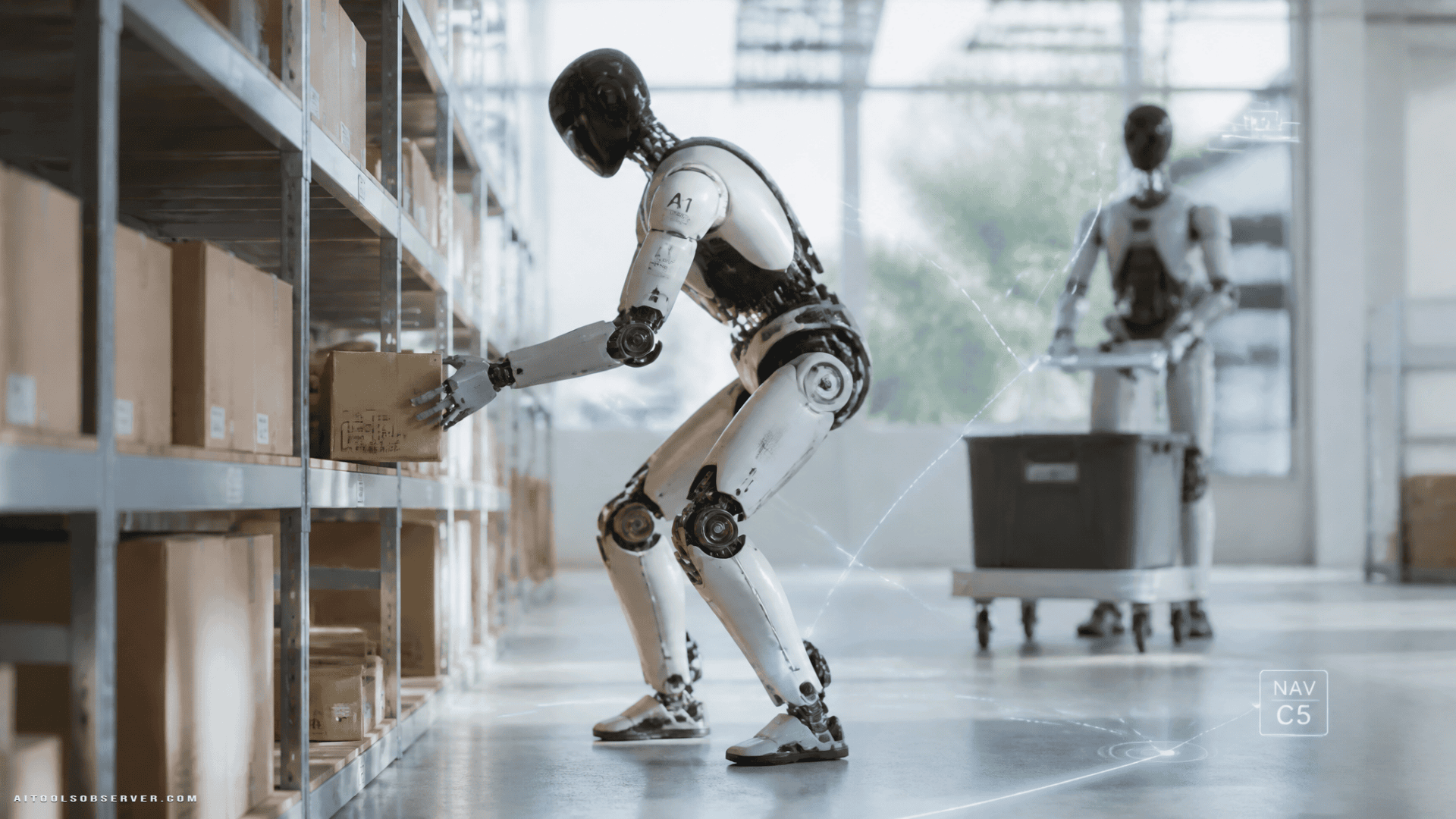
What Gemini Robotics 2 actually adds
The core idea is simple: robots need to do more than execute narrow motions. They need to interpret instructions, understand the physical scene, coordinate their bodies, manipulate objects with precision, and recover when the environment does not cooperate.
Google DeepMind describes Gemini Robotics 2 as an intelligence layer for adaptable robots. The update focuses on three practical capabilities:
- whole-body humanoid control
- improved dexterous manipulation
- multi-step and multi-robot task execution
That matters because real environments are built for human movement patterns. Useful robots need to reach shelves, crouch near the floor, balance while carrying something, and handle objects that are soft, awkward, or tightly packed.
The three-model stack
Instead of one model doing everything, the launch is organized around three different models with different roles.
Gemini Robotics 2
This is the main vision-language-action model. It takes visual input and language instructions, then converts them into motor actions.
Based on the description, it can control full humanoid robots as well as other bi-arm robots. The important shift is that control now extends from feet to fingertips, not just upper-body tabletop tasks.
This is the model behind examples like a humanoid walking to a table, picking up a watering can, moving to a shelf, and placing it in the correct bin.
Gemini Robotics ER 2
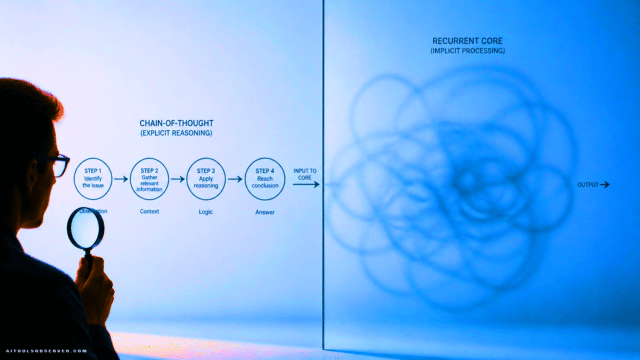
This is the embodied reasoning layer. Think of it as the higher-level agent that helps the robot understand tasks, communicate with humans, plan steps, and track progress over time.
That matters because many useful tasks are not one action. They are sequences with dependencies. A robot may need to inspect a room, decide what comes first, coordinate movement and manipulation, notice failure, and try another path.
Google DeepMind says this model can support task sequences lasting several minutes and involving hundreds of decisions. It also adds multi-robot collaboration, which means different robots can work together on a shared workflow.
Gemini Robotics On-Device 2
This model is optimized to run locally on robotic hardware. That is a practical step, not just a technical one.
In warehouses, hospitals, factories, labs, and field environments, network dependence can create latency and reliability problems. An on-device model gives teams a way to keep robotics behavior closer to the machine itself.
The launch also highlights adaptation to new robot embodiments in a few hours with relatively little data. That suggests Google DeepMind is pushing hard on one of robotics' hardest problems: transferring intelligence across different bodies, sensors, and degrees of freedom.
Why whole-body control is the real headline
The biggest shift here is not simply that robots can grip better. It is that the model is meant to coordinate movement across the entire body.
Most robot automation still breaks tasks into constrained zones. A tabletop robot handles objects in a fixed area. A mobile robot navigates. A separate system manipulates. Joining all of that into one fluid behavior is where complexity rises sharply.
Gemini Robotics 2 appears to move in that direction by letting a humanoid:
- walk to a target area
- bend or crouch to reach objects
- stretch into shelves or tight spaces
- manipulate objects precisely
- continue the task across locations
That kind of full-body coordination is what makes robots more relevant to homes, warehouses, retail floors, elder care settings, and back-of-house operations. The world is not arranged as a perfect workstation.
Dexterity is improving, but not solved
Robotics companies often talk about dexterity as if it is already here. The more realistic reading is that dexterity is improving in uneven steps.
Google DeepMind’s examples show Gemini Robotics 2 handling both multi-finger hands and simpler grippers. The launch mentions delicate actions like tying knots and sealing a ziplock bag, plus tighter packing tasks with two-finger grippers.
That is meaningful because useful manipulation has to work across different end effectors. Not every deployment will use a humanoid hand, and many industrial setups still rely on grippers.
The tradeoff is also clear in the launch details: multi-finger dexterous manipulation remains challenging. That is an important signal for buyers and builders. Progress is real, but human-level hand capability is still a high bar.
Multi-step reasoning is what turns demos into workflows
A robot that can execute one command is interesting. A robot that can manage a longer workflow, recover from mistakes, and understand when a task starts and ends is much more commercially relevant.
This is where Gemini Robotics ER 2 stands out in the launch. It is positioned as the system that:
- interprets user instructions
- understands the environment
- plans multi-step actions
- monitors progress
- self-corrects when something fails
- asks for human intervention when needed
That combination matters because real work is rarely a single motion. Cleaning a cluttered room, restocking an area, staging materials, or preparing items for packing all require branching decisions.
The progress-tracking piece is especially important. If a model can better identify when a task is complete or when a critical event has happened, it becomes easier to build robots that fit into operational processes rather than isolated demos.
Multi-robot collaboration could matter more than humanoid form
The humanoid angle will get attention, but the more practical feature for many operators may be multi-robot collaboration.
A single robot is often a bottleneck. One robot may be good at mobility, another at lifting, another at stationary manipulation. Coordinating multiple robots on a shared workflow can be more useful than trying to force one robot to do everything.
Google DeepMind says Gemini Robotics ER 2 enables different types of robots to communicate and work together. If that works reliably in real deployments, it opens up more modular automation designs.
Potential use cases include:
- one robot retrieving items while another sorts or packs
- one robot clearing clutter so another can complete precise manipulation
- mobile and stationary robots splitting a workflow across rooms or zones
- mixed fleets operating in warehouses or industrial facilities
For enterprise teams, this could become a bigger differentiator than any single robot embodiment.
On-device adaptation is a strong practical signal
One of the biggest barriers in robotics is deployment friction. A model may perform well on one platform, then require large amounts of tuning for another.
Gemini Robotics On-Device 2 is designed to reduce that gap. Google DeepMind says the model can adapt to new bi-arm robot embodiments with only a few hours of adaptation time and a relatively small number of examples.
That matters for three reasons:
- It lowers the cost of trying the model on new hardware.
- It reduces dependence on constant cloud connectivity.
- It makes cross-platform robotics AI more realistic.
If this holds up in broader use, it could help robotics teams move faster from research to pilot deployment. For buyers, it also suggests less lock-in to a single robot body design.
Safety is not a side note here
When robotics companies launch more capable systems, the useful question is not just what the robot can do. It is what happens when the robot is uncertain, when a human gets too close, or when a sub-system proposes an unsafe action.
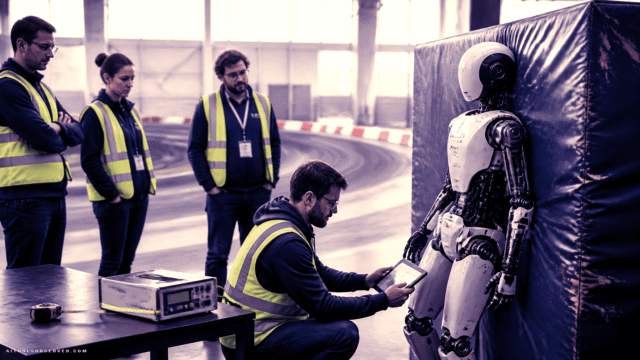
Google DeepMind frames safety as a multi-layered effort combining physical protections with AI safety systems. The new release includes a benchmark called ASIMOV-Agentic, described as a way to evaluate agentic safety orchestration and uncertainty handling.
The specific safety ideas mentioned are practical:
- refusing unsafe tool calls
- predicting whether a task is feasible
- asking for human intervention when uncertain
- detecting nearby humans
- triggering safety actions
- bringing the robot to a safe stop if needed
This is the right direction. More capable movement and manipulation increase the value of robots, but they also raise the stakes of bad decisions. Safety progress is not optional in collaborative settings.
Real-world use cases this launch points to
The launch examples and model design suggest several use cases where Gemini Robotics 2 could be relevant.
Facility cleanup and organization
A whole-body robot that can walk, bend, pick, carry, and place is better suited to cleanup tasks than a fixed manipulator. Cluttered spaces are exactly where narrow robotics systems tend to struggle.
Warehousing and internal logistics
Warehousing and internal logistics
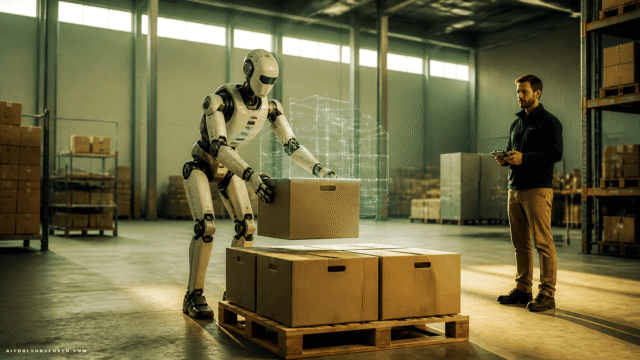
Multi-step reasoning, manipulation, and teamwork between robots could support workflows like item retrieval, transfer, sorting, staging, or packing. On-device operation also fits environments where latency matters.
Industrial support tasks
Bi-arm control and adaptability across embodiments make the stack relevant for manufacturing support, kitting, material handling, and repetitive multi-step procedures that still require some flexibility.
Labs and structured workplaces
Robots that can follow high-level instructions, handle objects carefully, and work through longer task chains may be useful in lab-like environments where workflows are structured but not fully rigid.
Human-robot collaborative environments
The safety updates and human proximity handling suggest a focus on robots working around people, not just inside isolated cages. That is important for any workplace aiming for mixed human-robot operations.
What to watch before getting too excited
The launch is ambitious, but a few practical questions still matter.
First, dexterity is still uneven. Fine manipulation with many fingers remains difficult, and that is one of the hardest parts of general-purpose robotics.
Second, movement speed still appears to be a work in progress. A robot that can complete a task slowly is important research progress, but commercial viability often depends on throughput.
Third, multi-robot coordination sounds strong on paper, but operational reliability is where these systems are really tested. Coordination failures become expensive quickly in live environments.
Fourth, generality across embodiments is promising, but buyers will still want to see how much tuning is needed for their specific hardware, sensors, and workflows.
Availability and rollout signals
Google DeepMind says Gemini Robotics ER 2 is available on Google AI Studio and in private preview on Gemini Enterprise Agent Platform. The VLA and On-Device models are available to early-access partners.
That rollout pattern matters. It suggests the reasoning layer is being exposed more broadly first, while the full motor-control stack remains more controlled through partner access.
For robotics developers, that usually means the software story is maturing in stages. The planning and agentic layer may become easier to explore before broader hands-on access to the lower-level robotics control models.
Why this launch matters in the bigger robotics market
Many robotics efforts still split intelligence into disconnected pieces: one system for language, one for planning, one for control, one for safety, one for fleet logic. Gemini Robotics 2 appears to bring those layers closer together.
That does not mean general-purpose robotics are suddenly solved. It does mean the market is moving toward robotics stacks that are:
- more multimodal
- more adaptive across hardware
- more agentic over longer workflows
- more aware of safety and uncertainty
- more capable of collaboration between robots
For founders, operators, and technical buyers, that is the real signal to pay attention to.
Who should care most
This launch is most relevant for a few groups.
Robotics developers should care because the adaptation and embodiment transfer story could reduce development time across platforms.
Enterprise automation teams should care because multi-step reasoning and multi-robot collaboration are closer to operational value than isolated manipulation demos.
AI infrastructure watchers should care because this is another sign that foundation-model thinking is extending deeper into physical systems, not just chat, search, and productivity workflows.
The planning and agentic layer may become easier to explore before broader hands-on access to the lower-level robotics control models.
The bottom line
Gemini Robotics 2 looks less like a single robot model and more like a layered operating stack for physical AI. The combination of whole-body control, dexterous manipulation, embodied reasoning, on-device adaptation, and safety handling is what makes this launch worth watching.
The practical takeaway is simple: if you are evaluating where robotics is heading next, stop focusing only on whether a robot can pick up an object. Start looking at whether it can understand a goal, move through space, manipulate reliably, coordinate with other robots, adapt to new hardware, and stop safely when the world gets messy. That is the bar Gemini Robotics 2 is aiming at.



Comments (0) No comments yet
Want to join this discussion? Login or Register.
No comments yet. Be the first to share your thoughts!