


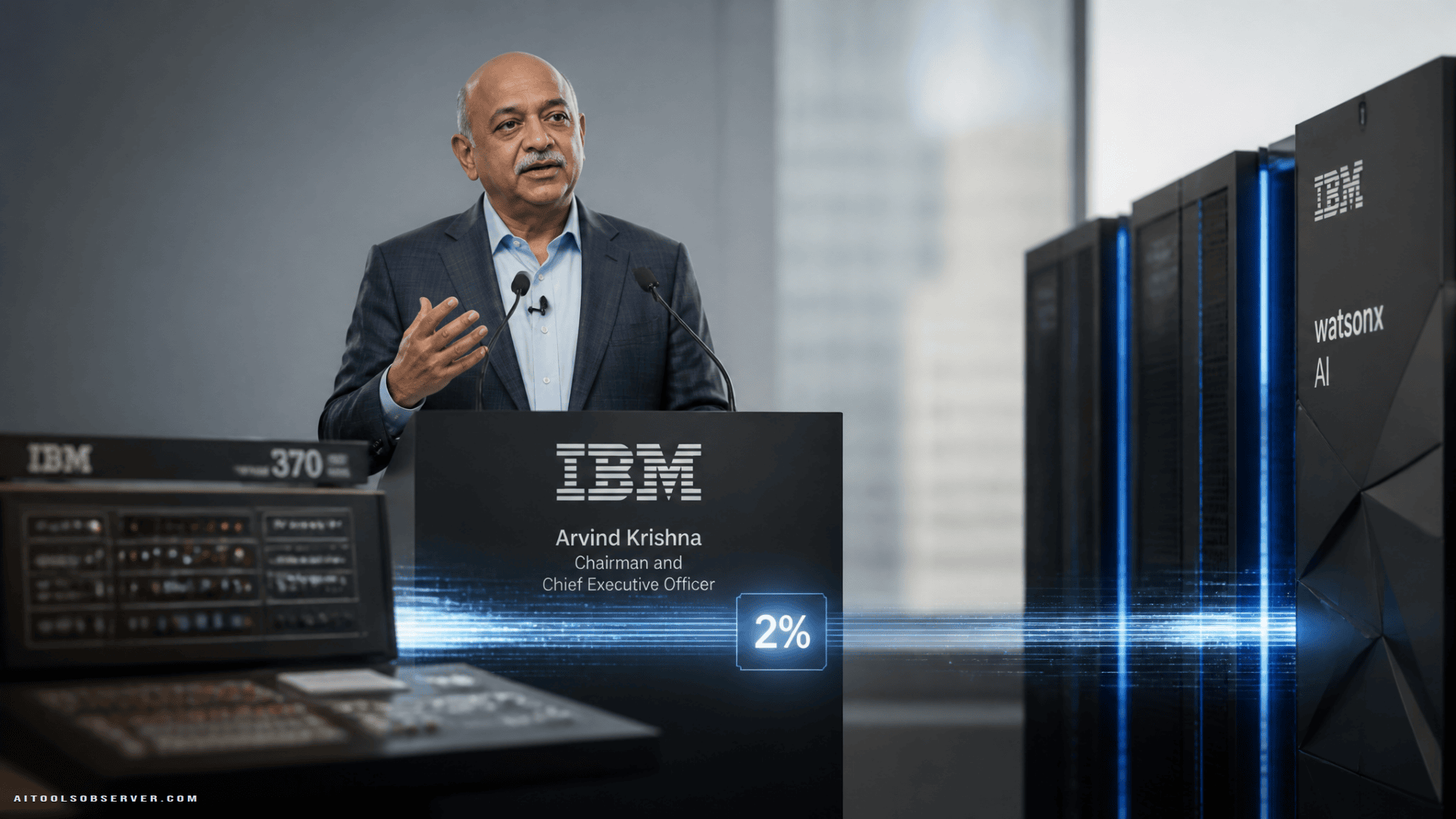
The 2% Claim, Explained
Krishna’s argument is that the vast majority of IBM’s software isn’t application-layer code that AI can replicate. It’s infrastructure software—the plumbing that moves data across hybrid environments, reduces complexity, and prepares enterprises for AI workloads.
Only about 2% of IBM’s software portfolio, he says, faces real displacement risk. His example: Tririga, a lease management tool IBM acquired in 2011 and is sunsetting in 2027. Starbucks reportedly pays around $2 million a year for it. That’s the category of software on the chopping block—aging, replaceable, already being phased out.
The rest, in Krishna’s framing, isn’t competing with AI. It’s enabling it.
What’s Actually Worrying Investors
The 2% figure is reassuring on paper. The quarterly results are less so.
IBM’s Z mainframe business dropped 42% in revenue during the second quarter—a sharp reversal from 49% growth in Q1. Because mainframe hardware and software revenue are tightly coupled (roughly $3 in software for every $1 in hardware), that decline dragged transaction processing software down 9%.
The explanation: customers shifted spending toward servers and storage as memory prices spiked due to AI chip demand. Infrastructure budgets are finite, and AI infrastructure is winning the allocation fight right now.
The Software Growth Revision
This is the number that stings most for investors.
IBM’s finance chief revised full-year software revenue growth guidance from double digits down to 6%–8%. That’s not a collapse, but it’s a meaningful step back from where expectations were set in January.
Software is IBM’s highest-margin business, representing 45% of total revenue in Q2. When that growth rate gets trimmed, it matters disproportionately to the overall story.
The Anthropic Subplot
In February, IBM shares dropped 13% in a single day after Anthropic published a post about Claude Code‘s ability to modernize COBOL—the programming language that lives on mainframes. The market read it as an existential threat to IBM’s core infrastructure business.
Krishna has been managing that narrative ever since. The 2% framing is partly a direct response to that fear: our software isn’t COBOL modernization targets, it’s the infrastructure AI runs on.
Whether investors fully buy that reframe is another question.
What to Watch
Krishna offered a few signals worth tracking:
- Mainframe hardware capacity is growing, which historically pulls software revenue up with a lag. He expects software to “catch back up” within a year.
- ~75% of deals that slipped in Q2 are expected to close before year end—a claim analysts at Jefferies flagged as needing actual results before they’d give it full credit.
- Free cash flow guidance for a $1 billion increase in 2026 remains intact, which is the floor of credibility IBM is defending right now.
The Practical Takeaway
For enterprise buyers evaluating IBM’s software stack, the near-term story is stability with some turbulence. IBM isn’t going anywhere, but it’s navigating a moment where AI infrastructure spending is pulling budget away from the traditional enterprise software renewals that fund its margins.
If you’re comparing enterprise AI infrastructure options, IBM’s positioning—hybrid cloud plumbing, data management, mainframe-adjacent tooling—is genuinely differentiated. The question isn’t whether the software is useful. It’s whether the growth story holds while the market waits for mainframe software to catch up to hardware.
Observe the results. Then choose.











Comments (0) No comments yet
Want to join this discussion? Login or Register.
No comments yet. Be the first to share your thoughts!