



Training Built the Hype. Inference Is Building the Business.
Training is the phase where AI models learn from massive datasets. It requires enormous, centralized GPU clusters and months of compute time. Inference is what happens after—every time a model responds to a query, generates an output, or makes a decision in a live application.
As AI moves from chatbots to agentic systems that act autonomously across workflows, inference frequency increases dramatically. Unlike training, inference is latency-sensitive. It needs to happen close to the end user, which means distributed, urban infrastructure matters more than remote gigawatt-scale campuses.
By 2030, inference is projected to account for half of all AI compute and 30% to 40% of total data center demand. That is the market Equinix is positioning itself to serve.
What the Nvidia and Together AI Deal Actually Means
Equinix announced a partnership with Nvidia and open-source cloud platform Together AI, which offers access to approximately 200 open-source models. The resulting product, called Equinix Inference Exchange, is structured as an inference platform as a service.
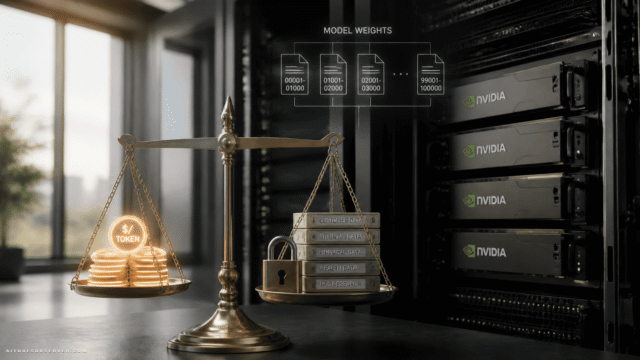
Customers connect to a variety of clouds and providers, run inference on open-source models, and can optimize their compute costs—what Equinix describes as managing “tokenomics.” Together AI acts as the seller of record, billing end customers directly. The service is expected to be available in the first quarter of 2027.
Financing details were not disclosed. What is clear is the architecture: Equinix is not trying to compete with hyperscalers on raw compute scale. It is positioning itself as the interconnection layer between them.
Equinix also announced Equinix Fabric One, a connectivity service designed to simplify multi-cloud and multi-model network architectures—a direct response to the operational complexity enterprises face when running AI across fragmented infrastructure.
The Urban Footprint Advantage
Equinix operates 281 colocation facilities across 77 metropolitan areas on six continents. These are not remote, purpose-built AI campuses. They are network interconnection hubs embedded in city centers, close to enterprise customers, financial institutions, and the end users that inference workloads must reach quickly.
Nvidia CEO Jensen Huang, speaking at the Equinix event in San Francisco, framed this geography as an asset: proximity to “where the sensors are,” combined with a distributed architecture that allows simultaneous closeness and reach.
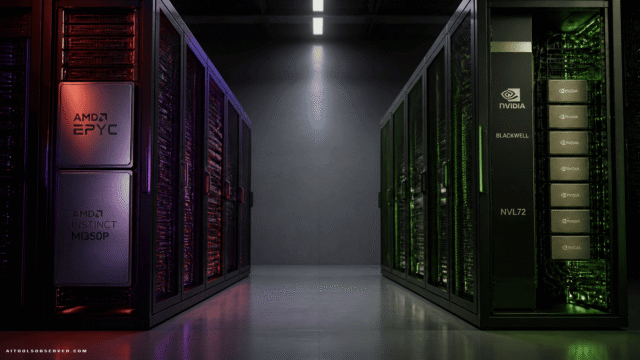
Equinix’s facilities are optimized for Nvidia’s B300 Blackwell Ultra GPUs. Some liquid-cooled locations also support the newer Vera Rubin chips. The hardware stack is current, but the real differentiator is location density, not raw power capacity.
Where Equinix Falls Short—and Why That Is Also a Defense
The colocation model has a structural ceiling. Equinix’s xScale facilities, which serve hyperscale customers, are mostly under 100 megawatts. Some AI training data centers are now measured in gigawatts. Equinix was, by analyst accounts, slow to pursue that scale.
Vlad Galabov, a data center analyst and host of the AIDC Debate podcast, said Equinix was “too slow” to react to gigawatt-scale demand, with newer, more aggressive players moving faster on burst infrastructure projects.
Short seller Jim Chanos has publicly bet against the stock, describing legacy data center companies as low-return, capital-intensive businesses that are structurally different from the AI-native infrastructure being built today.
The counterargument is diversification. Equinix serves over 10,500 customers across a wide range of industries and compute platforms—Nvidia, AMD, and general-purpose CPU workloads alike. In the most recent quarter, Equinix reported net income of $477 million. CoreWeave, one of the leading neoclouds, reported revenue slightly below Equinix’s $2.63 billion but posted a net loss of $626 million.
Galabov’s framing is precise: Equinix is “not exposed to an AI bubble risk.” The tradeoff is that it also captures less of the boom. High risk, high return—Equinix is explicitly not playing that game.
What This Means for AI Tool Builders and Enterprise Adopters
For teams building or deploying AI applications, the Equinix inference play has practical implications worth tracking.
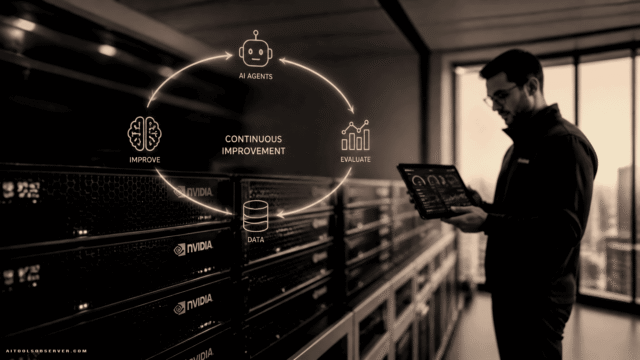
- Inference costs are becoming a primary optimization target. As agentic AI increases query volume, the economics of where and how inference runs will matter more than model selection alone.
- Multi-cloud inference infrastructure is getting more structured. Products like Equinix Inference Exchange and Fabric One suggest the market is moving toward managed interconnection layers, not just raw GPU rentals.
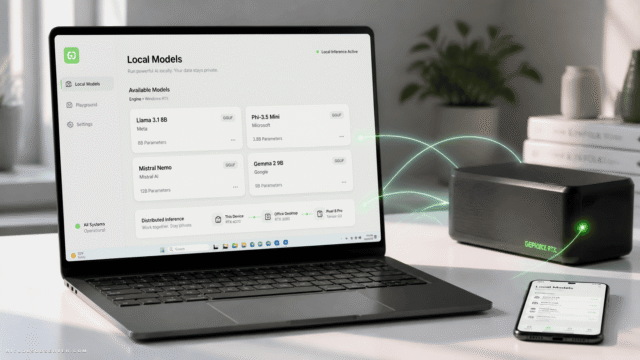
- Open-source model access at the infrastructure level is expanding. Together AI’s 200-model catalog, accessible through Equinix’s network, lowers the barrier to running non-proprietary models in production.
- Urban edge proximity will become a competitive variable. For latency-sensitive applications—real-time agents, financial systems, healthcare decision support—where inference runs geographically will affect product quality.
The broader signal is that AI infrastructure is maturing past the training-centric phase. The companies that built for interconnection, proximity, and operational reliability—rather than raw scale—may find that the next phase of the market is arriving at their doorstep.









Comments (0) No comments yet
Want to join this discussion? Login or Register.
No comments yet. Be the first to share your thoughts!