



The Numbers Are Stark

The Japanese Society of Gastroenterological Surgery projects that the number of gastroenterological surgeons aged 65 or younger will halve by 2043 — dropping from roughly 16,000 in 2023 to around 8,000 in just two decades.
That’s not a talent pipeline problem. That’s a structural collapse in slow motion.
The culprit isn’t mysterious. Surgery is demanding, high-stakes, and notoriously hard on work-life balance. Fewer medical professionals are choosing it as a career path, even as the patient population that needs surgical care keeps growing older and sicker.
An Aging Population, a Rising Cancer Burden

Japan is one of the world’s most rapidly aging societies. With that demographic shift comes a predictable surge in cancer diagnoses — conditions that frequently require surgical intervention.
Cancer cases are expected to peak around 2040, which means the demand curve and the supply curve are on a collision course. The window to build scalable solutions is roughly fifteen years. That’s not a lot of runway.
What AI Is Actually Being Asked to Do Here
This isn’t about replacing surgeons. It’s about making fewer surgeons capable of doing more — and doing it safely.
The use cases being explored include:
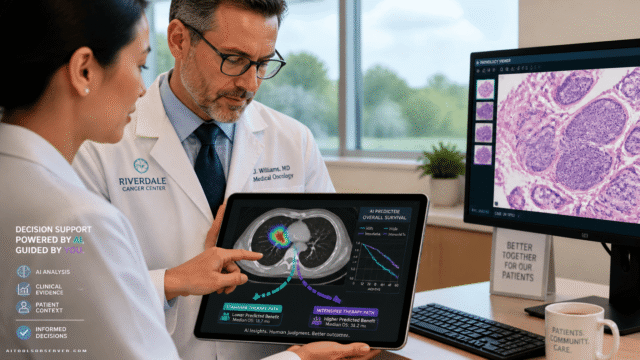
- Clinical decision support — AI systems that surface real-time guidance during procedures, drawing on vast libraries of surgical data to flag risks or suggest next steps.
- Technique preservation — Capturing and codifying the tacit knowledge of experienced surgeons before they retire, turning decades of expertise into trainable, transferable intelligence.
- Workload reduction — Automating the cognitive overhead around surgery: documentation, pre-op analysis, post-op monitoring — so surgeons can focus on the parts only humans can do.
Think of it less as robot surgery and more as an experienced co-pilot that never gets tired.
Government Backing Changes the Equation
When a government starts funding AI development in a specific vertical, the signal is worth paying attention to. It accelerates timelines, de-risks early-stage companies, and creates procurement pathways that private capital alone rarely opens.
Japan’s move here mirrors what we’ve seen in other high-pressure healthcare markets — where demographic reality forces institutional adoption faster than any product launch ever could.
For AI tool developers in the surgical and clinical space, Japan is becoming a serious proving ground. Not just a market, but a mandate.
Why This Matters Beyond Japan
Japan tends to be an early signal for challenges that other aging economies — South Korea, Germany, Italy, parts of China — will face within a decade.
The surgical AI tools being built and validated in Japan today are likely to find global markets tomorrow. And the frameworks being developed — for regulatory approval, clinical integration, and knowledge transfer — will shape how this category evolves everywhere.
The operating room is one of the last frontiers where AI adoption has moved slowly, largely because the stakes are so high and the tolerance for error is so low. Japan is essentially saying: the stakes of not adopting AI are now higher.
That’s a meaningful shift. And it’s worth watching closely.










Comments (0) No comments yet
Want to join this discussion? Login or Register.
No comments yet. Be the first to share your thoughts!