


What Changed
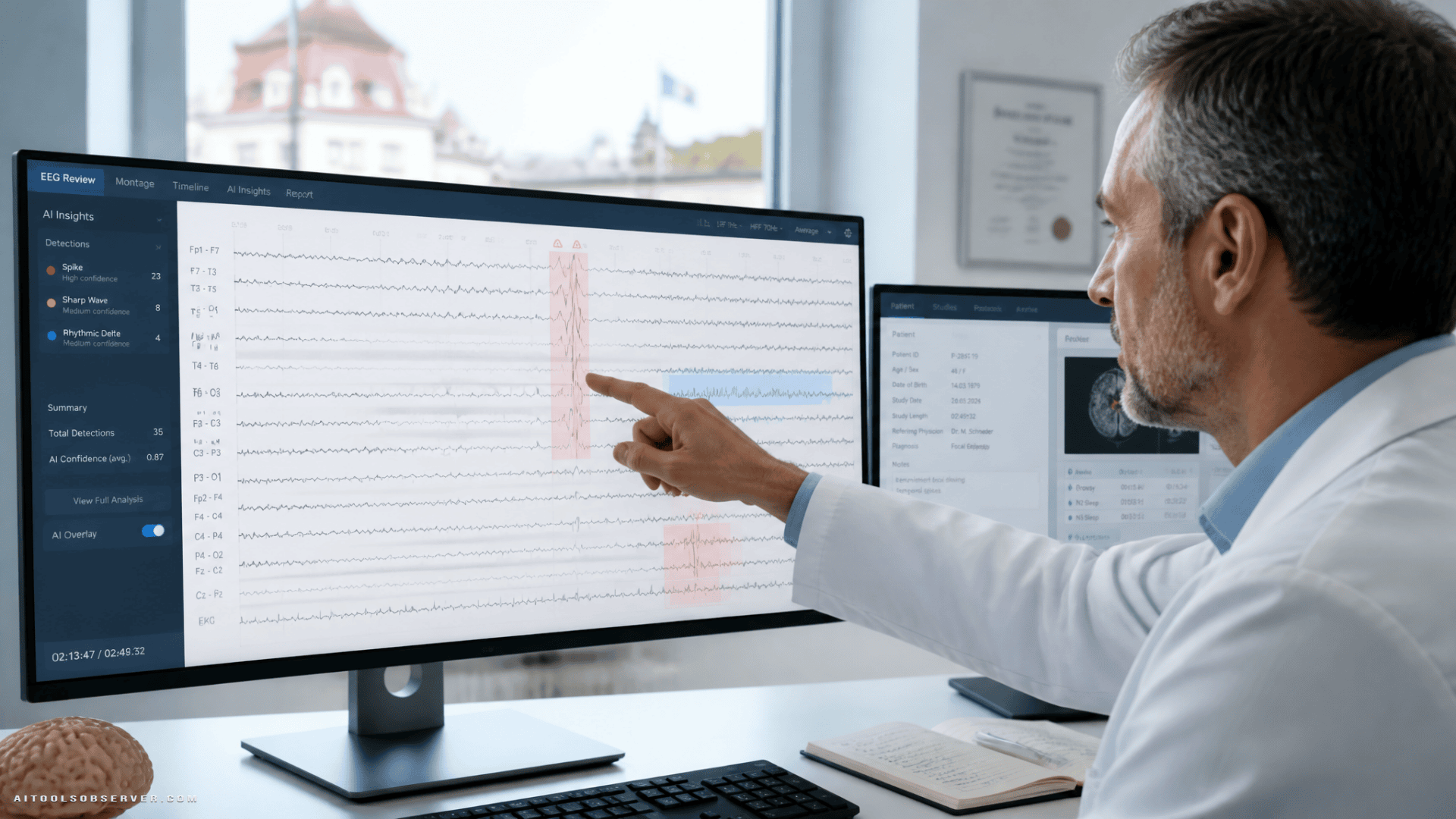
Natus has integrated its autoSCORE AI analysis tool into BRAIN QUICK Software, bringing AI-supported EEG interpretation to European and international markets. Previously, autoSCORE was only available through Natus NeuroWorks EEG Software in the United States, where it launched in August 2024. The CE mark, received earlier this year, opened the door to this broader rollout.
The result: two of Natus’s major EEG platforms now carry autoSCORE capability.
What autoSCORE Actually Does
This isn’t a basic spike detector. The autoSCORE algorithm is built on a deep-learning model trained on 30,000 expertly labeled EEG recordings, and it goes further than traditional seizure detection tools.
Key capabilities include:
- Assessing multiple clinically relevant abnormalities — not just spikes and seizures
- Delivering study-level assessments that flag whether an EEG is normal or abnormal
- Operating as a closed AI model, which supports consistency and data security
That last point matters in clinical settings where auditability and predictability aren’t optional.
Why Europe, Why Now
The CE mark is the regulatory unlock that made this expansion possible. For European neurologists, the integration into BRAIN QUICK — already a familiar platform in the region — lowers the adoption friction considerably. Clinicians don’t need to switch software; the AI layer arrives inside the tool they already use.
Early feedback from European users of the updated BRAIN QUICK Software described recording reliability as “impeccable” — particularly in demanding contexts like presurgical evaluation.
The Broader Signal
There’s a useful comparison being made here: AI-assisted EEG interpretation could shift clinical practice the way digital EEG once did — not by replacing neurologists, but by handling the mechanical load so specialists can focus on judgment calls that actually require their expertise.
That framing is measured and credible. autoSCORE is positioned as augmentation, not automation-as-replacement. For busy neurology departments, that distinction is exactly what makes a tool adoptable.
Takeaway for AI Tool Watchers
This update is a clean example of a staged AI rollout done sensibly — US launch, regulatory clearance, then international platform expansion. For anyone tracking medical AI adoption, the BRAIN QUICK integration shows how AI tools gain clinical traction: through trusted existing platforms, closed models that clinicians can rely on, and workflow improvements that are immediately visible in daily practice.
If you’re evaluating AI tools in regulated industries, the path Natus took here is worth noting as a pattern.












Comments (0) No comments yet
Want to join this discussion? Login or Register.
No comments yet. Be the first to share your thoughts!