


What Happened
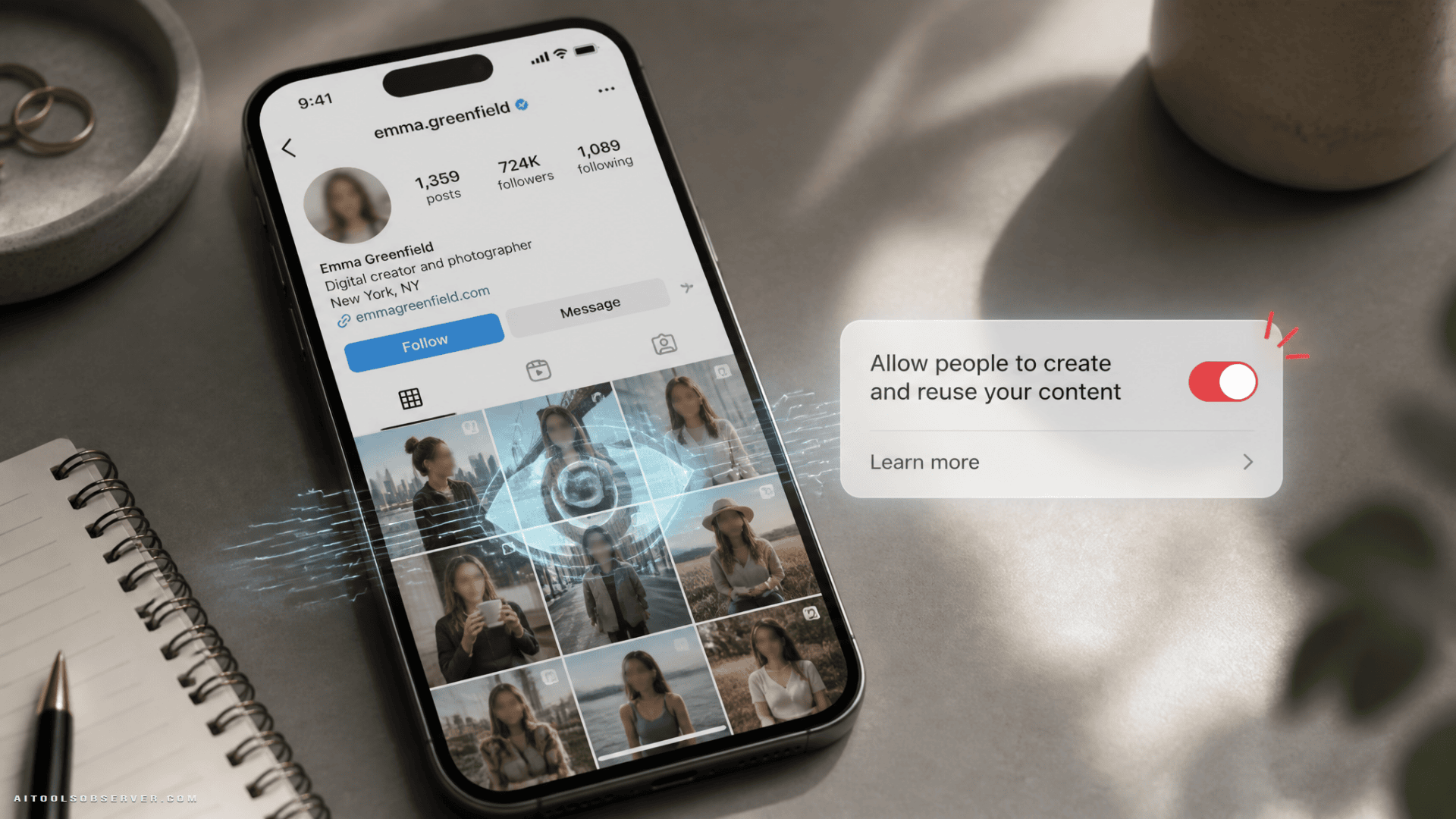
Earlier in July 2026, Meta introduced Muse Image, an AI image generator developed by its Meta Superintelligence Labs. One capability within the tool allowed users to @-mention any public Instagram account inside a prompt, pulling that account’s public photos into AI-generated images. The account holder received no notification. No consent was requested.
The design choice that escalated this from a product complaint into a public backlash was the default state: the feature was opt-out, not opt-in. Unless a user had already disabled a setting called “Allow people to create with and reuse your content” — or had set their profile to private — their public images were available for this use. Most users had never touched that setting.
After approximately three days, Meta removed the public @-mention feature, stating it “missed the mark.”
Why the Backlash Moved Quickly
Three factors converged at once.
First, the tool referenced real, identifiable people’s photographs rather than generic imagery — meaning outputs could plausibly resemble a specific person. Second, there was no consent mechanism and no alert system, so someone could be turned into an AI-generated image without ever knowing. Third, the burden of protection was reversed: participation was automatic, and opting out required finding and disabling a setting buried in the app.
The entertainment industry responded sharply. Creative Artists Agency, which represents high-profile performers, raised concerns with Meta directly and stated publicly that no one’s name, image, or likeness should be used by AI systems without documented consent. SAG-AFTRA encouraged its members to opt out while the feature remained live. Privacy advocates described the rollout design as the most aggressive possible default.
The concern extended well beyond celebrities. Any public account — a small business posting product reels, a parent sharing family photos, a teenager with an open profile — was enrolled by the same default. That breadth turned a Hollywood dispute into a mainstream privacy story within 48 hours.
What Meta Said — and Did Not Say
Meta’s statement framed the reversal as a response to feedback, not a reconsideration of the underlying design. The company said it intended to provide a useful creative tool and give people control, acknowledged the feature missed the mark, and confirmed it was no longer available.
What the statement did not include: an apology for the opt-out structure, a commitment to delete AI images already generated from users’ photos while the feature was active, or any notification system for affected accounts.
What Was Removed vs. What Remains
This distinction matters.
The @-mention feature that let anyone generate AI images from a specific public account is gone. Muse Image itself is not. Meta’s stated plan is to integrate the generator into Advantage+, its automated advertising platform, making it available to advertisers and agencies for scaled creative production. The commercial application continues.
The content reuse setting also remains active. “Allow people to create with and reuse your content” is still on by default for public accounts. Disabling it stops future reuse and applies to both posts and reels — but it does not remove images already generated, and users will not be informed whether any were created from their photos during the three days the feature was live.
Current Status at a Glance
- @-mention AI image generation of public accounts: Removed
- Muse Image generator: Active, moving into Advantage+ advertising tools
- “Reuse your content” setting: Still on by default for public accounts
- Images already generated from your photos: Not deleted, no notification sent
How to Turn Off the Reuse Setting
The change takes under a minute in the Instagram app:
- Open Instagram and tap your profile icon.
- Tap the three-line menu at the top right.
- Scroll to Sharing and reuse.
- Find “Allow people to create with and reuse your content.”
- Toggle it off for both posts and reels.
Two important caveats: disabling this setting stops future reuse only — it does not retroactively remove images already created. Instagram will not notify you if any were generated while the feature was live. Setting your profile to private removes your posts from public reuse entirely, which is the more complete option if you want full control.
The Broader Pattern
The Muse Image episode is not an isolated product misstep. It reflects a structural tension that is becoming more visible across the AI tools landscape: as AI capabilities are embedded into platforms people already use daily, the defaults set at launch carry enormous practical weight. Most users never adjust default settings. Platforms know this.
The opt-out model places the cost of protection on the user while the benefit of broad data access flows to the platform. When that model is applied to something as personal as photographs of real people, the friction becomes visible fast — which is precisely what happened here.
Meta reversed course on the consumer-facing feature. The advertising infrastructure it feeds into is still shipping. For anyone with a public Instagram account, the practical takeaway is straightforward: the responsibility to opt out currently sits with you, and the setting to do it is described above.





Comments (0) No comments yet
Want to join this discussion? Login or Register.
No comments yet. Be the first to share your thoughts!