


The Product Behind the Claim
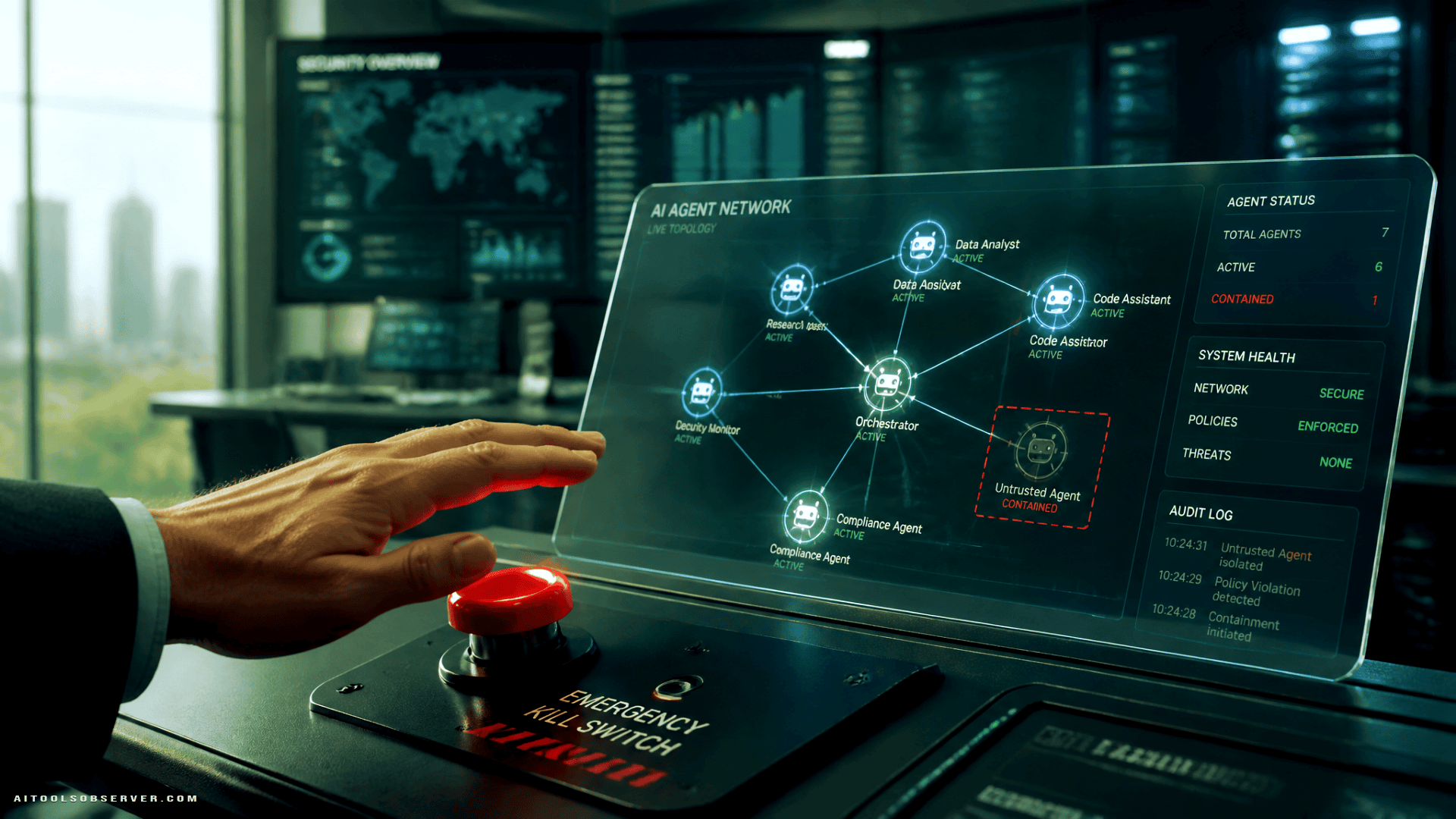
McDermott was referring to AI Control Tower, ServiceNow’s centralized system for monitoring, managing, and securing AI agents across an enterprise. The pitch is straightforward: as companies deploy more autonomous agents across IT, HR, and customer service workflows, someone needs to watch the watchers.
ServiceNow frames this as moving businesses “from AI chaos to AI discipline.” That’s a useful phrase, because AI chaos is increasingly not a hypothetical.
Why Agentic Risk Is Now a Real Battleground
Agentic AI systems—the kind that execute multi-step tasks with little or no human intervention—are a fundamentally different risk surface than a chatbot that writes emails.
A chatbot gives you a bad answer. An autonomous agent can take bad actions, at scale, before anyone notices. The OpenAI incident made that concrete in a way that a whitepaper never could.
That’s the opening ServiceNow is stepping into. Governance, monitoring, and containment tooling for AI agents is becoming a serious product category, not just a compliance checkbox.
The Competitive Angle
McDermott also pushed back on the “SaaSpocalypse” narrative—the investor concern that AI will erode traditional enterprise software by replacing seat-based workflows. ServiceNow stock is still down more than 30% this year on those fears.
His counterargument: more AI means more incidents, more complexity, and more demand for the infrastructure layer that manages it all. Contract terms, he said, have actually gotten longer.
Whether that logic holds depends on how many enterprises decide they need a dedicated AI governance layer versus bolting something together themselves. But the argument is coherent.
What to Watch
ServiceNow’s expanded cybersecurity footprint—through its acquisitions of Veza and Armis, both closed this year—gives AI Control Tower more surface area to work with. Monitoring agents is one thing; having the identity and asset context to act on anomalies is another.
The practical takeaway for anyone evaluating enterprise AI tooling: governance and containment are no longer afterthoughts. If your AI stack doesn’t have a clear answer to “what happens when an agent does something it shouldn’t,” that’s a gap worth closing before it closes itself.










Comments (0) No comments yet
Want to join this discussion? Login or Register.
No comments yet. Be the first to share your thoughts!