


What’s new in Suno v6
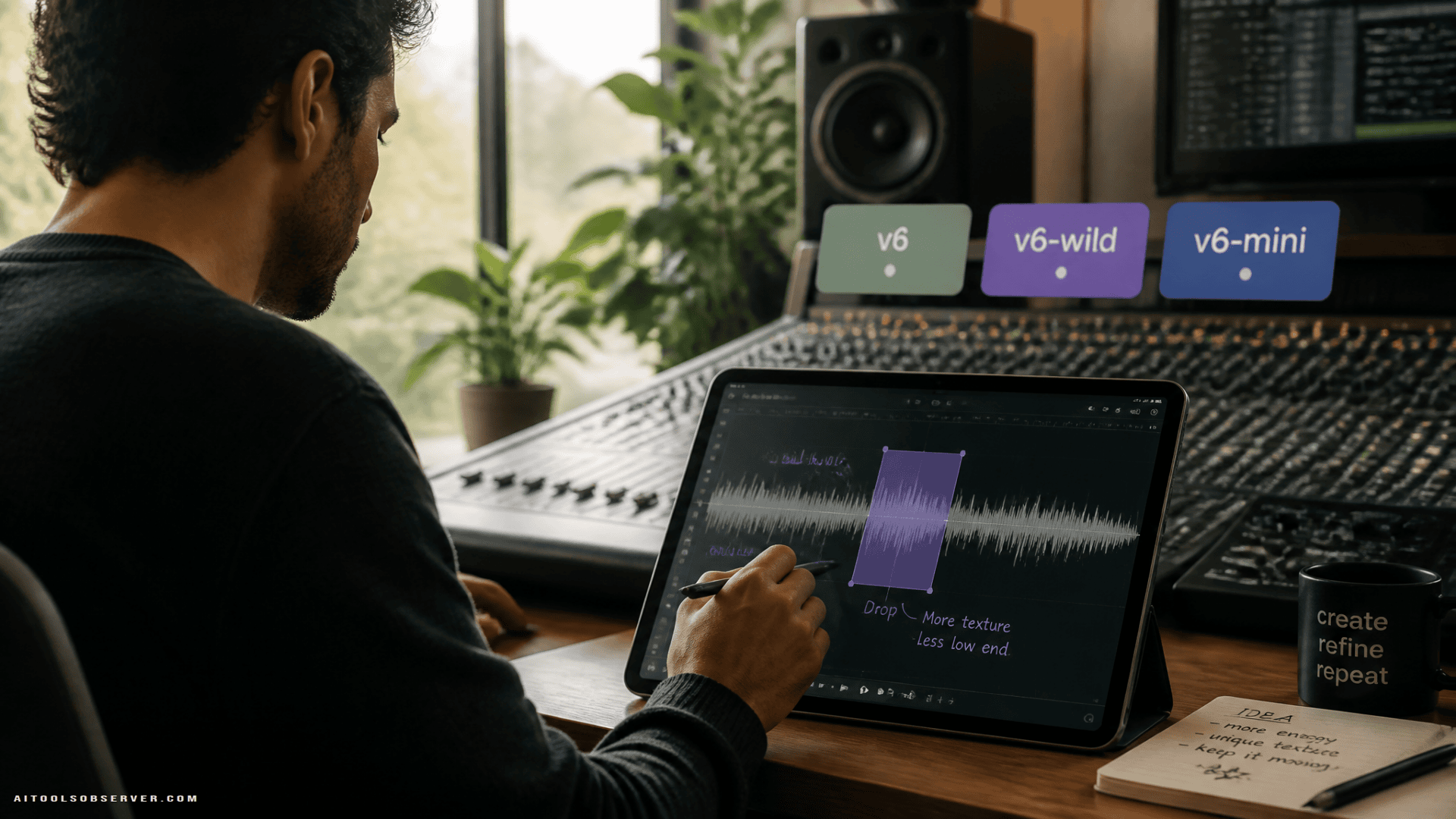
Suno is rolling out three models in the v6 generation:
- v6 for more precise, consistent results
- v6-wild for less predictable, more experimental output
- v6-mini as a faster, lighter option for broader use
Based on the available context, v6 and v6-wild are positioned for Pro and Premier subscribers, while v6-mini is intended for all users.
That lineup makes the product segmentation easy to read. One model for control, one for chaos, one for speed.
The big shift: editing instead of regenerating
The most useful part of this update is not just “better generations.” It’s the new editing layer.
Suno says users can now:
- modify individual sections of existing songs with written instructions
- combine elements from multiple sources
- isolate and sample sections of recordings
- change specific lyrics without rebuilding the whole track
That matters because music creation rarely fails at idea generation. It fails in revision. If these tools work as described, Suno is pushing beyond “prompt in, song out” and closer to a real iterative workflow.
For creators, that means fewer full resets. For producers, it means more surgical changes. For everyone else, it means less arguing with a model that refuses to touch verse two without rewriting the chorus.
More ways in, fewer format walls
Suno also says projects can start from:
- text
- audio
- images
- video
Users can also describe mood, references, instrumentation, structure, and overall musical feel more effectively across the new models.
This multi-input approach is practical. Not everyone starts with lyrics. Some start with a reference clip, a visual moodboard, a rough hum, or a scene from a video. Suno seems to be designing for that messy reality rather than forcing every user through a text box.
v6-wild
This is the permission slip for risk. Suno describes it as more experimental and less predictable, which usually means more surprise, more edge, and more cleanup.
That makes it a fit for creators who want unusual textures or left-turn ideas, and are comfortable trading polish for novelty.
v6-mini
This appears to be the speed layer. Faster, lighter, more efficient.
For casual creators, quick demos, or idea sketching, that’s probably the right tradeoff. Not every song needs the full laboratory treatment.
Stronger safeguards are part of the release
Suno says it has strengthened safeguards around uploaded audio and lyrics. The stated goals include detecting unauthorised use, improving transparency around AI use in music, and reducing abuse.
That’s not a side note. In AI music, safeguards are product features now.
The company’s broader positioning also matters here. Suno says v6 was developed with input from artists, producers, songwriters, and musicians, and points to work with industry partners including Warner Music Group, BMG, and Believe. The message is clear: this launch is not only about creation quality, but also about fitting more neatly into the licensing and compensation conversation around generative music.
Why this launch stands out
A lot of AI music announcements still boil down to “it makes songs from prompts.” Useful, yes. Distinctive, not really.
What makes Suno v6 more interesting is the combination of:
- model specialization
- section-level editing
- multi-input creation
- stronger guardrails around source material
That package suggests Suno wants to serve different creator types without pretending they all work the same way.
A casual user wants speed. A producer wants control. An experimental artist wants accidents. A platform trying to stay relevant probably needs all three.
Practical implications for creators
If you make music professionally, the editing tools are the headline. Being able to alter pieces of a track instead of regenerating the whole thing could make AI output more usable inside actual production workflows.
If you’re an emerging creator, the multi-input setup lowers the barrier to starting. A reference clip, an image, or a rough idea can become the seed instead of a perfectly written prompt.
If you’re mostly curious and want fast results, v6-mini looks like the least intimidating entry point.
One thing to watch
Suno says it plans to retire previous models as v6 rolls out. That’s worth noting for anyone with established habits or workflows tied to older versions.
When AI tools replace model generations, you usually gain features but lose some familiarity. Better controls are nice. So is knowing where all the buttons used to be.
The takeaway
Suno v6 looks less like a pure generation upgrade and more like a workflow upgrade. The real value is not just making songs from prompts, but making revision less painful and creation less linear.
If you’ve been waiting for AI music tools to act a bit more like instruments and a bit less like slot machines, this is the part to pay attention to.









Comments (0) No comments yet
Want to join this discussion? Login or Register.
No comments yet. Be the first to share your thoughts!