



What the leak appears to show
Based on the reported materials, Suno’s training pipeline appears to have pulled from a wide mix of sources, including:
- YouTube Music
- Deezer
- Genius
- Pond5
- Jamendo
- Freesound
- IMSLP
- podcast RSS feeds
The reported code comments and dataset notes suggest ingestion at very large scale, including millions of clips and massive hour counts across multiple collections. The leak also appears to confirm a point already central to ongoing legal disputes: Suno trained on a huge volume of copyrighted music and related text from the open internet.
That is not entirely new at a high level. Suno had already said in legal filings that its models were trained on essentially all music files of reasonable quality accessible on the open internet, amounting to tens of millions of recordings. What is new here is the level of operational detail.
Why YouTube is at the center of this story
YouTube has been one of the most contested pieces of AI training fights because it combines scale, convenience, and an enormous catalog of music. The leaked data reportedly includes a file showing more than two million music clips ingested from YouTube Music, along with other comments describing very large hour totals tied to YouTube-related datasets.
That matters because record labels have specifically accused Suno of ripping songs from YouTube. According to the reporting, the leaked materials appear to back that up.
There is also a second layer here. The code reportedly suggests scraping may have used proxy infrastructure, which points to a more deliberate collection system rather than casual downloading. If true, that strengthens the argument from rights holders that this was industrial-scale acquisition of protected works.
It wasn’t just songs
One of the more overlooked parts of the leak is the breadth of material involved. This was not only about full songs or instrumentals.
The reported files suggest training data included:
- Lyrics datasets, including foreign-language lyrics
- Stock music libraries
- Classical and sheet-related archives
- Sound libraries
- Podcast audio
- Vocal-focused searches such as acapella content
That last point is especially interesting. If a model is meant to generate convincing sung vocals, melody lines, and production styles, then specialized sourcing for vocal-heavy content would make practical sense. It also shows how targeted AI training can become when companies optimize for specific output quality.
Why this changes the copyright conversation
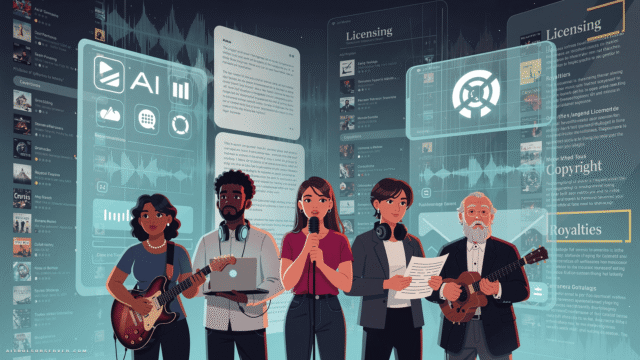
The legal argument around AI training often gets flattened into one question: is it fair use or not? But the Suno leak pushes the conversation into a more concrete set of questions:
- What was copied?
- From where?
- At what scale?
- Through what technical methods?
- Were platform protections bypassed?
- How closely can outputs imitate existing works?
Those details matter because copyright cases are rarely decided only on broad philosophy. They often turn on the specifics of access, copying, transformation, market impact, and whether technical barriers were circumvented.
If a company trains on “publicly available” material, that does not automatically settle the issue. Publicly accessible is not the same thing as freely licensed. And streaming access is not the same thing as permission to duplicate media into training datasets.
The fair use defense is getting tested in public
Suno’s position, based on public filings and statements, is that training on publicly available internet music is permitted under fair use. That is a view shared by many AI companies across text, image, video, and audio.
The problem is that courts, creators, and platforms may see the issue differently when the evidence becomes more specific. A generic statement about training on internet data sounds one way. A leak describing source-by-source scraping, giant ingestion volumes, and possible stream-ripping sounds very different.
That does not mean the fair use argument fails. It does mean the argument gets harder to keep at the level of abstraction.
The security issue may be just as important
The training-data story will grab headlines, but the breach itself raises a separate problem: can users trust AI startups with their data?
According to the reported account from the hacker, they accessed customer information for hundreds of thousands of users, including emails and phone numbers, along with Stripe-related payment details depending on account setup. Suno has said the incident was limited, quickly contained, involved outdated source code, and did not compromise sensitive personal information. The company also said it does not have access to customers’ full credit card numbers in Stripe.
Those statements reduce some of the worst-case assumptions, but they do not erase the concern. For users, this is a reminder that many AI tools are still young, moving fast, and handling a mix of creative assets, identity data, and billing information.
What founders and AI buyers should pay attention to
If you’re evaluating AI audio tools, this story is not just about Suno. It highlights a broader due diligence checklist that buyers increasingly need to use.
1. Ask where training data comes from
If a vendor is vague about data sourcing, assume the risk is higher. “Public internet” is not a sufficient answer if your use case depends on legal clarity.
2. Separate product quality from compliance risk
A tool can be impressive and still create downstream legal exposure. Strong output quality does not mean low copyright risk.
3. Look at security maturity
Breaches involving code repositories, cloud credentials, or customer records are not side issues. If a tool is embedded in your workflow, security practices matter as much as features.
4. Watch ongoing litigation
For AI music tools especially, lawsuits are not background noise. They may shape product restrictions, licensing models, pricing, and enterprise adoption.
Why podcasts and stock libraries matter too
Most discussion around AI music focuses on chart songs and major labels. But the reported dataset sources suggest something broader: AI audio models may be trained across every corner of the audio web.
That includes stock music catalogs, public-domain-adjacent archives, creator-uploaded audio libraries, lyric sites, and spoken-word feeds. This matters because it shows how models can absorb not just mainstream music, but also production cues, metadata patterns, voice structures, and niche genre conventions from many different ecosystems.
For creators, that expands the concern. The issue is not only whether famous songs were used. It is whether the long tail of online audio has been systematically harvested without clear permission.
The bigger market signal
This leak fits a pattern across AI. More companies are no longer denying that copyrighted material was used in training. Instead, they are shifting to a legal defense centered on fair use, public availability, and the claim that outputs are new rather than copied.
That shift is important because it tells you where the market is headed. The next phase of competition may not be about who can scrape the most data. It may be about who can prove cleaner sourcing, better licensing, stronger safeguards, and lower enterprise risk.
In other words, the product category is maturing. Buyers will increasingly care not just about what an AI tool can generate, but about how it was built.
What this means if you use AI music tools today
If you are a casual user, this story is a warning to be careful with account data and to pay attention to platform trust, not just output quality.
If you are a business, agency, or creator building commercial work with AI music, the practical takeaway is even sharper:
- review the provider’s data sourcing claims
- check the company’s security posture
- understand indemnity and usage terms
- avoid assuming “AI-generated” means “copyright-safe”
The Suno leak appears to expose both sides of the AI tool risk equation at once: questionable training inputs and fragile operational security. For anyone choosing AI tools, that combination is the signal to watch.







Comments (0) No comments yet
Want to join this discussion? Login or Register.
No comments yet. Be the first to share your thoughts!