


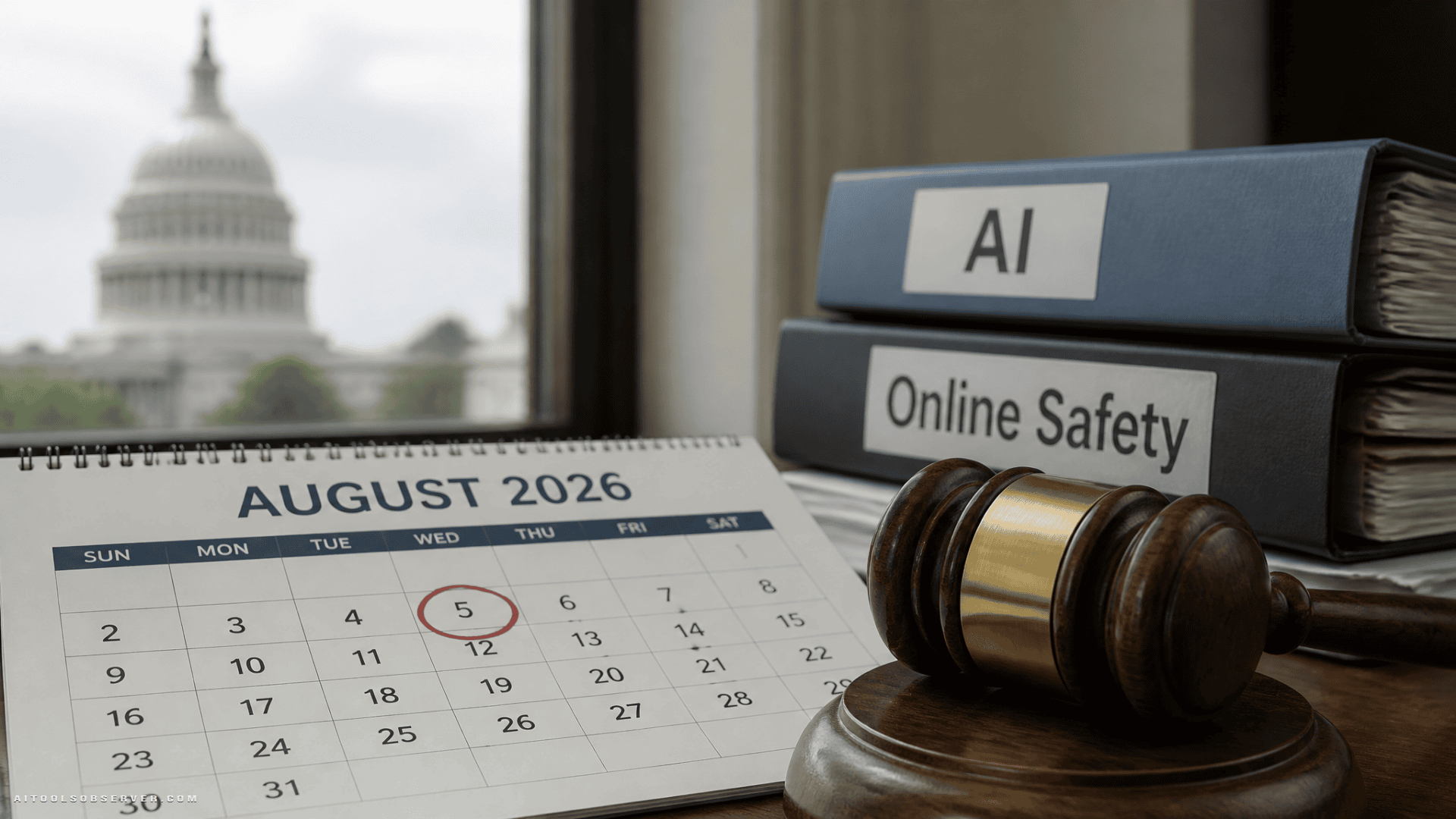
Why the Delay Happened
There’s no single reason for the postponement — it’s a combination of factors that have been building for weeks.
Agreement is still elusive. Panel members and aides have publicly said they don’t know which bills Cruz will include on the markup docket. The chairman has been soliciting input from members, but consensus hasn’t materialized.
Democrats haven’t submitted proposals. A Republican aide cited the lack of Democratic bill suggestions as part of the holdup. Democratic aides pushed back on that framing, but the bipartisan friction is real regardless of who’s responsible.
The Blackburn package hit a wall. Sen. Marsha Blackburn (R-Tenn.) has been working to combine a bipartisan kids online safety bill with state AI law preemption provisions — a pairing that would have significant implications for how federal AI rules interact with state-level laws already on the books. That effort stalled after Blackburn failed to secure a Trump endorsement following an Oval Office meeting with Cruz.
The Thune-Klobuchar AI bill may not be ready. Senate Majority Leader John Thune told reporters he hoped Cruz could include his forthcoming bipartisan AI bill with Sen. Amy Klobuchar (D-Minn.), but acknowledged he wasn’t optimistic it would be ready in time.
What’s Actually at Stake
This markup isn’t just procedural housekeeping. The bills under consideration touch on some of the most contested questions in US AI policy right now.
Federal Preemption of State AI Laws
The Blackburn package’s attempt to bundle kids online safety with state AI law preemption is one of the most consequential elements in play. Several states — including California, Colorado, and Texas — have moved ahead with their own AI regulations. Federal preemption would override those, creating a single national standard.
That’s a major ask. State attorneys general and consumer advocates have pushed back hard on preemption language in previous federal tech bills. Whether Blackburn can thread that needle, especially without a Trump endorsement, remains an open question.
Kids Online Safety
Online safety for minors has broad bipartisan support in principle, but the details remain contested. Attaching it to AI preemption provisions complicates what might otherwise be a more straightforward vote.
A Bipartisan AI Framework
The Thune-Klobuchar bill represents the kind of cross-aisle AI legislation that could actually move through a divided Senate. But if it’s not ready for this markup, it gets pushed to the fall — and the legislative calendar gets more crowded, not less.
The Bigger Picture for US AI Policy
Republican senators have made clear they want to advance AI legislation in 2026. Cruz confirmed he’s been talking to Thune “frequently” about the markup plans. The political will is there, at least on the surface.
But political will and legislative readiness are different things.
The delay to August 2026 compresses an already tight timeline. If the markup doesn’t happen before recess, the next realistic window is September — and by then, midterm positioning starts to shape every vote.
Commerce ranking member Maria Cantwell (D-Wash.) noted this week that she hadn’t been read in on the markup agenda. That’s a signal that bipartisan coordination is still incomplete, which makes a smooth markup harder to execute even if the date holds.
The broader fight over AI regulation is also being shaped by politics far beyond committee procedure.
What This Means for AI Tool Builders and Adopters
If you’re building on AI or making decisions about AI tools for your business, the regulatory uncertainty isn’t going away soon. Here’s what to watch:
- State laws remain in effect. Until federal preemption passes — if it ever does — state-level AI regulations continue to apply. California’s AI rules, for example, are already shaping how companies handle automated decision-making and transparency requirements.
- Kids and consumer safety requirements are coming. Whether through this markup or a later one, online safety legislation targeting AI-powered platforms is moving. If your product touches minors or consumer data, compliance planning should already be underway.
- A federal AI framework is still possible in 2026. The Thune-Klobuchar bill signals genuine bipartisan interest. A delay isn’t a death sentence for federal AI legislation — but it does mean more months of operating without clear national rules.
The Bottom Line
The August 2026 shift is a setback, not a collapse. But it narrows the path significantly. Cruz has roughly two days between the tentative markup date and the start of summer recess to move legislation that touches some of the most politically complex issues in tech policy.
Watch for whether the Blackburn package gets restructured, whether the Thune-Klobuchar bill makes the docket, and whether Cruz can get Democratic buy-in before the gavel drops. Those three variables will determine whether this markup produces anything meaningful — or becomes another entry in the long list of almost-happened federal AI bills.














Comments (0) No comments yet
Want to join this discussion? Login or Register.
No comments yet. Be the first to share your thoughts!