


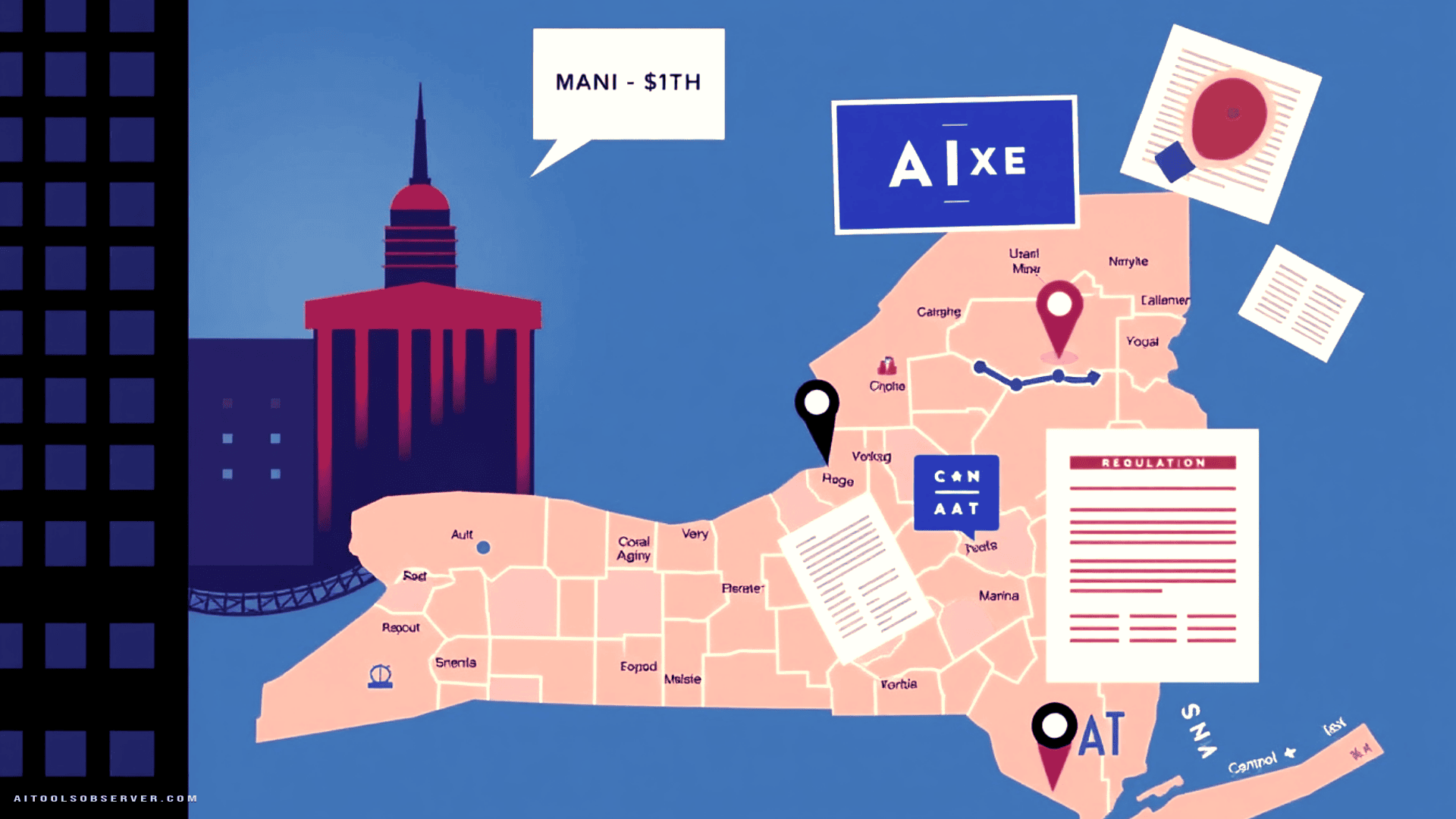
The Race That Became a Referendum on AI Oversight

New York’s 12th Congressional District is one of the most educated, high-income electorates in the country. It covers a large swath of Manhattan. It’s the kind of district where voters actually read the fine print on outside spending.
Alex Bores, a state assemblymember and former Palantir employee turned critic, entered the race as a relative unknown. He sponsored the RAISE Act in the New York State Legislature — one of the country’s most significant attempts to establish legal guardrails for AI systems.
That single policy position made him a target.
Think Big, a super PAC backed by leaders at OpenAI and venture capital firm Andreessen Horowitz, launched an early ad blitz against him. The goal was straightforward: neutralize a pro-regulation voice before it reached Congress.
It didn’t work the way they planned.
When Attack Ads Become Endorsements
Here’s the dynamic that every AI founder, marketer, and policy watcher should understand.
In a high-information electorate, aggressive outside spending from powerful tech interests doesn’t just fail — it can actively validate the candidate it targets. Rep. Pat Ryan, the first sitting congressional delegate to endorse Bores, put it bluntly:
People are smart enough to understand that if people that rich and powerful are coming at him, he must be doing something right.
Democratic strategist Chris Coffey, who supports Bores’ opponent Micah Lasher, admitted the obvious:
Alex has a national platform he did not have before, and he is more well-known in the district than he has ever been.
This is the backfire effect in real time. And it has direct implications for how the AI industry approaches political influence going forward.
Two Sides of the AI Industry, One Ballot

What makes this race particularly revealing is that it isn’t simply “tech money vs. regulation.” It’s a split within the AI industry itself.
Think Big, backed by OpenAI-aligned investors and Andreessen Horowitz, is spending against Bores. But separate pro-Bores entities linked to Anthropic — a company that has taken a notably more favorable stance toward AI oversight — are now spending more combined than Think Big.
This is the real story beneath the headlines.
The AI industry is not monolithic. There is a genuine and growing fault line between:
- Companies that view regulation as an existential threat to their growth trajectory
- Companies that view thoughtful regulation as a competitive moat and a trust-building mechanism
Anthropic’s positioning here isn’t purely altruistic. A regulated AI environment tends to favor well-capitalized, safety-focused incumbents over fast-moving, less scrutinized competitors. Regulation can be a strategic tool just as much as a constraint.
The RAISE Act and What It Actually Represents

Bores’ sponsorship of the RAISE Act is the policy flashpoint at the center of all this spending.
The law aims to establish guardrails for AI — liability frameworks, transparency requirements, and accountability structures for high-risk AI deployments. For companies building and selling AI tools at scale, this kind of legislation changes the compliance calculus significantly.
For the AI tools ecosystem specifically, this matters on multiple levels:
Liability shifts. If AI outputs cause harm, who is responsible — the model provider, the deployer, or the end user? Legislation like the RAISE Act starts to answer that question in ways that reshape product design, terms of service, and enterprise sales conversations.
Transparency requirements. Disclosure mandates around AI-generated content, automated decision-making, and data usage directly affect how AI tools are marketed and adopted.
Market access. Regulatory frameworks can create barriers to entry that consolidate the market around compliant, well-resourced players — which is exactly why some incumbents quietly support them.
Why This Proxy War Reflects a Broader Ecosystem Shift

The NY-12 race isn’t an isolated political curiosity. It’s a microcosm of a much larger battle playing out across the AI tools landscape.
Tiffany Muller, president of End Citizens United, noted that the scale of tech and crypto spending in elections this cycle “dwarfs anything we have ever seen before.” She pointed to Illinois, where a crypto-backed PAC spent $10 million against Lt. Gov. Juliana Stratton — and she won by nearly 100,000 votes.
The pattern is consistent: industry money is flowing into elections at the exact moment when foundational AI policy decisions are being made. The companies spending now are betting that shaping the legislative environment early is cheaper than complying with unfavorable rules later.
For anyone tracking the AI tools market, this spending is a leading indicator. Where political money flows, regulatory pressure follows — and where regulatory pressure builds, product strategy has to adapt.
The Coalition Bores Is Building — and What It Signals

Beyond the AI angle, the coalition forming around Bores tells you something important about the political appetite for AI accountability.
Our Revolution, founded by Sen. Bernie Sanders, endorsed Bores despite disagreements on other issues. Joseph Geevarghese, the group’s executive director, framed the race as “a marquee fight between those who want AI regulated and those who believe AI should be free from any type of government oversight.”
Union support. Progressive organizations. A sitting congressman. These aren’t natural allies of a former Palantir employee. But the AI regulation issue is creating new political alignments that cut across traditional ideological lines.
Rep. Ryan articulated the emerging frame clearly:
It’s less about progressive or moderate right now. It’s more about, are you with the people or are you with the elites?
That framing — AI regulation as a populist issue rather than a technocratic one — is a significant shift. It means the debate is no longer confined to policy wonks and Silicon Valley insiders. It’s entering the mainstream political vocabulary.
What This Means for AI Tool Builders and Adopters

If you’re building, selling, or evaluating AI tools right now, the NY-12 race is worth watching for three concrete reasons.
First, federal AI legislation is no longer a distant possibility. The political energy building around AI oversight — amplified by races like this one — accelerates the timeline for federal action. Tools built without compliance architecture are increasingly exposed.
Second, the Anthropic vs. OpenAI political divide reflects a real product strategy divergence. Companies that lean into safety, explainability, and accountability are positioning themselves for a regulated future. Companies that resist oversight are betting on a window of time that may be closing faster than they expect.
Third, public trust in AI is genuinely mixed. Muller’s observation that voters are approaching AI industry arguments “with a certain amount of skepticism” reflects broader consumer sentiment. AI tools that lead with transparency and clear use-case boundaries are better positioned than those that overpromise and underdeliver.
The Race Isn’t Over — But the Trend Is Clear
Bores is narrowly leading in internal polls, but the race remains tight. Micah Lasher has deep New York political roots and Nadler’s backing. George Conway and Jack Schlossberg bring high name recognition. A significant chunk of voters are still undecided.
The outcome of this specific primary matters less than what the race has already revealed.
The AI industry’s attempt to use political spending to suppress regulation is generating exactly the kind of backlash that accelerates the regulatory momentum it was trying to stop. The more visibly tech billionaires fight oversight, the more politically viable oversight becomes.
The Bigger Picture

The NY-12 proxy war is a preview of what the next two years of AI policy will look like.
Massive industry spending. Competing factions within the AI sector itself. Populist coalitions forming around accountability. And a public that is increasingly skeptical of the idea that powerful technology should self-regulate.
For founders building AI tools, the strategic takeaway is straightforward: the regulatory environment is shifting, the timeline is compressing, and the companies that engage constructively with oversight frameworks will be better positioned than those that spend money trying to prevent them.
Observe the money. Observe the politics. The direction of travel is becoming very clear.










Comments (0) No comments yet
Want to join this discussion? Login or Register.
No comments yet. Be the first to share your thoughts!