


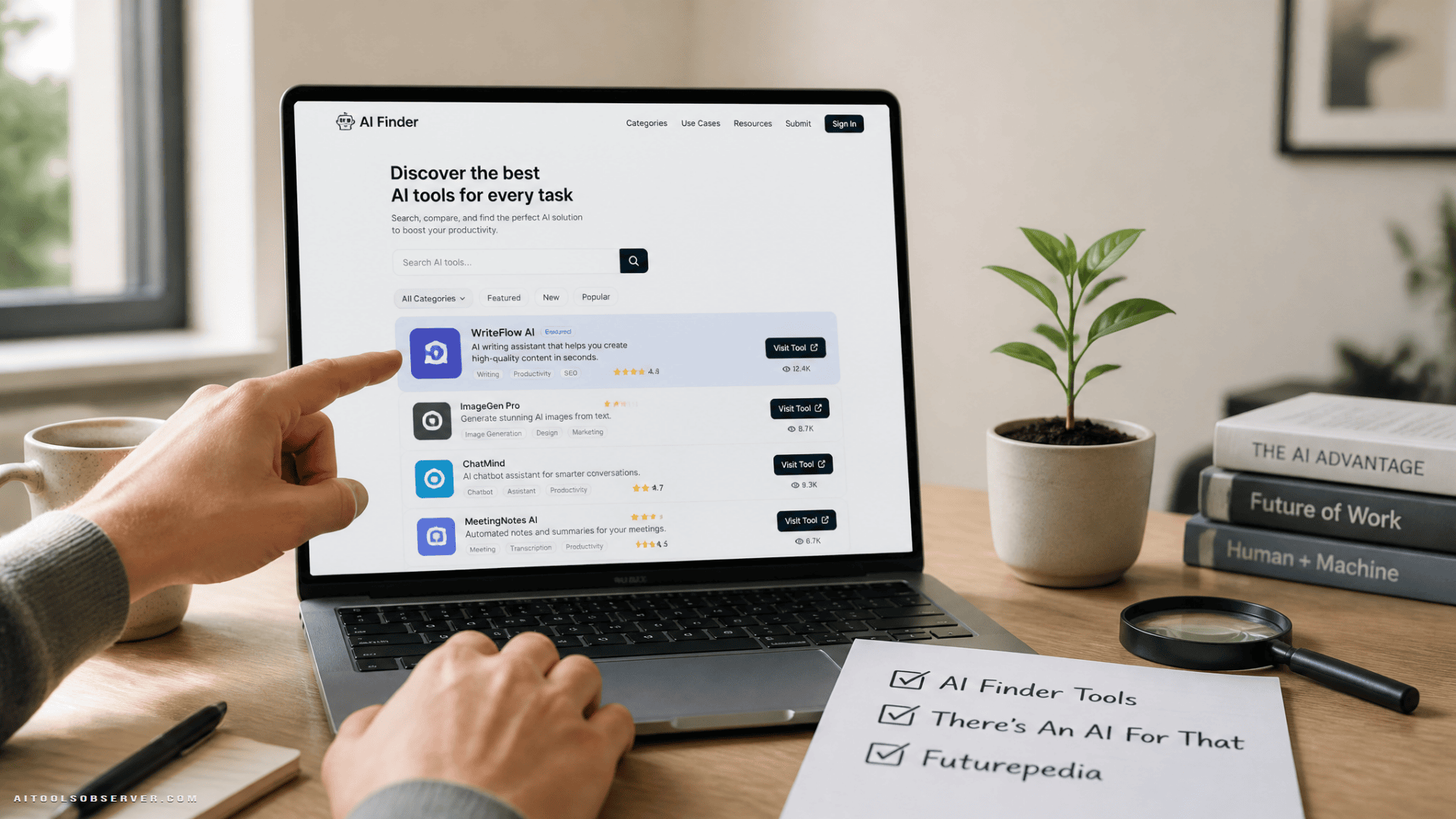
1. AI Finder Tools
This is the first stop — and the one that requires the most intentional effort, which is exactly why it’s worth doing first.
Every submission goes through manual review before it goes live. That matters more than it sounds. Directories that accept everything eventually stop being useful to searchers, which means they stop sending you qualified traffic. A curated directory stays trusted, and trusted directories are the ones people — and search engines — keep returning to.
What you actually get
- A dedicated, SEO-optimized page for your tool — not just a row in a table
- A full feature breakdown and description, not a one-line summary
- A direct backlink to your site
- Release date displayed, which signals that your tool is active and current
- Placement across multiple categories, so you’re discoverable by use case, not just by name
The submission fee is $19, which is reasonable for a manually reviewed, permanent listing with its own SEO real estate. If budget is tight, it’s worth reaching out directly — discounts have been available for founders who ask.
The catalog is already in the thousands of tools and growing, which means the site has ongoing search traffic and repeat visitors rather than a one-time spike.
2. There’s An AI For That
If you’ve spent any time in the AI tools space, you already know this one. It’s one of the most recognized general AI directories with a large, established audience of people who browse specifically to find new tools.
No login is required to browse, which keeps friction low and traffic volume high. The gap between “I found your tool” and “I clicked through to your site” is as small as it gets.
The tradeoff is visibility within the directory itself. With a catalog this size, your tool is one of many. You’re less likely to get the dedicated real estate you’d get from a smaller, curated listing. Still worth doing — the audience reach is real — but set expectations accordingly.
3. Futurepedia
Futurepedia has become a go-to bookmark for people specifically hunting for new AI tools by category. The audience is already in discovery mode, which is exactly the intent signal you want.
Like the option above, no account wall stands between a visitor and your listing. That matters because login friction kills click-through rates. The traffic that comes through tends to convert into actual site visits rather than drop-offs at a signup screen.
Submission is straightforward. The category-based structure means you’re more likely to surface in front of someone who’s already narrowed their search to your use case.
What to Do After You’re Listed
Write your description like ad copy, not documentation. Lead with the problem you solve. Save the feature list for later in the description.
Add a screenshot or short demo clip wherever the directory allows it. Listings with visuals consistently get more clicks than plain text entries.
Ask your early users to leave reviews on directories that support them. Third-party social proof carries more weight than the same words on your own landing page.
Track your referral traffic. If you’re not watching where clicks are coming from in your analytics, you won’t know which directory is worth keeping updated — and which one you can deprioritize.
The Actual Takeaway
Ads can work. They work best when you’re scaling something that’s already proven it converts — not when you’re still figuring out if there’s demand for what you built.
Directories are free or close to it. They put you in front of high-intent searchers. And unlike ad spend, they don’t disappear the moment you stop funding them.
Start with these three. Then, once you have referral data, conversion signals, and a clearer picture of who’s actually clicking through — decide whether ads are even necessary.








Comments (0) No comments yet
Want to join this discussion? Login or Register.
No comments yet. Be the first to share your thoughts!