



The Old Model Is Breaking Down

Seat-based subscriptions made sense when software was passive — a tool you opened, used manually, and closed. You paid per user, per month. Simple.
AI changes that equation entirely. An AI agent doesn’t sit idle between logins. It runs workflows, processes data, makes decisions, and executes tasks autonomously — often at a scale no human team could match. Charging per seat for that kind of output is like charging a factory by the number of workers on the floor, not by what they produce.
Vendors noticed the mismatch. Now they’re repricing accordingly.
What Usage-Based and Outcome-Based Pricing Actually Means
These two terms get used interchangeably, but they’re slightly different — and the distinction matters when you’re comparing tools.
Usage-based pricing ties your bill to consumption metrics: API calls, tokens processed, compute hours, tasks completed. You use more, you pay more. Think of how OpenAI charges per token or how cloud providers bill per compute unit.
Outcome-based pricing goes a step further. You pay when the AI achieves a defined result — a lead qualified, a ticket resolved, a document summarized correctly. It’s performance-linked billing, and it’s gaining traction among enterprise AI vendors who want to align incentives with actual business value.
Both models shift financial risk. With flat subscriptions, the vendor wins whether you use the tool or not. With usage or outcome pricing, your costs scale with your results — which sounds fair until your usage spikes unexpectedly.
Why This Shift Is Happening Now

Three forces are converging to accelerate this pricing transition.
AI Agents Are Scaling Autonomously

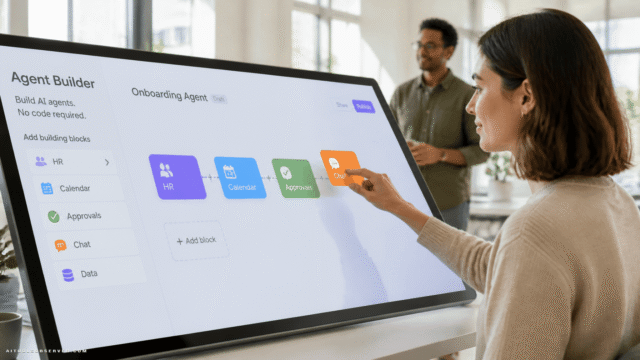
The rise of AI agents — systems that plan, act, and iterate without constant human input — makes traditional per-seat pricing economically absurd. A single agent can do the work of dozens of users in a fraction of the time. Vendors can’t leave that value on the table.
Infrastructure Costs Are Becoming a Strategic Variable

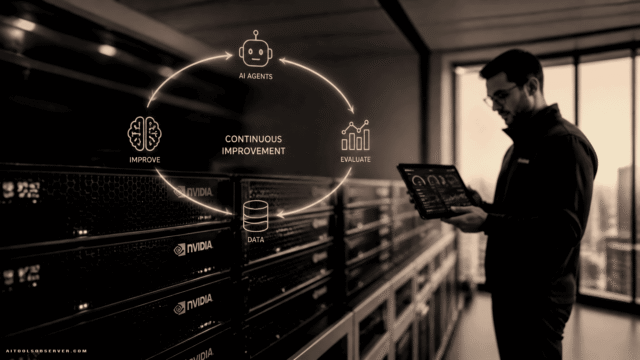
Running AI at scale is expensive. Storage architecture, compute capacity, and total cost of ownership (TCO) optimization are no longer just IT concerns — they’re core business levers. Vendors are passing more of that cost variability directly to buyers through consumption-linked pricing.
Investors Are Demanding Better Unit Economics
The market is scrutinizing AI companies on revenue quality, not just growth. Usage-based models create more defensible, scalable revenue tied to actual product adoption. That’s a better story for investors — and it’s pushing vendors to restructure how they monetize.
What This Means for Tool Buyers Right Now

If you’re evaluating AI tools — whether for your team, your clients, or your own workflows — the pricing model is now as important as the feature set. Here’s what to watch.
Read the Pricing Page Like a Contract
Don’t just look at the headline number. Understand what triggers a charge. Is it per API call? Per task completed? Per active agent? Per gigabyte processed? The answers determine whether your costs stay predictable or balloon as you scale.
Model Your Usage Before You Commit

Usage-based pricing rewards heavy users with proportional value — but it punishes unpredictable usage patterns. Before signing up, map out your expected consumption. Build a low, medium, and high scenario. If the high scenario breaks your budget, negotiate a cap or look for a hybrid plan.

Compare Total Cost of Ownership, Not Monthly Price

A $50/month flat subscription might look cheaper than a $0.02/task usage model — until you’re running 10,000 tasks a month. TCO comparison is the only honest way to evaluate AI tool pricing in a usage-based world.
The Vendor Landscape Is Repricing in Real Time

This isn’t a future trend — it’s already happening across the AI tools ecosystem.
Infrastructure-adjacent players are particularly active in this space. Companies building the compute and storage layers that power AI agents are seeing their own economics shift, which flows downstream into how SaaS vendors price their products. The infrastructure cost curve directly shapes the pricing models you encounter as a buyer.
Momentum in the AI sector is concentrated around companies that have figured out scalable, usage-linked economics — not just those with impressive demos. That’s a signal worth paying attention to when you’re choosing tools that will anchor your workflows long-term.
How to Stay Ahead of the Pricing Curve

The vendors winning right now are the ones who’ve aligned their pricing with the value AI actually delivers. As a buyer, your job is to match that alignment to your own economics.
A few practical moves:
- Audit your current AI subscriptions. Are you paying for seats you’re not fully using? That’s a red flag in a world moving toward outcome-based billing.
- Prioritize tools with transparent usage dashboards. If you can’t see your consumption in real time, you can’t manage your costs.
- Negotiate outcome-based terms where possible. If a vendor claims their AI delivers results, ask them to price it that way. It’s a fair ask — and their answer tells you a lot.
- Revisit your tool stack every quarter. Pricing models are changing fast. A tool that was cost-effective six months ago may have repriced significantly.
The Bottom Line
Usage-based and outcome-based pricing isn’t just a billing change — it’s a fundamental restructuring of the relationship between AI vendors and buyers. The old model rewarded access. The new model rewards results.
That’s actually good news for buyers who use AI seriously. But it demands a sharper approach to evaluation, budgeting, and vendor comparison than most teams currently apply.
The AI tools ecosystem is repricing itself around real-world value. The buyers who understand that shift — and build their tool selection process around it — will spend smarter, scale faster, and avoid the cost surprises that are already catching unprepared teams off guard.
Observe the pricing model as closely as you observe the product. In AI, they’re inseparable.













Comments (0) No comments yet
Want to join this discussion? Login or Register.
No comments yet. Be the first to share your thoughts!