


What the Study Actually Measured
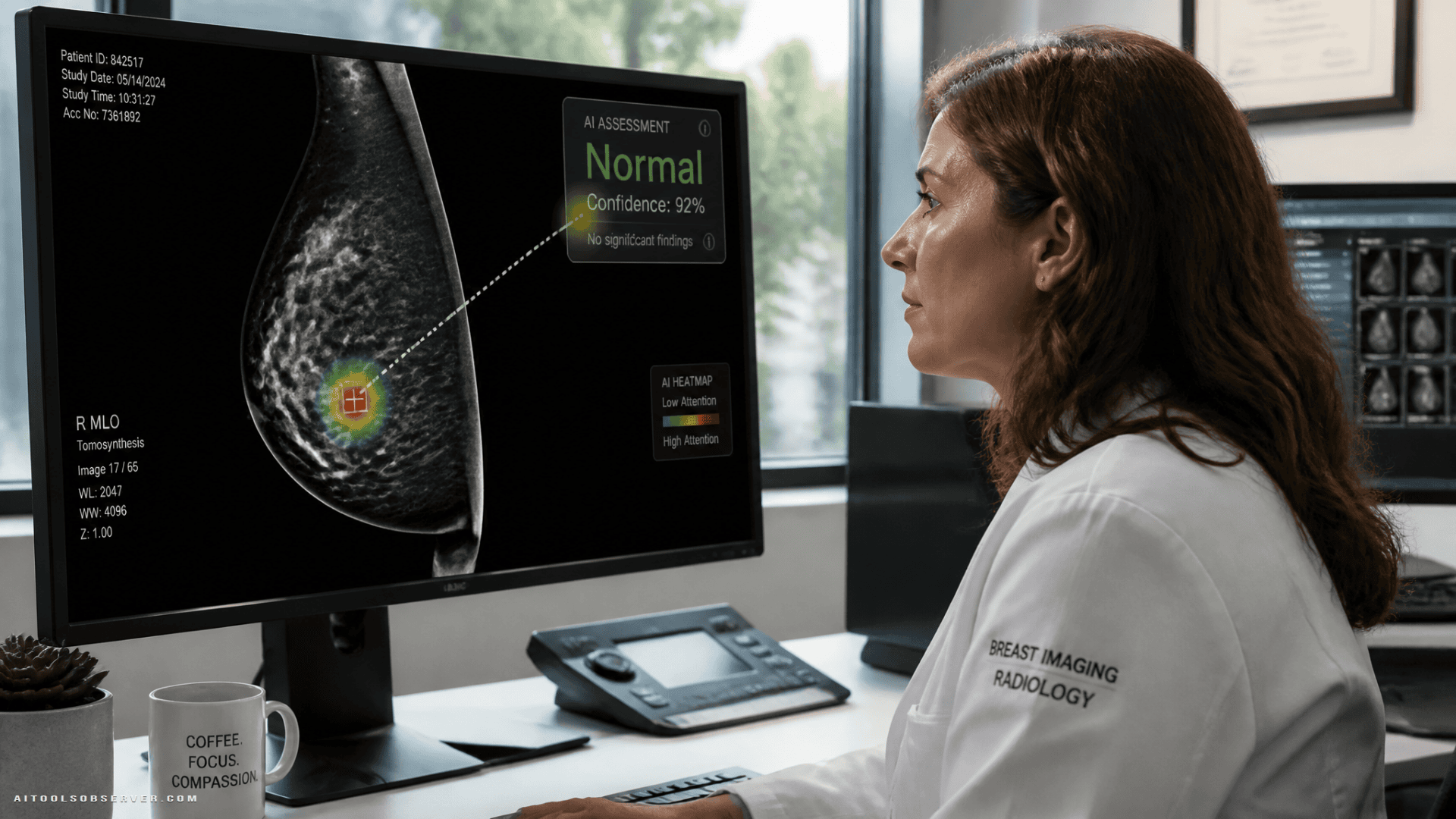
Researchers at the University of Nottingham had ten breast radiologists interpret the same mammography screening exams twice — once with AI assistance, once without — six weeks apart. Eye-tracking cameras monitored where and how long readers looked during each session.
The AI tool’s test set included 26 true positives, 14 false negatives, 14 false positives, and 6 true negatives. That mix of correct and incorrect outputs was key to isolating how radiologists responded to AI errors specifically.
The results were stark:
- Sensitivity for false negatives dropped from 71% (without AI) to 39% (with AI) — meaning radiologists missed significantly more cancers when the AI incorrectly flagged an exam as normal.
- Specificity increased for false positive cases (39% vs. 21%), suggesting radiologists were more likely to dismiss real findings when AI flagged something incorrectly.
- Read times increased when AI provided prompts — from a median of 25 seconds with no prompts to 34 seconds with four or more — but longer time didn’t translate to better accuracy.
The eye-tracking data added another layer. Radiologists fixated less on cases the AI deemed normal, even when those cases contained findings later diagnosed as malignant. Their visual search behavior changed based on what the AI told them to expect.
The Automation Bias Problem
Automation bias isn’t new. It’s the well-documented tendency to over-rely on automated systems, accepting their outputs without sufficient independent verification. In aviation, finance, and now medicine, it shows up the same way: the human defers to the machine even when the machine is wrong.
What makes this study valuable is that it quantifies the effect in a controlled clinical setting. It’s not theoretical. Radiologists with real expertise, reading real exams, missed real cancers at a significantly higher rate when AI pointed them in the wrong direction.
The implications for patient outcomes are direct. A missed cancer in screening mammography isn’t a data point — it’s a delayed diagnosis.
Experience Level Matters
Not all radiologists appear equally vulnerable. An editorial accompanying the study, written by Dr. Paola Clauser of the Medical University of Vienna, noted that less experienced readers tend to be more prone to automation bias, while more experienced readers are better at identifying incorrect AI suggestions.
This creates a practical problem for radiology departments. AI tools are often positioned as support systems that can help less experienced readers perform at a higher level. But if those same readers are more susceptible to following AI errors, the risk profile shifts in ways that aren’t always accounted for in deployment decisions.
It also raises questions about training. If radiologists aren’t explicitly taught to critically evaluate AI outputs — not just accept them — the tool designed to help may quietly erode the independent judgment it was meant to support.
What This Means for AI Tool Design
The study authors suggested that AI calibration needs to compensate for automation bias directly. That’s a meaningful design challenge.
Right now, most AI tools in radiology are built to surface findings, flag anomalies, and reduce workload. Fewer are designed with the assumption that their outputs might actively mislead a clinician — and that the interface should account for that possibility.
Some directions worth watching:
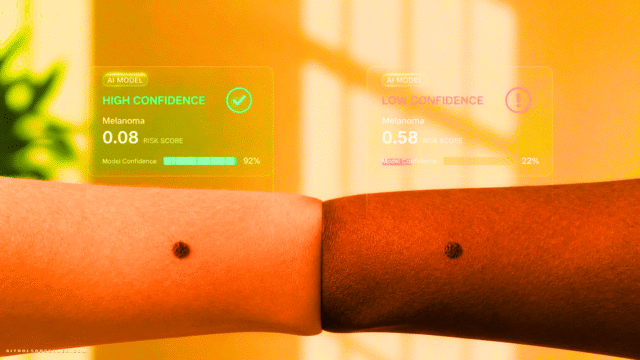
- Confidence scoring with uncertainty flags — making it visually clear when an AI recommendation is low-confidence, not just what the recommendation is.
- Workflow design that preserves independent review — requiring radiologists to complete their own read before AI output is displayed.
- Ongoing performance monitoring — tracking whether individual radiologists’ accuracy changes over time with AI assistance, not just at deployment.
The Practical Takeaway
AI in radiology isn’t a binary win or loss. It can improve efficiency, support workflow, and maintain diagnostic performance in many scenarios. But this study makes clear that the risk of automation bias is real, measurable, and consequential — particularly for false negative cases where the cost of a missed finding is highest.
For anyone evaluating AI tools in clinical imaging contexts, the right question isn’t just “does this AI improve accuracy on average?” It’s also: “What happens to clinician performance when this AI is wrong — and how does the tool handle that?”
That second question doesn’t get asked nearly enough.





Comments (0) No comments yet
Want to join this discussion? Login or Register.
No comments yet. Be the first to share your thoughts!