



The Problem: MRI Scans That Stop Short

MRI scans are already a standard part of neurological workups. In most clinical settings, however, they serve a narrow purpose: ruling out acute conditions like strokes or tumors. Once those are excluded, the scan’s diagnostic value is largely exhausted.
This represents a significant missed opportunity. The structural data captured in a brain MRI contains far more information than conventional interpretation extracts. The question researchers at UF asked was straightforward: what if that existing scan could do more?
What NeuroPACS Does

NeuroPACS is an AI-driven analysis platform that processes standard MRI scans to identify neurological markers associated with Parkinson’s disease, Alzheimer’s disease, and related dementias. Rather than requiring new imaging protocols or additional patient procedures, it layers analytical capability onto scans already being ordered.
Dr. David Vaillancourt, one of the researchers behind the platform, describes the approach precisely: the technology takes an MRI that is already part of the healthcare infrastructure — already paid for, already scheduled — and adds a diagnostic layer on top of it. The incremental cost to the system is low. The potential diagnostic return is substantial.
The platform’s AI models are trained to distinguish between conditions that appear clinically similar in early stages. This includes differentiating Parkinson’s disease from dementia with Lewy bodies and Alzheimer’s disease — a distinction that matters significantly for treatment planning and prognosis.
Why Early Differentiation Matters Clinically
Speed and specificity in diagnosis are not merely academic concerns. As Dr. Nicholas McFarland notes, certain neurodegenerative conditions progress more rapidly than others and carry higher disability burdens. Identifying which condition a patient has — and doing so earlier — directly shapes the treatment pathway they enter.
A patient diagnosed with Parkinson’s disease and one diagnosed with Lewy body dementia may present similarly at first presentation, but their disease trajectories and optimal management strategies differ considerably. Conflating the two, or delaying differentiation, leads to suboptimal care during the window when intervention matters most.
Earlier diagnosis also gives patients and families more time to understand the condition, plan care, and make informed decisions. That dimension of the benefit is harder to quantify but no less real.
The Non-Invasive Advantage
One of the more significant clinical arguments for NeuroPACS is what it avoids. Recent advances in dementia biomarker research have produced tools that can detect disease-specific proteins — but many of these involve lumbar punctures or PET imaging with specialized tracers. They are invasive, expensive, or both.
Dr. Bhabana Patel frames the contrast directly: existing tools for differentiating dementia subtypes are limited, and some of the newer advances have come with invasive requirements. NeuroPACS offers a non-invasive alternative — one that works within the imaging infrastructure already in place.
For patients who are elderly, medically fragile, or simply reluctant to undergo invasive procedures, this distinction is clinically meaningful. A diagnostic tool that is accessible and low-burden is more likely to be used — and used earlier.
The Workflow Integration Angle
From an operational standpoint, NeuroPACS is designed to integrate rather than disrupt. It does not require hospitals to purchase new MRI equipment or retrain radiologists on entirely new protocols. The platform attaches to existing scan orders and returns structured AI-generated analysis alongside standard imaging results.
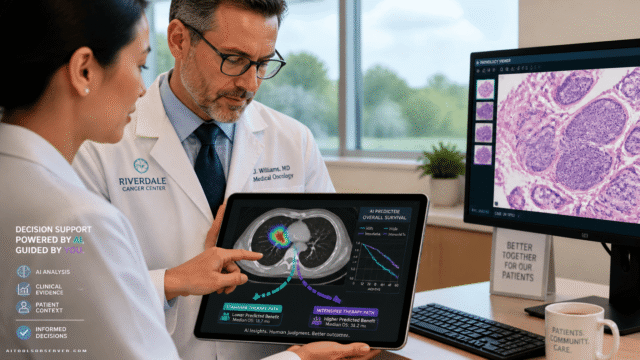
This positions NeuroPACS as a clinical decision support tool — augmenting physician judgment rather than replacing it. Neurologists and radiologists receive additional signal; they retain interpretive authority. That model of AI integration tends to face lower institutional resistance and faster adoption pathways than more autonomous diagnostic systems.
Where This Fits in the Broader AI Diagnostics Landscape
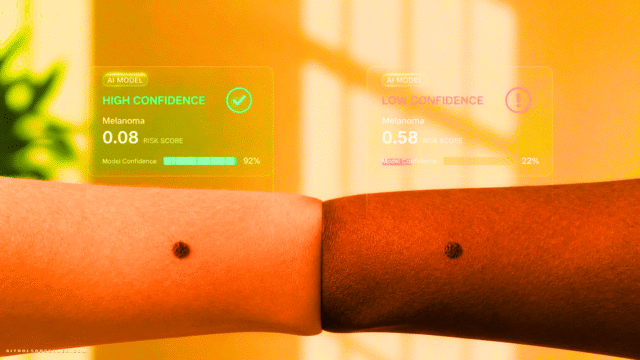
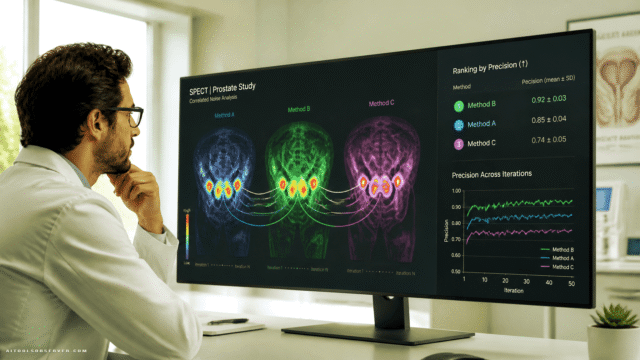
NeuroPACS sits within a growing category of AI tools applying machine learning to medical imaging for conditions where early detection is both difficult and high-value. Similar approaches are being explored in oncology, cardiology, and ophthalmology — fields where imaging data is abundant but underutilized.
What distinguishes the neurodegenerative disease context is the particular scarcity of good diagnostic options. Unlike some cancers where biopsy provides a definitive answer, neurological diagnosis often relies on clinical observation over time. AI-assisted imaging analysis offers a way to compress that diagnostic timeline without introducing new procedural risks.
The platform’s development at a major academic medical center also suggests a pathway toward clinical validation and eventual regulatory consideration — steps that will determine how broadly NeuroPACS can be deployed beyond the research setting.





Comments (0) No comments yet
Want to join this discussion? Login or Register.
No comments yet. Be the first to share your thoughts!