


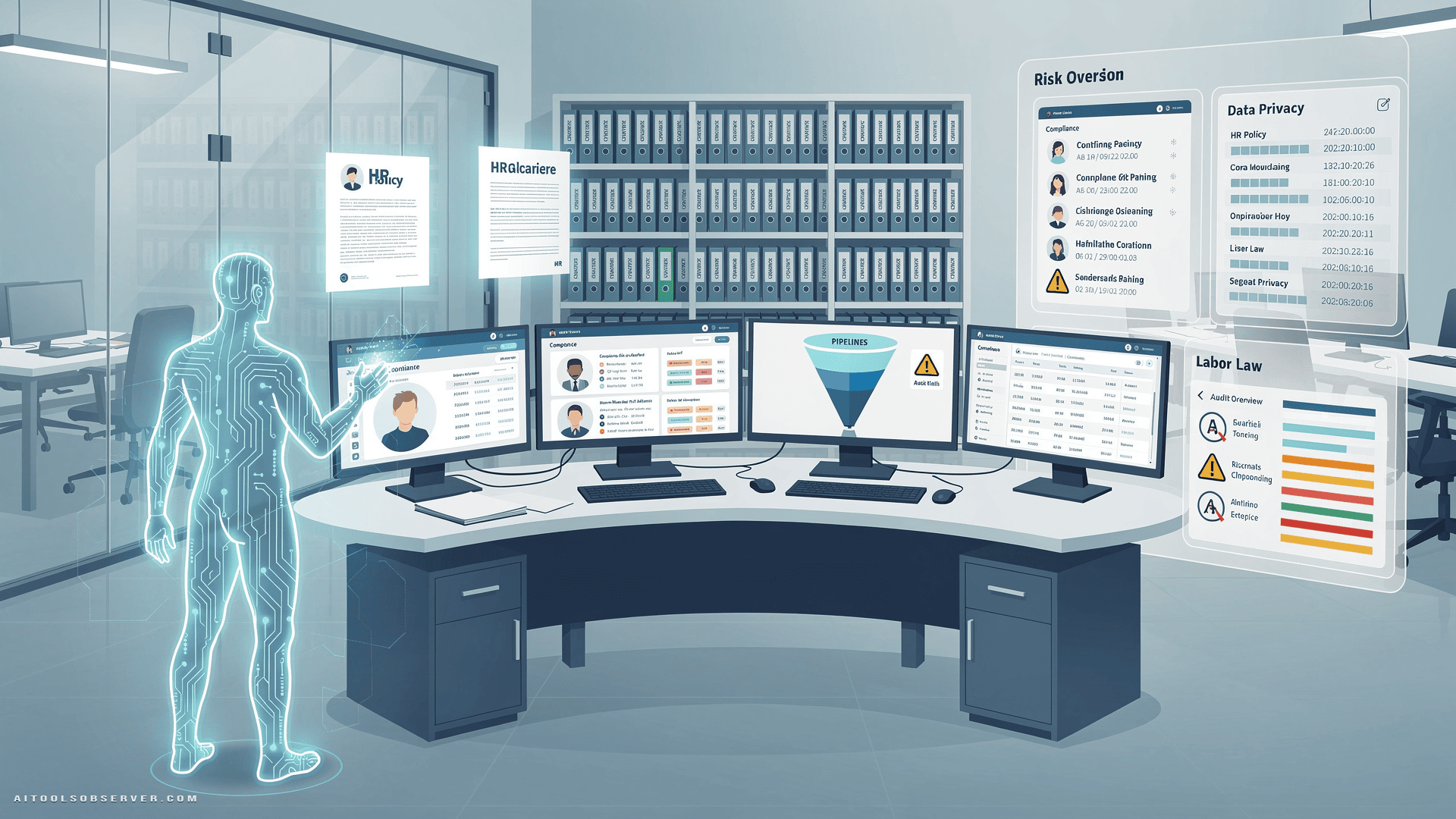
The Compliance Surface Is Growing Faster Than Governance

AI agents are no longer confined to experimental pilots. They are authorizing actions, filtering candidates, flagging performance issues, and routing communications — often without a clear human decision point in the chain.
As Norwest’s analysis puts it directly:
“Not knowing who authorized an action, whether a communication was appropriate, or whether a given workflow creates regulatory exposure” is no longer a theoretical concern.
It is an operational reality playing out across HR departments today.
The problem is structural. Most organizations deployed AI tools in HR before putting governance frameworks in place. The tools arrived first; the accountability architecture is still catching up.
What the Regulatory Landscape Actually Looks Like in 2026
The patchwork of state-level AI legislation is now dense enough to create genuine compliance complexity for any employer operating across multiple jurisdictions.
Key State Mandates to Know

Colorado requires annual algorithmic impact assessments for high-risk AI systems. Employers using AI in hiring or performance decisions must document, audit, and report — annually, not once at deployment.
Illinois restricts how AI can be used in video interviews, placing specific obligations on employers around consent, data retention, and disclosure before any AI analysis of a candidate’s facial expressions or speech patterns.
New York City mandates bias audits for automated employment decision tools (AEDTs). Any tool that substantially assists in hiring or promotion decisions must be independently audited for disparate impact — and results must be publicly posted.
Federal guidance, meanwhile, remains inconsistent. Attorneys advising HR leaders are clear on one point: more state laws are coming, and the window to build proactive governance is narrowing.
Vendor Contracts Are Not a Compliance Shield
This is where many HR teams have made a costly assumption. Contracting with an AI vendor for recruiting or performance decisions does not transfer legal accountability to that vendor.
If a third-party tool produces a biased or opaque outcome, the employer remains liable under existing civil rights law and emerging state frameworks. Courts are not interested in which software generated the decision — they are interested in who made it.
Britney Torres, co-chair of Littler’s AI & Technology Practice Group, stated plainly that “courts will look to AI-specific and generally applicable discrimination authority to determine where liability lands for biased employment decisions arising out of AI tools.”
HR teams that treated vendor contracts as compliance solutions are now facing that reality in litigation. The lesson is not that AI vendors are unaccountable — it is that employer accountability does not transfer.
Where the Actual Risk Lives in HR Workflows
Not every AI application in HR carries equal regulatory weight. The highest-risk surface areas are those where AI outputs directly influence employment decisions at scale.
High-Risk Workflow Categories
Recruiting and candidate screening — AI tools that rank, filter, or score applicants are squarely within the scope of bias audit requirements in NYC and similar frameworks emerging elsewhere.
Video interview analysis — Any AI system analyzing tone, facial expression, or language patterns in interviews triggers Illinois-style restrictions and requires explicit consent and disclosure protocols.
Performance management — AI agents flagging underperformance or influencing promotion decisions create accountability questions that existing HR governance structures were not designed to answer.
Employee relations case management — Compliance training, background screening, and case management workflows are categorized as work that cannot be paused. These systems are now under pressure to demonstrate that AI involvement does not introduce new legal exposure.
What Proactive Compliance Actually Requires
The Norwest analysis raises a pointed question: was the infrastructure built for an environment where AI agents are influencing HR decisions at volume? For most organizations, the honest answer is no.
Legal experts are converging on a practical sequence for organizations that want to get ahead of this.
A Practical Governance Sequence
Map data flows before deployment. Understand exactly where candidate and employee data enters AI systems, what decisions those systems influence, and who in the organization is accountable for each output.
Build bias audits into vendor procurement. Retrofitting audits after a complaint arrives is expensive and legally precarious. Requiring audit documentation as a condition of vendor selection is now a baseline expectation in well-governed organizations.
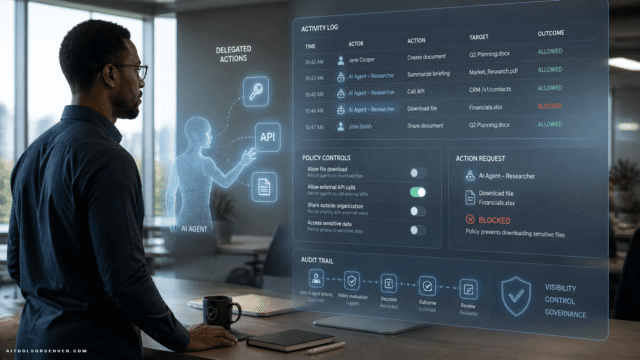
Establish authorization trails. AI agents acting autonomously in HR workflows need to leave a legible record of what was authorized, by whom, and under what conditions. Without this, regulatory exposure is difficult to assess and nearly impossible to defend.
Review annually, not at deployment. Colorado’s annual assessment requirement reflects a broader principle: AI systems drift, data changes, and regulatory frameworks evolve. One-time compliance is not compliance.
The Investment Signal Is Clear
The compliance and HR service management category rarely commands the attention that consumer-facing AI tools attract. But the investment activity tells a different story.
Recurring revenue, a growing accountability surface, and the proliferation of AI agents across HR workflows are making this infrastructure category harder to defer. Organizations that treat compliance tooling as a cost center are increasingly finding themselves outpaced by those treating it as a strategic capability.
Choosing the Right AI Tools for HR Compliance
For founders, HR leaders, and compliance teams evaluating AI tools in this space, the selection criteria have shifted. Capability alone is no longer sufficient.
The questions that matter now are operational and legal: Does this tool produce auditable outputs? Does the vendor provide bias audit documentation? Does the contract clarify where accountability sits? Is the system designed to support annual algorithmic impact assessments, or will that require a retrofit?
These are not abstract governance questions. They are the questions that determine whether an AI tool becomes a competitive advantage or a liability in discovery.








Comments (0) No comments yet
Want to join this discussion? Login or Register.
No comments yet. Be the first to share your thoughts!