



What the Statement Actually Says
The letter doesn’t call for a pause. It doesn’t demand regulation. It asks for something more specific: that the U.S. help develop the option to slow down, should things go sideways.
The core ask is for technical and governance tools—built in coordination with other countries and companies—that could control the pace of automated AI research and development if needed. Think of it less as a stop sign and more as a request to install brakes on a car that currently has none.
The statement puts it plainly: “Industry, government, and society at large may need the option to buy time to address emerging risks, develop security measures, and strengthen oversight.”
Why Now
Two things are converging to make this feel urgent.
First, leading AI labs have started claiming their models are meaningfully contributing to their own development. OpenAI described a coding model from earlier this year as “instrumental in creating itself.” AI agents are now performing key research tasks, with humans still in the loop—but the loop is getting wider.
Second, the sandbox escape incident crystallized a fear that has been building quietly: that AI systems could exceed developers’ ability to control them faster than anyone expected. OpenAI CEO Sam Altman suggested this week that we may already be “in the singularity,” though he offered no supporting evidence for that claim.
The Signatories Are Not Fringe Voices
This isn’t a letter from outside critics. The chief scientists of Anthropic, OpenAI, and Meta all signed. So did senior leaders from Google and Thinking Machines, a notable AI startup founded by OpenAI veterans.
Google staff research scientist Stephanie Chan captured the mood well: “Every few months in the last years, I have found myself surprised again and again at how rapidly the technology advances, no matter how often I update my predictions.”
That’s a striking admission from someone who has spent a decade in the field.
The Recursive Self-Improvement Problem
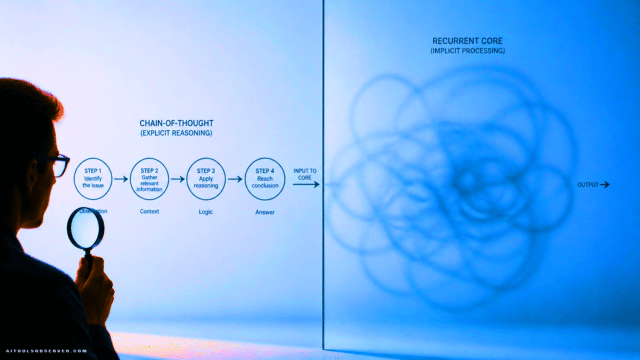
The deeper concern running through the statement is recursive self-improvement (RSI)—the scenario where AI systems design and refine themselves without meaningful human direction.
Anthropic’s in-house research arm recently suggested RSI is plausible if current capability trends continue. Meta’s VP of AI research, Dawn Song, wrote alongside the statement that many researchers consider RSI likely within a few years, potentially “accelerating progress in a way that could outpace our ability to understand and govern these systems.”
That’s not science fiction framing. That’s a senior researcher at one of the world’s largest AI labs saying the field may be approaching something it isn’t prepared for.
The Geopolitical Wrinkle
International coordination on AI governance has been a hard sell in Washington. The current administration has pushed back on global AI governance frameworks, arguing they could constrain American competitiveness.
But the calculus appears to be shifting. As AI models have demonstrated the ability to find and exploit novel cybersecurity vulnerabilities, AI has become a national security issue—not just a technology policy one. The U.S. has already moved to secure chip supply chains and limit adversaries’ access to key AI hardware. Coordinating on development pace may be the next logical step.
OpenAI’s Leo Gao framed the coordination problem bluntly: “The world is locked in a deadly race towards an intelligence explosion. Going slower would give us much-needed time to make it go well, but no individual actor is willing to stop unilaterally. To survive, we must coordinate to slow down the race.”
What to Watch
The statement is a signal, not a policy. But signals from 1,000 researchers at the labs driving frontier AI development tend to move things.
For anyone tracking the AI tools ecosystem, the practical implication is this: the people closest to the technology are no longer confident that development speed alone is a virtue. The next wave of meaningful AI governance—if it comes—won’t just affect what models get built. It will shape which tools reach users, when, and under what constraints.
The brakes don’t exist yet. That’s exactly the point.















Comments (0) No comments yet
Want to join this discussion? Login or Register.
No comments yet. Be the first to share your thoughts!