


The Problem Nobody Bothered to Solve

Most AI-in-cars conversation circles around autonomy. Self-driving. Full automation. The future.
Meanwhile, millions of car owners are stuck in the present, bouncing between a diagnostic shop, a mechanic, and a service advisor just to understand why their 2014 Honda Civic is making a weird noise.
“The industry is fragmented,” says Codrin Cobzaru, co-founder of Sparq. “The person who diagnoses your car isn’t necessarily the same person who’s going to fix it. And sometimes there are even more people you have to talk to to translate what that means in terms of costs.”
That’s the gap Sparq is building into. Not autonomy — clarity.
What Sparq Actually Does

The pitch is refreshingly simple: plug in, get answers.
Sparq ships a physical diagnostics tool that connects to your car’s OBD2 port — the standardized socket that every US-spec car built after 2008 is required to have. Once connected, the AI reads your vehicle’s data and returns three things most car owners desperately want:
- What’s wrong
- What needs to be done
- What it’s going to cost
No jargon translation required. No waiting room. No seven different people telling you seven slightly different things.
The app currently runs on iOS only. Android support is planned, but the team made a pragmatic call early on: iOS is more standardized, which means fewer variables and a more reliable product. Sensible engineering logic, even if Android users will grumble.
The Tech Behind It: CAN Bus and Why 2009 Matters

If you’ve never heard of CAN bus — Controlled Area Network — you’re not alone. Think of it as the internal internet of your car: a communication standard that lets all the vehicle’s electronic components talk to each other.
The US fully adopted CAN bus by 2009, which is why Sparq’s compatibility window starts there. It’s not an arbitrary cutoff — it’s the year the hardware and software ecosystem became consistent enough to build on reliably.
“By 2009, all new cars were fully compatible with that standard,” explains co-founder Daniel Nieh. “And that’s fully compatible with our diagnostics tool at both the hardware and software level.”
If your car is a 2009 or newer gas or hybrid vehicle, you’re in. If you’re driving an EV, you’re not — at least not yet.
Why EVs Aren’t the Priority (Yet)
This is where Sparq’s thinking gets interesting.
Most EV problems originate in the battery pack, not the engine. Sparq’s current diagnostic logic is built around engine-centric data — which makes it a natural fit for internal combustion and hybrid vehicles, but less relevant for pure EVs.
“We think EVs will be a market, but they won’t be the market,” Nieh says.
It’s a contrarian take in an industry obsessed with electrification, but it’s also a focused one. They’re not ignoring EVs — they’re sequencing deliberately.
For now, the 200+ million gas and hybrid vehicles on US roads represent more than enough surface area to work with.
The Bigger Vision: From Reactive to Predictive

Here’s where it gets genuinely exciting.
Right now, Sparq is reactive. Something goes wrong, you plug in, you get answers. That’s already a significant improvement over the status quo.
But Cobzaru and Nieh want to go further — toward AI that predicts problems before they happen.
“If we can analyze data and use it to predict what might go wrong, that could save a lot of people a lot of money,” Cobzaru says.
The use cases are more obvious than they might seem. Riding the brakes. Skipping oil changes. Ignoring coolant levels. These are patterns, and patterns are exactly what AI is built to recognize. A system that notices you’ve been riding your brakes for three weeks and flags it before your pads are gone? That’s not science fiction — that’s just good data engineering.
Who This Is Actually For

Sparq isn’t built for gearheads. It’s built for everyone else.
The person who panics when a warning light appears. The first-time car owner who doesn’t know a serpentine belt from a timing chain. The busy parent who just needs to know if the car is safe to drive to school pickup.
That’s a massive, underserved audience — and it’s one that existing tools (clunky OBD2 readers, expensive dealer visits, unreliable forum advice) have never served well.
The Workflow in Practice

If you’re evaluating whether Sparq fits your life, here’s the practical breakdown:
Step 1 — Buy the hardware. The Sparq diagnostics tool plugs into your OBD2 port, typically located under the dashboard near the steering column.
Step 2 — Download the iOS app. Connect the tool to your phone via the app.
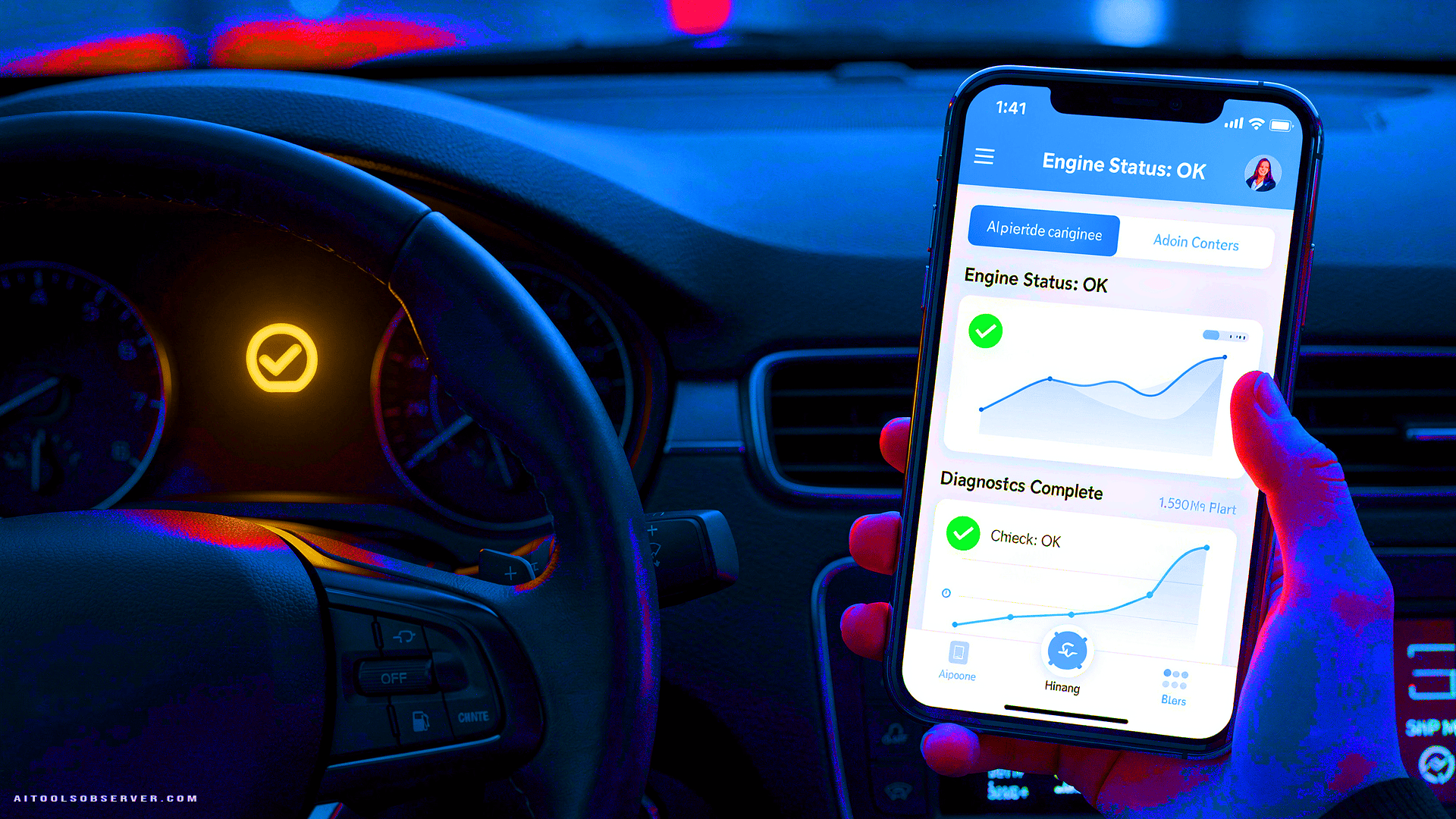
Step 3 — Run a scan. The AI reads your vehicle’s data and surfaces a plain-language diagnosis, recommended actions, and estimated repair costs.
Step 4 — Decide with confidence. Walk into any mechanic already knowing what’s wrong and roughly what it should cost. That alone changes the power dynamic entirely.
The Broader Signal

Sparq is a small company solving a specific problem — but it points to something larger.
AI’s most durable value isn’t always in the flashy frontier applications. Sometimes it’s in taking a fragmented, confusing, anxiety-producing experience and making it legible. Car diagnostics is one of those experiences. Healthcare billing is another. Insurance claims. Tax prep.
The pattern is the same: industry complexity that benefits insiders, leaving regular people confused and overcharged.
If Sparq can make car ownership feel less like a trap and more like something you’re actually in control of, that’s not a small thing. That’s the kind of AI application that earns a permanent place in someone’s life.
The check-engine light isn’t going away. But the panic around it? That’s fixable.















Comments (0) No comments yet
Want to join this discussion? Login or Register.
No comments yet. Be the first to share your thoughts!