


The Gap Between Old Automation and What’s Actually Deploying Now
Rule-based automation was always brittle. It worked well when every input looked identical and every process followed the same path. The moment something looked slightly different—an edge case, a missing field, an unusual request—the system broke or stalled.
Agentic AI handles that differently. Instead of following a fixed script, a team sets a goal and the system plans the steps, calls the right tools, and manages most exceptions on its own. It’s less like a macro and more like a capable colleague who knows when to act and when to ask.
The practical implication: companies are no longer just asking “what can we automate?” They’re asking “how much better can our people decide and act once AI handles the grind?”
Embedded AI Is the Real Deployment Story
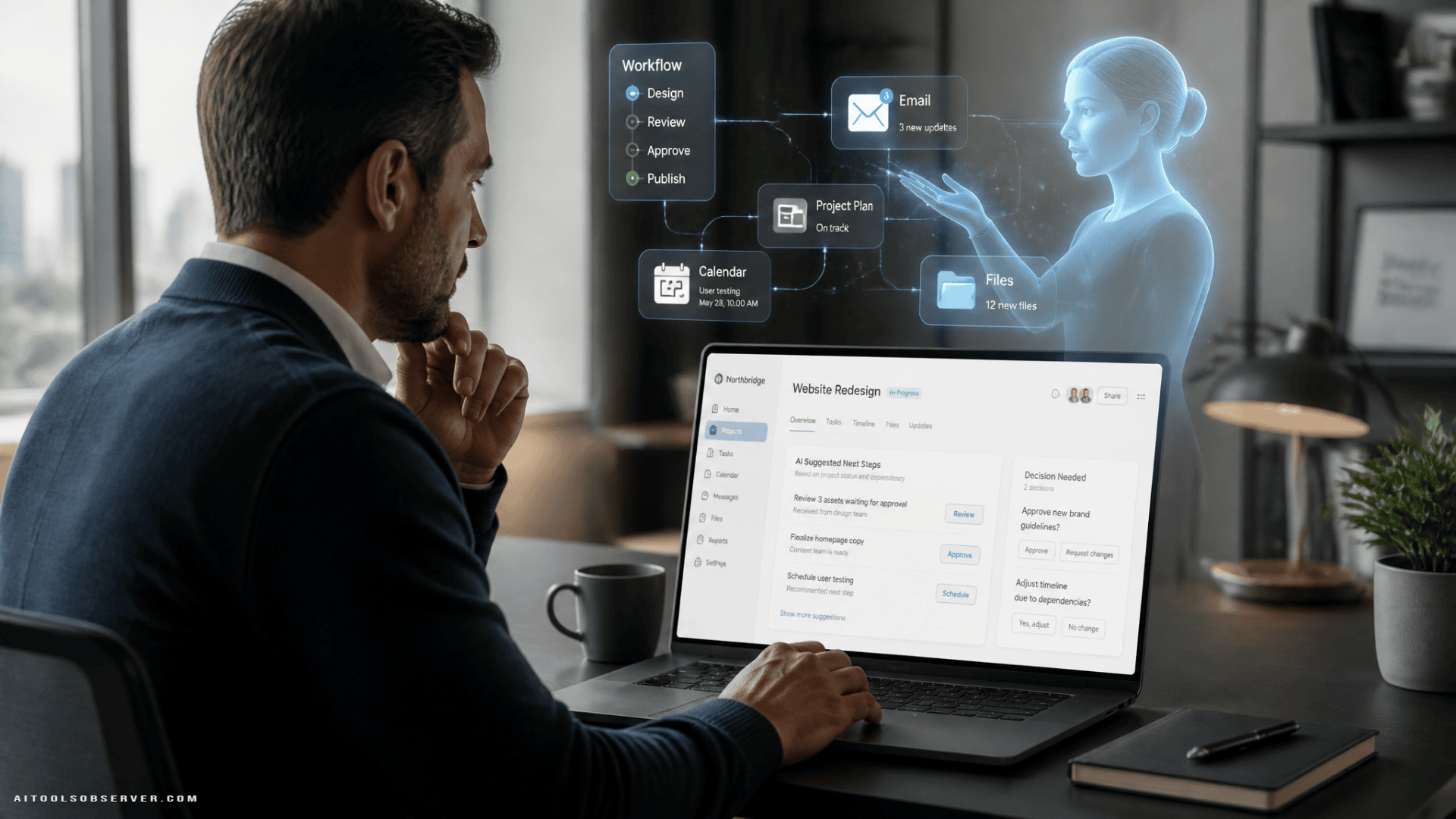
One of the clearest patterns in enterprise AI adoption right now is where these tools actually live. Companies aren’t asking employees to open a separate AI app. They’re building AI capabilities directly into the software people already use every day—email clients, project boards, CRM platforms, support queues.
That matters because adoption friction drops significantly when the help is already inside the tool. Employees don’t need to change their workflow. The workflow changes around them.
A few patterns show up consistently in these rollouts:
- Triage and prioritization — Sorts incoming requests and surfaces what needs attention first
- Structured output from unstructured input — Turns messy notes, emails, or meeting transcripts into clean task lists
- Proactive monitoring — Scans dashboards and flags what changed since the last review, without anyone asking
These aren’t dramatic transformations. They’re small, compounding improvements that add up across hundreds of daily decisions.
The Human-in-the-Loop Question Is Getting More Specific
As agentic AI takes on more autonomous work, the question of control has become more nuanced. It’s no longer just “should a human be involved?” It’s “at which exact points does a human need to approve, review, or redirect?”
Most firms are drawing those lines deliberately. A system can surface the data behind a recommendation and let a manager review it before anything gets signed off. That transparency builds trust faster than any capability demo.
What’s emerging is a layered model: AI acts alone on low-risk, high-volume tasks; humans stay in the loop for decisions with significant consequences. The interesting design challenge is figuring out exactly where that boundary sits for each workflow.
Roles are shifting as a result. People are spending less time executing tasks and more time reviewing outputs, catching errors, and making judgment calls that the system flags as uncertain.
New Job Titles, New Metrics, New Team Structures
The organizational ripple effects of agentic AI are starting to show up in job postings and org charts. Titles like AI workflow designer and automation orchestrator are appearing across industries. Some companies are bringing in specialized development services to build agentic systems tailored to their specific operations rather than relying entirely on off-the-shelf tools.
Success metrics are shifting too. Leaders who once tracked task completion volume are now measuring time saved per decision cycle, speed from data to action, and reduction in escalations. Those are harder to measure but more meaningful.
This isn’t just a technology upgrade. It’s a redesign of how work gets structured, who owns what, and what “doing a good job” actually looks like.
What the Adoption Curve Looks Like From Here
According to Gartner’s projections, task-specific AI agents are expected to appear in roughly 40% of enterprise software by the close of 2026—up from under 5% just a year earlier. That’s a steep curve, and it suggests the window for treating agentic AI as a future consideration is closing.
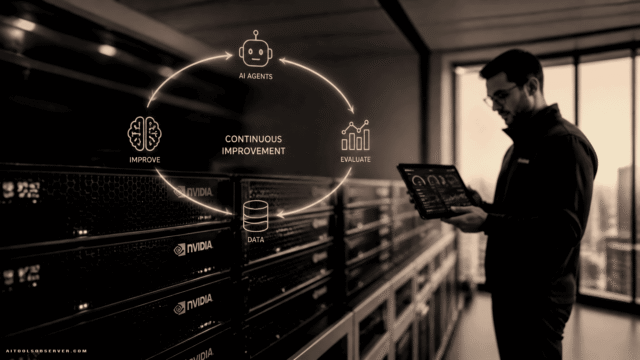
Companies that once ran automation as a one-time cost-cutting project are now building it into daily operations as a permanent layer. The distinction matters: one is a project, the other is infrastructure.
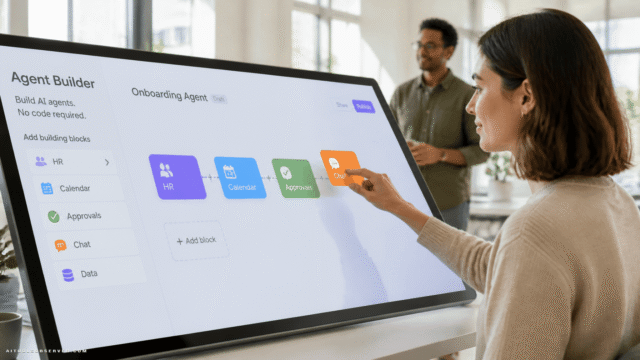
Finance, operations, and customer service teams are already seeing the most active deployments. But the pattern is spreading, and the tools are getting easier to configure without deep technical expertise.
The Practical Takeaway
If you’re evaluating AI workflow tools right now, the most useful question isn’t “does this tool use AI?” Almost everything does. The better questions are:
- Where does it embed? Does it live inside the tools your team already uses, or does it require a context switch?
- How does it handle exceptions? Rule-based systems break. Agentic systems should adapt—understand what that means for each vendor.
- Where does human oversight live? Any serious enterprise deployment needs clear approval points. If a tool can’t show you where humans stay in control, that’s a gap worth probing.
The companies getting the most out of agentic AI aren’t the ones with the most automation. They’re the ones who’ve been most deliberate about pairing agent autonomy with human accountability—and redesigning their teams to match.












Comments (0) No comments yet
Want to join this discussion? Login or Register.
No comments yet. Be the first to share your thoughts!