


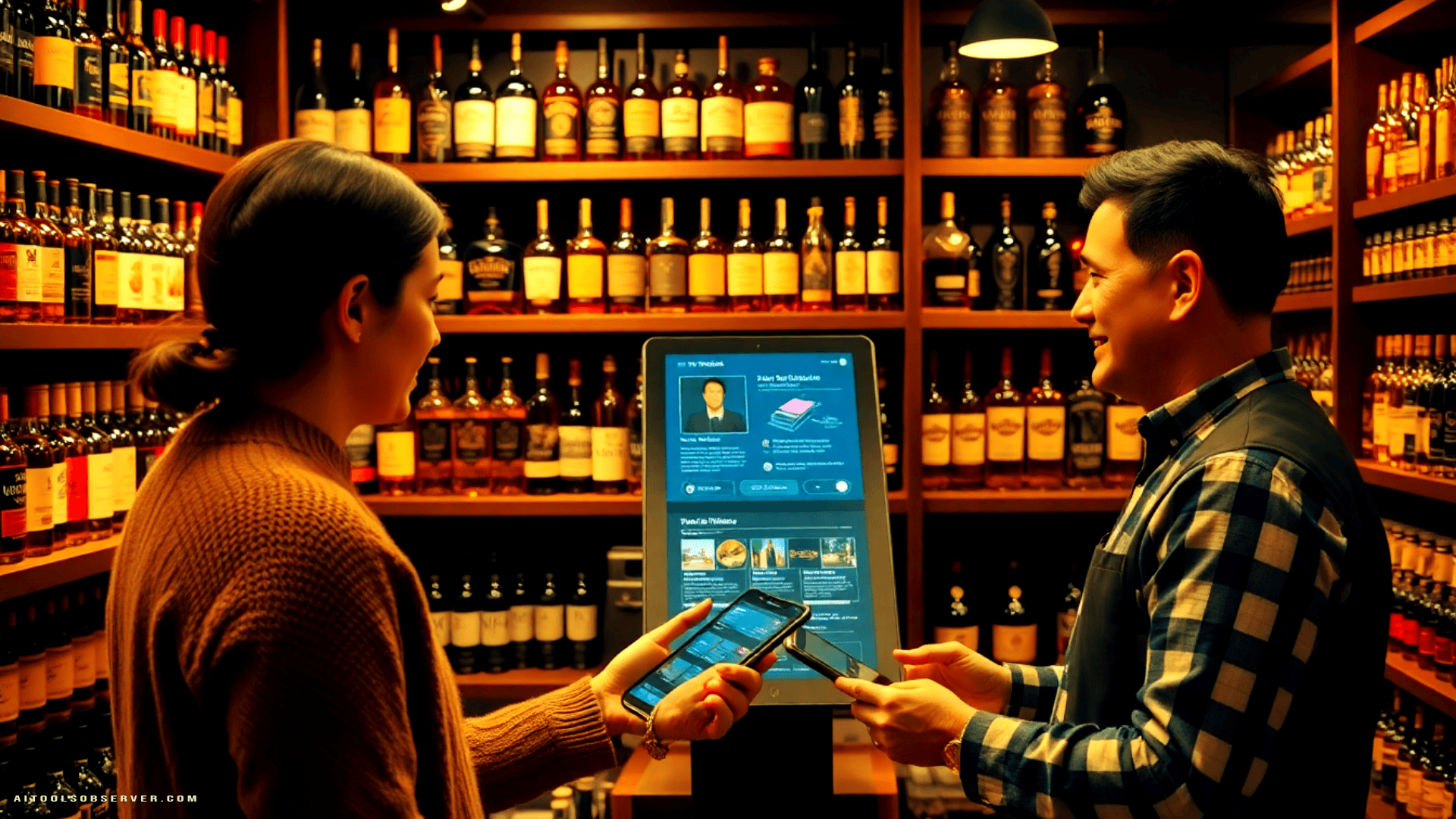
The Problem Every Whiskey Buyer Knows
People are drinking less. And when they do drink, they’re far more deliberate about what they choose.
That shift creates a real challenge for specialty retailers. Customers don’t want to guess. They want confidence in every bottle they buy — especially when that bottle costs $60, $80, or more.
Brendan Ryan, co-owner of the Cedarburg shop and a former attorney, saw this tension clearly. “We all hate it when we go to a shop, and we buy something, hoping we’ll like it. Take it home. We end up not liking it, and it just sits on the shelf and gets dusty,” he said.
That frustration became the business case for building something better.
Meet BOB: The AI Shopping Assistant Behind the Counter

Ryan and his wife Tierra built an AI tool called BOB — loaded with the store’s full inventory and Ryan’s personal tasting notes.
The concept is straightforward but powerful. Customers type in their flavor preferences, describe their budget, or even explain who they’re shopping for. BOB processes that input and generates tailored recommendations based on tasting profiles and personality fit.
It’s not a generic product filter. It’s a recommendation engine trained on real expertise — the kind of nuanced knowledge a seasoned whiskey buyer carries in their head, now accessible to every customer who walks through the door.
How the Workflow Actually Works

Here’s the practical flow inside the shop:
- Step 1 — Customer inputs preferences. They describe what they enjoy, what they’ve liked before, or who the bottle is for. BOB uses that context to narrow the inventory.
- Step 2 — BOB generates recommendations. The tool surfaces options with matching tasting notes, pulling from Ryan’s curated descriptions rather than generic database entries.
- Step 3 — Customers sample before they commit. Many of the suggested bottles are rare finds. The shop lets customers taste them in-store before buying — removing the guesswork entirely.
- Step 4 — The human layer closes the sale. Ryan and his team are present throughout. The AI informs the conversation; it doesn’t replace it.
“It really helps people take a deeper dive into their own palate as well as save money,” Ryan said.
Why This Works: Human-in-the-Loop AI Done Right
A lot of retailers bolt AI onto their operations as a gimmick. This is different.
BOB works because it’s built on genuine domain knowledge. The tasting notes aren’t scraped from a database — they’re Ryan’s own. The inventory is live and local. The recommendations reflect what’s actually on the shelf, not what an algorithm thinks should be there.
And critically, the AI doesn’t operate in isolation. Customers can still talk to a real person, ask follow-up questions, and taste before they buy. That combination — AI precision plus human warmth — is what separates this from a chatbot slapped onto a website.
Customer Solomon Gatton put it plainly: “There are so many shops that you could go into that could care less about you, and he does. That’s what kept me coming back.”
That loyalty isn’t accidental. It’s the direct result of using technology to serve people better, not to replace the relationship.
The Bigger Vision: Bringing the Bourbon Trail to Wisconsin

Ryan’s ambition goes beyond solving a single customer pain point.
He wants to recreate the immersive, educational experience of Kentucky and Tennessee’s bourbon trail — where discovery, tasting, and storytelling are all part of the purchase — inside a Wisconsin retail shop.
AI makes that scalable. Without it, delivering that level of personalization to every customer would require a staff of experts on the floor at all times. With BOB, the expertise is always available, always consistent, and always ready to meet a customer where they are.
What Other Retailers Can Learn From This

You don’t need to be a tech company to deploy AI effectively in a retail setting.
The Cedarburg shop model is replicable across any specialty retail category — wine, coffee, skincare, outdoor gear — anywhere customers face too many choices and not enough guidance.
The key ingredients are simple:
- Proprietary knowledge loaded into the tool. Generic AI gives generic answers. Your expertise is the differentiator.
- Live inventory integration. Recommendations only matter if the product is actually available.
- A human layer that stays in the loop. AI handles discovery; people handle trust.
- A try-before-you-buy mechanism. Reducing purchase risk accelerates decisions and builds confidence.
The Takeaway
AI doesn’t have to be complicated to be effective. Sometimes the most powerful application is the most human one — helping a customer find a bottle they’ll actually love, instead of one they’ll regret.
Brendan Ryan built BOB to solve a real problem his customers had. He kept his own expertise at the center of it. And he made sure technology enhanced the relationship rather than replacing it.
That’s the model worth paying attention to. Not AI as a cost-cutting tool. AI as a trust-building one.







Comments (0) No comments yet
Want to join this discussion? Login or Register.
No comments yet. Be the first to share your thoughts!