



Why Ant Group Is Moving So Fast Into Robotics

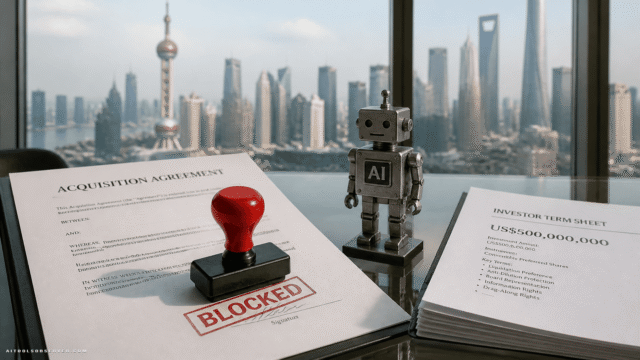
Ant’s pivot into hardware and AI didn’t happen overnight. After Chinese regulators blocked its landmark IPO in 2020, the company behind Alipay began diversifying aggressively — launching a healthcare services app, releasing its own AI models, and in late 2024, establishing a humanoid robot subsidiary called RobbyAnt.
The robotics push is now a core strategic pillar, not a side experiment.
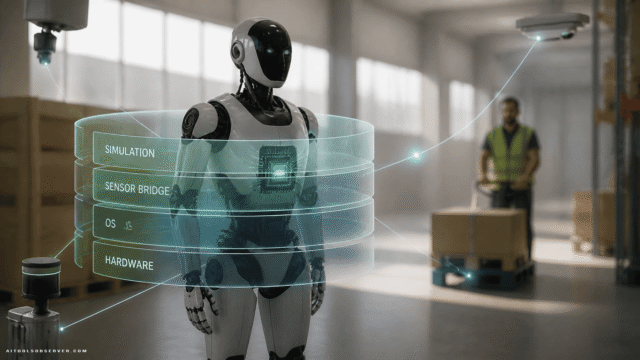
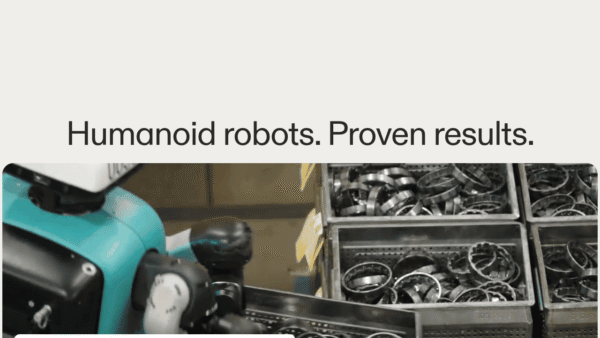
Its investment portfolio in the space spans the full stack. On one end, you have humanoid robot makers like Galaxea and Unitree. On the other, you have parts and software startups like Linkerbot, Hypershell, and Genrobot AI. Ant is building exposure across the entire robotics value chain.
What Makes the Zeroth Deal Stand Out

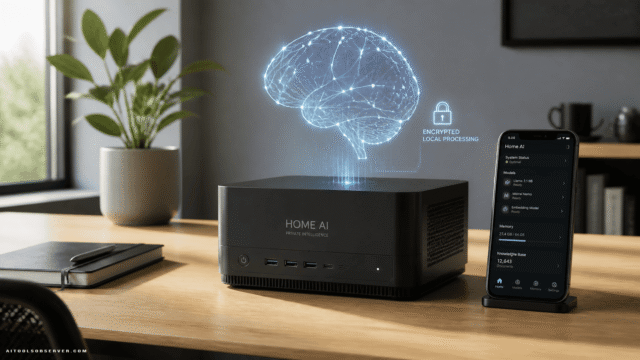
Zeroth Robotics — known in China as Suzhou JoyIn Intelligent Technology — is targeting one of the most commercially viable near-term use cases for humanoid robots: the home.
The company’s founder, Guo Renjie, has outlined a phased roadmap. Phase one focuses on companionship robots for elderly care and pet care. Phase two moves into children’s education. The long-term goal is a fully capable home robot.
That’s a smart sequencing strategy. Elderly care is a massive and underserved market in China, and it’s a use case where a robot doesn’t need to be perfect — it just needs to be helpful and safe.
The numbers back up early traction. Zeroth claims orders exceeding 30,000 units and reports that operating revenue in the first half of the year surged 600% year-over-year. For a company founded in late 2024, that’s a remarkable early signal.
The pre-Series A round brings Zeroth’s total funding to 1 billion yuan, with participation from Monolith, Geely Capital, 37 Interactive Entertainment, and Hua Capital alongside Ant.
The Alipay Integration Angle
Here’s where Ant’s involvement gets strategically interesting beyond the capital.
Ant has released an AI and robotics-friendly version of its Alipay mobile payments service. Zeroth has explicitly flagged this as an area where it wants to cooperate with Ant.
Think about what that means in practice. If Zeroth’s home robots can natively integrate with Alipay — handling purchases, subscriptions, or service payments — it creates a closed-loop ecosystem where the robot becomes a commerce and services interface, not just a physical assistant.
That’s a fundamentally different value proposition than a standalone robot. It’s a distribution play wrapped inside a hardware product.
China’s Humanoid Robot Race Is Heating Up Fast
Ant’s moves don’t exist in a vacuum. China’s humanoid robotics sector is experiencing a funding and talent surge that mirrors what happened with EVs a decade ago.
Nvidia added fuel to the fire this week, announcing it was hiring for multiple robotics roles based in Beijing, Shanghai, and Shenzhen. When Nvidia starts staffing up in a market, it’s a reliable signal that the infrastructure layer is maturing.
Zeroth’s robots currently run on chips from Horizon Robotics, a Chinese AI chip company. Guo noted that the company specifically sought investors with experience in industries like smartphone chips — a deliberate move to secure supply chain expertise as hardware competition intensifies.
The company also plans to launch overseas sales in North America and Europe this fall, pending local compliance clearance. That’s an ambitious timeline, but it reflects the confidence of a startup that has already secured 1 billion yuan in backing and a major strategic partner in Ant.
What This Means for the AI Tools and Hardware Ecosystem
For founders, investors, and AI adopters watching this space, Ant’s 12-deal robotics spree sends a clear message: the convergence of AI software, payments infrastructure, and physical hardware is no longer theoretical.
The companies building at that intersection — where AI models meet real-world robots that can transact, assist, and learn — are attracting serious capital. And the timelines are compressing faster than most expected.
Zeroth’s Wall-E IP authorization for its W1 robot (unveiled at AWE 2026 in Shanghai) is a small but telling detail. Consumer perception matters in home robotics. Familiar, friendly design lowers the adoption barrier — and Ant knows how to scale consumer products.
The Bottom Line
Ant Group’s 12-investment robotics blitz, capped by the Zeroth deal, is one of the clearest signals yet that China’s AI hardware race is entering a new phase. This isn’t speculative venture activity — it’s a coordinated infrastructure play by one of China’s most powerful fintech operators.
Watch how the Alipay integration develops. If Ant successfully embeds its payments ecosystem into consumer robots at scale, it won’t just be funding the next wave of humanoid robots. It’ll be owning the commerce layer that runs on top of them.
That’s the real bet here — and it’s a big one.



Comments (0) No comments yet
Want to join this discussion? Login or Register.
No comments yet. Be the first to share your thoughts!