


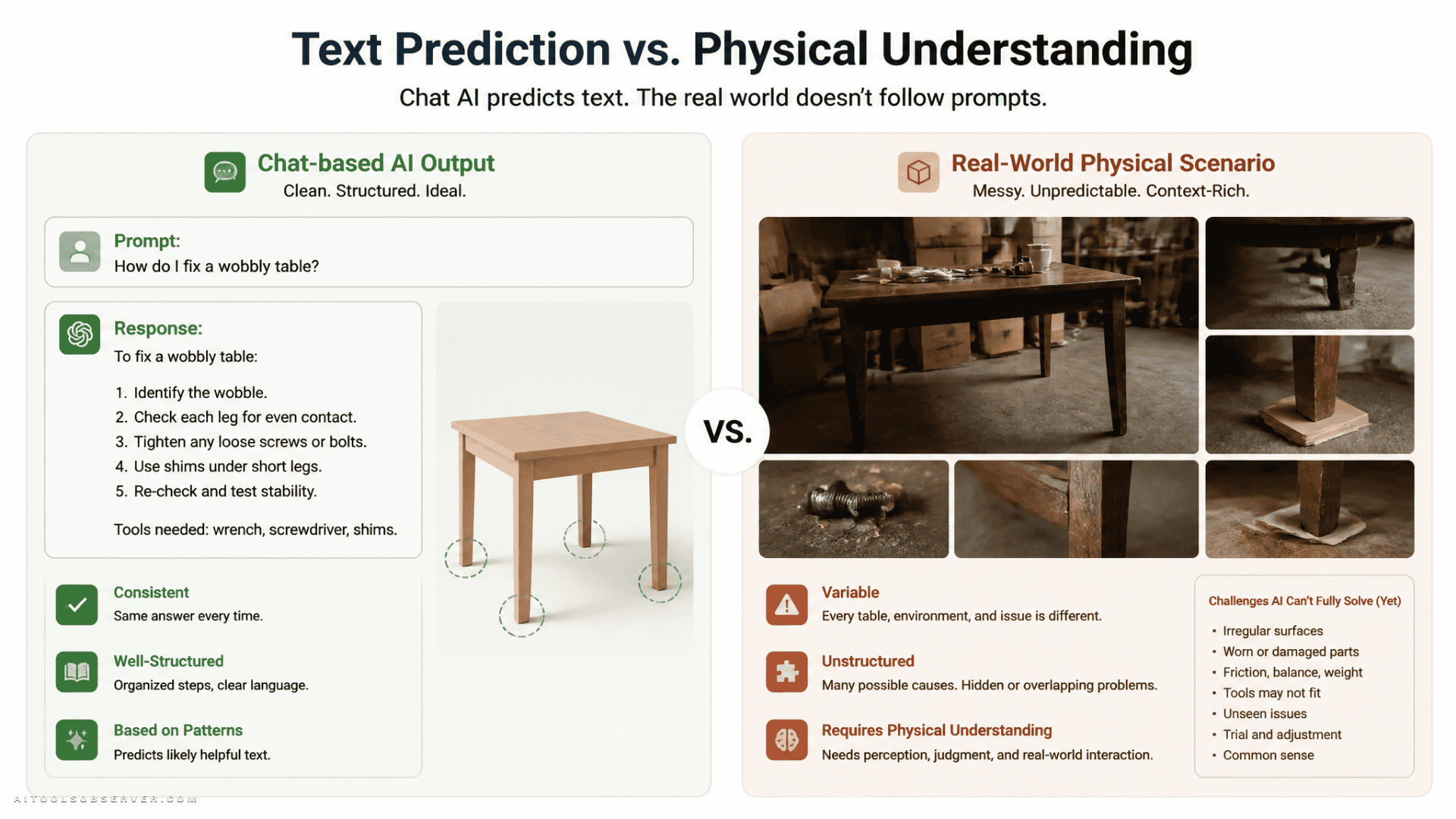
Why LeCun Says LLMs Hit a Wall

LeCun isn’t dismissing ChatGPT, Claude, or Gemini. He acknowledges they’re genuinely useful — strong at coding, math, and text generation. But he draws a hard line around what they can and cannot do.
“They basically just accumulate knowledge,” he says. “They can regurgitate something, you train them to regurgitate, but they’re not particularly smart. They don’t have an underlying understanding.”
His argument is structural, not superficial. LLMs are built to predict statistically plausible outputs from training data. That works brilliantly for well-defined, predictable problems. It breaks down completely when the real world introduces unpredictable physical variables.
The Pen Problem

LeCun illustrates this with a simple demonstration. He balances a pen upright on its tip and asks: what happens when you let go?
A toddler knows the pen falls. No human wastes energy predicting which direction — there’s no way to know, and it doesn’t matter. But an LLM, trained on statistical patterns, might attempt a directional prediction anyway. It would almost certainly be wrong, because it’s generating plausible-sounding output rather than reasoning about physical reality.
This is the core limitation. LLMs aren’t built to handle the bewildering range of outcomes that real-world environments produce. “They’re not a path towards human-level or human-like intelligence, or even animal-like intelligence,” LeCun says, “because they cannot deal with real-world data.”
What JEPA Actually Is — and Why It Matters

AMI Labs is developing an alternative architecture called Joint Embedding Predictive Architecture (JEPA). The concept is technically dense, but the practical logic is clean.
JEPA creates abstract representations of the world rather than trying to predict every detail of it. These abstractions filter out irrelevant information and leave the AI with a structured, useful picture of a situation. In the pen example, JEPA would recognize that predicting the direction of the fall is a pointless exercise — and move on.
This is a fundamentally different cognitive strategy. Instead of generating statistically plausible outputs, JEPA reasons about what matters and what doesn’t. That distinction becomes critical the moment you move AI out of a chat interface and into a physical environment.
The Robotics Bottleneck JEPA Is Designed to Break

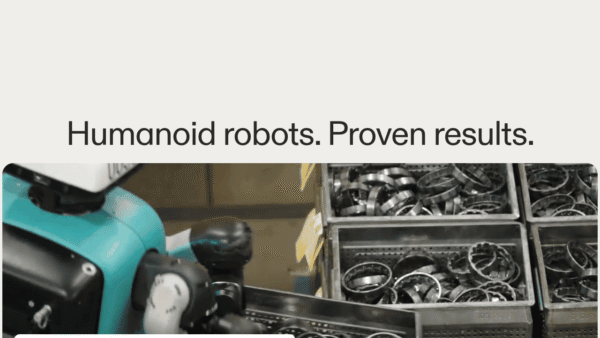
Billions of dollars have poured into humanoid robotics. The hardware is advancing fast. But training robots to perform basic household tasks — ironing, loading a dishwasher, navigating a cluttered room — remains expensive, slow, and unreliable.
LeCun is blunt about why: “LLMs are largely hopeless for robotics.”
The physical world doesn’t offer clean statistical patterns. It offers infinite variability, unpredictable surfaces, and consequences that cascade in real time. A robot needs to model the world, anticipate outcomes, and adapt — not retrieve a plausible-sounding response.
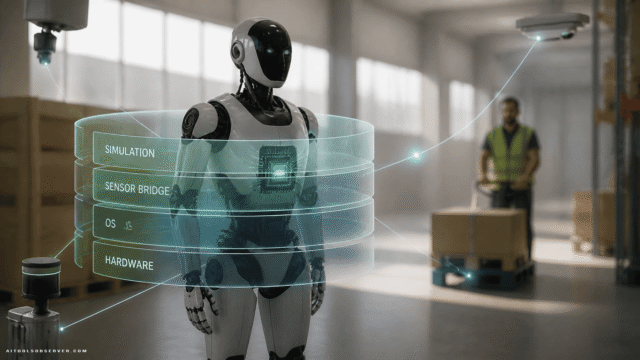
JEPA is designed to give robots that capability. AMI Labs plans to deploy the system in industrial settings in 2026, with broader applications to follow.
World Models: The Broader Research Wave LeCun Is Part Of

LeCun isn’t alone in this direction. A growing cluster of serious researchers and well-funded labs are converging on what’s loosely called World Models — AI systems that build internal simulations of reality to support decision-making.
The conceptual roots go back decades, but a pivotal 2018 paper by David Ha and Jürgen Schmidhuber demonstrated that an AI could learn to act purely from a learned mental simulation of its environment. That paper catalyzed a wave of research that’s still accelerating.
Who Else Is Building in This Space

- Oxford University’s Applied AI Lab, led by Professor Ingmar Posner, has spent four years developing what he calls a “mechanistic world model” — a system that structures knowledge so it can be recalled, combined, and modified efficiently. Posner frames the next decade of AI around systems that can answer: What matters? What causes what? What would happen if I acted differently?
- Google DeepMind is working on its Genie model, a world-modeling system with significant research backing.
- Wayve, a London-based autonomous driving company, has built Gaia — a world model focused on driving environments.
- World Labs, founded in San Francisco in 2023 by AI pioneer Fei-Fei Li, is developing spatial intelligence models grounded in physical-world understanding.
- Google’s Dreamer world model produced a notable result: a variant of the system learned to collect diamonds in Minecraft by imagining future scenarios — no explicit programming, just learned simulation.
This isn’t a fringe movement. It’s a coordinated shift in where serious AI research energy is flowing.
What This Means for the AI Tools Ecosystem

For founders, product teams, and AI adopters tracking the tools landscape, this trend carries real implications — even if JEPA and world models won’t ship as consumer products tomorrow.
The LLM-as-default assumption is being challenged at the architecture level. The next generation of AI tools for robotics, industrial automation, and physical-world applications will likely be built on fundamentally different foundations than today’s chat and generation tools.
Robotics AI is becoming a distinct product category. As world models mature, expect a new tier of AI tools purpose-built for physical environments — not fine-tuned LLMs, but architecturally different systems. That creates new comparison criteria, new vendors, and new evaluation frameworks for buyers.
The funding signal is real. A $1B+ seed round for an architecture-level AI research lab is not typical. It signals that major capital allocators believe the current LLM paradigm has a ceiling — and that the next platform shift is already in motion.
Timeline uncertainty is high, but directional clarity is strong. Posner notes that in 2017, nobody predicted ChatGPT would arrive by 2022. The same humility applies here. World models and JEPA could move faster than expected — or slower. What’s clear is the direction of travel.
The Human Role in a World-Model Future
LeCun doesn’t frame this as a displacement story. He frames it as a division of labor.
“We’re still going to need humans to figure out what questions to ask, what to build, what to create — which is really the properly human aspect,” he says.
His analogy is instructive: future AI systems, even if smarter than us in specific domains, will function like a staff of highly capable assistants working under human direction. The captain of industry still sets the agenda. The assistants execute with precision.
That framing matters for how you think about AI tool adoption. The tools are getting more capable. The judgment about what to build with them remains irreducibly human.
The Takeaway
The AI tools ecosystem is not static. The LLM wave that produced ChatGPT, Claude, and Gemini is real and valuable — but it’s not the final architecture. Yann LeCun’s AMI Labs and the broader world models movement represent a credible, well-funded challenge to the current paradigm, specifically targeting the physical-world intelligence gap that LLMs cannot close.
Watch JEPA. Watch world models. Watch the robotics AI category.
The next platform shift in AI may not come from scaling what already exists — it may come from building something structurally different. And the labs doing that work are already funded, already building, and already moving.





Comments (0) No comments yet
Want to join this discussion? Login or Register.
No comments yet. Be the first to share your thoughts!